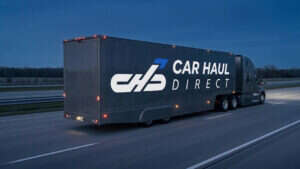
Here is the short answer up front. A carrier owns the truck and physically moves your car. A broker does not own trucks. A broker arranges your shipment by matching you with a vetted carrier that is already running your route. Most retail car shipments in the United States involve both: you book with a broker, and the broker dispatches a carrier to your door. This guide breaks down what each party does, how federal licensing separates them, and how to verify any company yourself in about 2 minutes.
Quick answer: A carrier owns the truck and physically moves your car. A broker owns no trucks and arranges the shipment by matching you with a vetted carrier already running your route. FMCSA issues the two licenses separately: motor carrier authority and broker authority. Most retail shipments involve both. Verify either one by searching its USDOT number on SAFER, which takes about 2 minutes.
Car Shipping Broker vs Carrier: The Short Answer
People use these terms interchangeably, and that causes real confusion when a problem comes up.
A carrier is the trucking company. It owns or leases the truck and trailer, hires the driver, loads your car, and hauls it to your delivery address. When you see a loaded hauler on the interstate, that is the carrier at work.
A broker is a licensed matchmaker. Brokers do not own trucks or employ drivers. They maintain a network of carriers, find the truck that fits your route and schedule, and manage the booking from quote to delivery.
One more thing surprises most people: the majority of cars on those trailers were booked through a broker, not directly with the trucking company. The sections below explain why, and what that arrangement means for you.
What a Car Carrier Actually Does
Carriers do the physical work. A typical auto carrier is a small business, often 1 to 5 trucks, running a set of familiar lanes. An open trailer usually hauls 7 to 10 cars at a time, which is why open transport is the most affordable way to move a vehicle.
The carrier’s driver inspects your car at pickup, notes existing damage on the bill of lading, loads the car, and repeats the inspection with you at delivery. The carrier’s cargo insurance is the primary policy that responds if your car is damaged in transit.
That paperwork matters more than most people realize. If damage ever happens, the steps you take in the first hour after delivery decide how smoothly the claim goes.
Carriers hold motor carrier authority from the Federal Motor Carrier Safety Administration (FMCSA). That authority is the federal license to haul vehicles for pay across state lines.
What an Auto Transport Broker Does
A broker holds a different license, called broker authority, also issued by FMCSA. The broker never touches your car. Instead, the broker prices your shipment, posts it to industry load boards where carriers look for freight, and selects a carrier with the right equipment, route, and record.
Because brokers work with a huge pool of trucks, they can usually arrange pickup far faster than a single carrier could. At Car Haul Direct, pickup typically happens within 1-3 days of booking.
The broker also handles the paperwork: the carrier agreement, insurance verification, dispatch details, and the schedule you plan your week around.
Pricing is part of the job too. A broker watches what carriers are actually accepting on your lane this week and quotes a rate the market will bear. Quote too low and no truck takes the load. Quote too high and you overpay. That calibration is most of what a broker’s fee buys.
FMCSA Authority: Broker License vs Motor Carrier License
FMCSA issues two separate authority types, and every legitimate company holds at least one.
Motor carrier authority lets a company transport property, including cars, for compensation. Broker authority lets a company arrange transportation through licensed carriers. FMCSA also requires every broker to file a $75,000 surety bond, which exists to protect customers and carriers if the broker fails to pay or perform.
Every interstate company also gets a USDOT number. That number is your verification tool, and the SAFER section below shows you exactly how to use it.
Some large companies hold both authority types and run their own trucks while also brokering freight. Many hold only one. Neither is automatically better. What matters is that you know which one you are talking to before you hand over your keys.
Why Most Retail Shipments Go Through a Broker
The carrier side of this industry is fragmented. FMCSA’s registry lists hundreds of thousands of authorized interstate carriers, and most of them run a handful of trucks on a few regular lanes.
That creates a matching problem for you. If you call carriers one by one, you need a truck that is empty in your city, heading to your destination, on your dates. The odds of finding that on your own are poor. A broker solves it by posting your shipment where tens of thousands of carriers and their dispatchers can see it, then picking the best fit.
Carriers benefit from this arrangement as well. A small carrier has no marketing department and no website you would ever find on your own. Load boards and broker relationships keep its trailer full, so the owner can spend the week driving instead of selling. That is why most of the industry’s truck capacity stays invisible to you unless you go through a broker.
That competition is also why broker pricing stays honest. A carrier filling one last spot on a trailer prices that spot aggressively, because the truck is making the trip anyway. On a popular route like New York to Florida, a typical open transport shipment often lands somewhere around $600 to $1,200 depending on distance, vehicle, and season.
What a Good Broker Adds
A good broker earns its fee in four places.
Carrier vetting. Before dispatch, the broker confirms the carrier’s authority is active, its cargo insurance is current, and its safety record is clean.
Insurance verification. The broker collects proof of the carrier’s cargo policy before your car ever gets loaded. Car Haul Direct also maintains $2M in cargo insurance coverage.
Recovery when a carrier falls through. Trucks break down, drivers get sick, schedules slip. If an assigned carrier cancels, a broker re-dispatches your car to another truck, often the same day. If you booked direct, you start your search over from zero.
One point of contact. You get one person tracking your shipment instead of chasing a dispatcher who is juggling 9 other cars.
A bad broker does none of this. The worst ones double broker your load, secretly handing it to another broker you never vetted. That is exactly what vetting and verification protect you from.
How to Verify Any Company on SAFER
SAFER is FMCSA’s free public lookup, and the whole check takes about 2 minutes.
- Go to the FMCSA SAFER Company Snapshot.
- Search by the company’s USDOT number. A name search works too, but numbers are exact.
- On the snapshot, check the operating authority status. It should read active and authorized for property.
- Look at the authority type listed. Broker means the company arranges transport. Motor carrier means it hauls. Some companies show both.
- Confirm insurance is on file. Active authority without insurance on file is a red flag.
A clean snapshot shows active authority, the correct legal name and address, and insurance on file. Take a second to match the legal name on SAFER to the name on your paperwork. Some bad operators hide behind names that sound like a well known company, and the USDOT number is the only reliable way to tell them apart.
If a company will not give you its USDOT number, stop the conversation. That refusal tells you everything you need to know.
Full Disclosure: Car Haul Direct Is a Licensed Broker
You deserve to know exactly who you are working with, so here it is plainly. Car Haul Direct Inc. is an FMCSA-licensed auto transport broker, USDOT 4321158, with active broker authority. We are based in Blue Ash, Ohio, just outside Cincinnati. We do not own trucks, and we will never claim otherwise.
What we do is arrange nationwide, door to door car shipping across all 48 contiguous states for consumers, dealerships, fleets, and OEMs. We also handle auction pickups, and many auctions include 3-5 free storage days, though the exact window varies by auction.
Being a broker is not a shortcut or a lesser license. It is the model that lets one company reach virtually every truck running every lane in the country, instead of only the handful it would own. When your dates move or a carrier cancels, that reach is what keeps your shipment on schedule.
If you would rather verify us than trust us, search USDOT 4321158 on SAFER using the steps above. We would rather you check than take our word for it.
When Booking Direct With a Carrier Makes Sense
Sometimes direct booking works fine. If you already know a carrier running your exact route on your dates, or you are moving a car locally, calling that carrier can be simple and fair.
Finding that carrier is the hard part. Few small carriers advertise to the public, and the ones that do often book out weeks ahead during busy seasons. If your dates are flexible and your route is common, a few phone calls can be worth it. If you are on a deadline, the search itself becomes the cost.
The tradeoffs are availability and backup. One carrier has one schedule. If the truck fills up or breaks down, you have no fallback. And if something goes wrong, you are resolving it alone instead of having a broker in your corner.
For most people shipping a personal vehicle across state lines, a vetted broker is the practical choice.
The Bottom Line
A carrier moves your car. A good broker finds the right carrier, verifies its insurance and record, and stands behind the shipment when plans change. Now you know how to tell the two apart and how to check either one in minutes.
Want a real number for your own route? Run your shipment through the quote calculator at Car Haul Direct, or call (888) 884-5430 and talk to a real person about your move.
Frequently asked questions
Is a car shipping broker more expensive than a carrier?
Not usually. Brokers post your shipment where tens of thousands of carriers compete for it, and a carrier filling an empty trailer spot often prices it aggressively. Booking direct can occasionally cost less if you happen to find a carrier already running your exact route, but that search takes time and leaves you no backup if the truck cancels. For most cross country shipments, broker pricing is competitive with anything you would find on your own.
How do I check a car shipping company on SAFER?
Go to safer.fmcsa.dot.gov and open the Company Snapshot search. Enter the company’s USDOT number for an exact match, then review three things: operating authority status (it should show active), authority type (broker, motor carrier, or both), and insurance on file. The whole check takes about 2 minutes and costs nothing. If a company refuses to share its USDOT number, treat that refusal as a serious warning sign and move on.
Can I book a car carrier directly instead of using a broker?
Yes, if you can find one. Most carriers are small operations running fixed lanes, so you would need a truck that is empty in your city, heading to your destination, on your dates. That match is hard to make alone, which is why most retail shipments go through brokers. Direct booking works best for local moves, or when you already know a carrier that runs your route regularly.
Who is liable if my car is damaged during transport?
The carrier that physically hauled your car is liable for damage in transit, and its cargo insurance is the primary policy that pays. This is why the pickup and delivery inspections on the bill of lading matter so much: they document your car’s condition before and after the trip. A good broker helps you file and pursue the claim. Document everything in the first hour after delivery, before you drive the car anywhere.
What is double brokering in car shipping?
Double brokering is when a broker secretly hands your shipment to another broker instead of a carrier, adding a hidden middleman you never vetted. It is one of the most common scams in auto transport. Protect yourself by asking who will actually haul your car and verifying that carrier’s USDOT number on SAFER before pickup.
Does a car shipping broker have its own trucks and insurance?
A pure broker does not own trucks or employ drivers, though some large companies hold both broker and motor carrier authority and run trucks too. On insurance, the carrier’s cargo policy covers your car in transit, while brokers carry their own coverage as an added layer. Ask any company which authority it holds and what insurance applies to your shipment, then verify the answer on SAFER.
How fast can a broker get my car picked up?
Because brokers work with tens of thousands of carriers, they can usually find a truck quickly. At Car Haul Direct, pickup typically happens within 1-3 days of booking, though remote locations and unusual routes can take a little longer. Booking direct with one carrier means waiting for that company’s schedule to open up, which can stretch to a week or more on less traveled lanes.
Do I pay the broker or the carrier when I ship a car?
Practices vary by company. Commonly, the broker collects a portion when a carrier is assigned, and you pay the driver the remaining balance at delivery. The split, payment methods, and timing differ from one company to the next, so ask for the full payment terms in writing before you book. Any company that gets vague about when and how much you pay has earned a follow-up question.