California Car Shipping
Routes, Costs, and What to Know in 2026
By Dean Xeros, EVP of Business Development — Car Haul Direct (USDOT 4321158 | MC 1685969)
California Car Shipping: What It Costs in 2026
Prices shift based on distance, transport type, fuel costs, and seasonal carrier availability. The figures below are realistic 2026 ranges for standard open transport on popular California routes. Enclosed transport runs 30–50% higher.
| Route | Miles | Open transport |
|---|---|---|
| Los Angeles → New York | ~2,790 miles | $1,050 – $1,450 |
| San Francisco → Chicago | ~2,130 miles | $900 – $1,250 |
| Los Angeles → Seattle | ~1,135 miles | $550 – $800 |
| San Diego → Dallas | ~1,370 miles | $650 – $950 |
| Los Angeles → Miami | ~2,750 miles | $1,000 – $1,400 |
A few variables that directly affect your final quote:
Vehicle size.
Trucks, SUVs, and lifted vehicles take more space on a carrier and cost more to ship than sedans and compacts.
Pickup and delivery locations.
Shipping from a residential address in the Bay Area versus a terminal near the port will affect pricing. Door-to-door is more convenient but sometimes costs more depending on carrier routing.
Time of year.
Demand spikes in late spring and summer when people are relocating. Prices are typically softer in January and February heading into California.
Inoperable vehicles.
If your car doesn’t run, expect to add $150–$250 to cover the equipment required to load and unload it.
Top Routes from The Los Angeles and San Francisco
From Los Angeles, the most active corridors run:
- East to Phoenix, Las Vegas, Denver, and onward to Chicago or the Northeast
- North along I-5 toward Sacramento, Portland, and Seattle
- Southeast along I-10 toward El Paso and Houston, connecting to Atlanta and Florida
From San Francisco, the primary lanes are:
- I-80 east toward Reno, Salt Lake City, and Chicago
- I-5 north toward Portland and Seattle
- South along the 101 or I-5 toward Los Angeles for intrastate transfers
Intrastate California shipping — LA to San Francisco, for example — is a shorter haul (around 380 miles by road) and typically runs $300–$500. It sounds simple, but California is one of the more regulated states for commercial carriers, and not every out-of-state broker can dispatch carriers that comply with California Air Resources Board (CARB) regulations. CHD works with carriers who operate within California regularly and understand what that compliance looks like on the ground.
California-Specific Notes: Port Vehicle Imports at the Port of Los Angeles
Customs clearance.
Your customs broker handles this, but no transport company can move your car until it has cleared. Make sure you have the Bill of Lading, the original title or manufacturer’s certificate of origin (MCO), and your EPA/DOT compliance documentation if the vehicle was manufactured outside the US.
Port fees.
These are separate from shipping costs. Terminal handling charges, storage fees if the car sits too long, and inspection fees can add up. Ask your customs broker for the full port fee schedule.
CARB compliance.
California has strict emissions regulations. If your imported vehicle doesn’t meet current CARB standards, you may face significant modification costs before it can be registered in California. This is a separate issue from transport, but it’s worth knowing before you finalize the purchase.
Open vs. Enclosed Transport in California
The choice between open and enclosed transport comes down to two things: vehicle value and personal comfort.
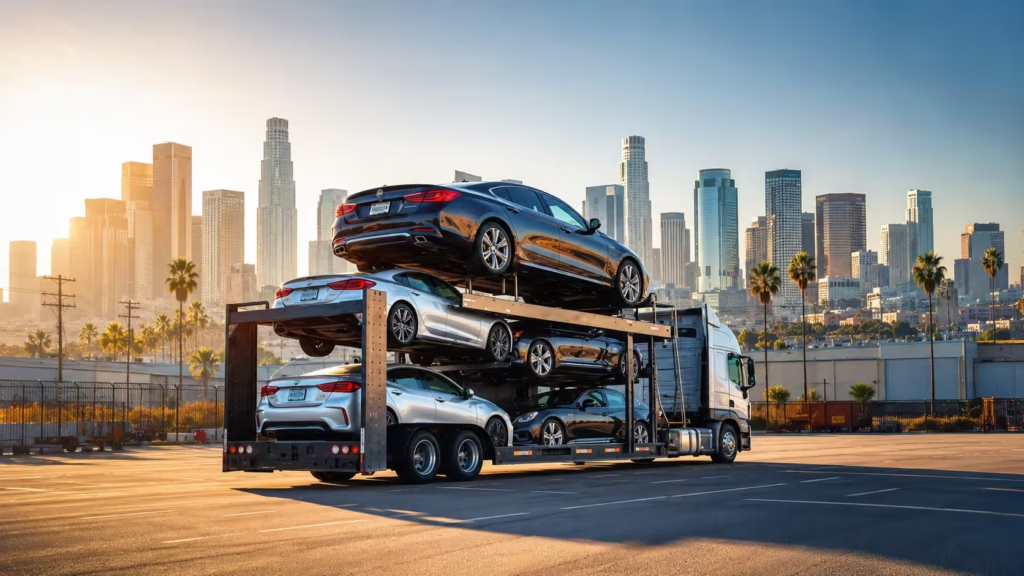
Open transport is the standard. It’s the same method used to deliver vehicles to dealerships. Your car rides on a multi-vehicle carrier — typically 7 to 10 cars per load — exposed to weather and road conditions. This is perfectly adequate for most everyday vehicles. The vast majority of cars shipped through California go via open carrier without incident.
Enclosed transport puts your vehicle inside a covered trailer. If you’re shipping a luxury vehicle, a classic, an exotic, or anything you wouldn’t want a rock chip touching, enclosed is worth the premium. Enclosed carriers also typically run fewer vehicles — 2 to 6 per load — which means more care and attention during loading and unloading.
In California specifically, open transport works well for most of the year. The state’s dry climate means less road salt and moisture exposure than routes through the Midwest or Northeast in winter. That said, if your vehicle is traveling from Los Angeles to the Northeast between November and March, it will encounter winter road conditions along the way, which is another reason to consider enclosed if your car is high-value.
A few California-specific considerations:
- Wildfire smoke and ash can be a factor on I-5 through the Central Valley in summer and fall. For concours-quality vehicles, enclosed is the right call.
- Coastal salt air around San Francisco and LA isn’t typically an issue for the short duration of loading and unloading, but it’s worth noting for particularly sensitive finishes.
California’s collector car market. California hosts the largest concentration of classic car collectors and exotic car owners in the United States. Pebble Beach, Monterey Car Week, and the Los Angeles area private collections alone represent billions of dollars in rolling stock. Those owners ship regularly — to Scottsdale for Barrett-Jackson and the Cavallino Classic, to Amelia Island for the Concours d’Elegance, and to private events and storage facilities across the country. Enclosed transport from California to Scottsdale or Amelia Island concours events is a regular CHD service. If you’re moving a show-quality car to a judged event, timing and condition on arrival matter as much as getting there. We coordinate with drivers who understand that and treat the load accordingly.
CHD dispatches both open and enclosed carriers in California. When you call, we’ll give you an honest assessment of which option fits your vehicle — not an upsell.
How Long Does It Take to Ship a Car To or From California?
Transit times depend on distance, carrier availability, and the specific pickup and delivery locations. Here are realistic expectations:
- California to/from the Pacific Northwest (Seattle, Portland): 2–4 days
- California to/from the Southwest (Phoenix, Las Vegas, Denver): 1–3 days
- California to/from Texas (Dallas, Houston): 3–5 days
- California to/from the Midwest (Chicago, Kansas City): 4–6 days
- California to/from the Southeast (Atlanta, Miami): 6–9 days
- California to/from the Northeast (New York, Boston): 7–10 days
Add 1–3 days to any timeline for carrier dispatch. Vehicles don’t always move the day they’re available. Carriers run specific routes on specific schedules, and matching your car to the right carrier takes time. Anyone promising next-day dispatch on a coast-to-coast haul is either very lucky or not being straight with you.
If you’re working with a hard deadline — a military PCS, a lease return, a home closing date — tell us upfront and we’ll build the schedule around it.
How CHD Serves California: Coverage, Carriers, Track Record
Car Haul Direct is based in Blue Ash, Ohio, and operates nationally under USDOT 4321158 and MC 1685969. We work California routes year-round.
We’ve transported more than 50,000 vehicles across the country, including thousands of pickups and deliveries in California. We work with a vetted carrier network — not just whoever accepts the load first — and we don’t broker your shipment through a chain of intermediaries. Our dispatch team communicates directly with drivers.
Our cargo insurance coverage runs from $1 million to $2 million in supplemental protection, giving you coverage that goes well beyond what many carriers carry on their own. That matters when you’re shipping a $90,000 truck or a car that came off the boat at San Pedro.
What we don’t do: We don’t give low-ball quotes to win your business and then re-price you before pickup. What we quote is what you pay.
To get a quote or book a shipment, call 888-884-5430 We answer the phone.