Classic car auction house auto transport is the coordination of vehicle shipping to and from auction facilities with the aim of meeting sale, release, and buyer-delivery requirements. This 2026 guide explains how to match transport equipment to collector vehicles, control handoffs, and keep auction staff, carriers, and buyers working from the same instructions.
- Auto transport for classic car auction houses starts with release clearance, vehicle condition, and confirmed carrier equipment.
- Car Haul Direct coordinates carriers for auction moves; equipment, timing, and applicable coverage require shipment-specific confirmation.
- Choose enclosed transport for vehicles requiring protection from direct weather exposure; enclosure does not replace condition documentation.
- Keep auction release, carrier pickup, and buyer delivery as separate checkpoints in your vehicle shipping process.
Why auto transport matters for classic car auction houses
A classic car auction shipment connects several responsibilities: the auction controls release, the carrier handles physical transport, and the buyer or receiving facility accepts delivery. A booking alone does not establish that every party is ready.
For your 2026 auction calendar, build transport planning around the actual route, vehicle, transport type, and timing needs. A restored convertible, a nonrunning project, and a modified low-clearance coupe require different loading discussions, even when they leave the same sale.
CHD is a transport brokerage coordinating carriers, not a truck-owning fleet. That distinction matters when you confirm who dispatches the shipment, who loads the vehicle, and whose applicable policy covers the carrier’s work.
Approve the transport plan against the vehicle’s requirements, not the trailer label alone. Enclosure, loading access, securement, release authorization, and receiving arrangements all need separate answers.
How to organize classic car auction transport
Define the route and handoff responsibilities
Start with a shared spreadsheet and a written route brief. Record the actual pickup facility and delivery address rather than relying on an auction name or buyer’s billing address. A collector’s home, storage building, or restoration shop can have different access restrictions.
Keep 1 dispatch record per vehicle as an operating rule. Group related records under the sale or consignment reference, but preserve each vehicle’s identity and instructions. This prevents a change to one lot from silently changing the whole shipment.
For multi-vehicle moves, identify whether all vehicles must arrive together or whether separate deliveries are acceptable. Consolidation is a routing decision, not permission to overlook individual handling needs.
- Identify the pickup facility, loading entrance, and receiving address.
- Assign an auction release contact and a delivery contact.
- Record the lot reference and vehicle identification details.
- Separate required dates from preferred dates.
- Confirm who can approve changes to the route or handoff.
Build a vehicle-specific handling record
Use a simple intake form before requesting transport. Ask the consignor or authorized auction representative to describe the vehicle’s actual operating condition, not just its catalog description. A listing that says a car runs does not establish that it currently starts, steers, brakes, and moves safely for loading.
Document low clearance, body modifications, unusual starting procedures, fluid leaks, and loose components. Give the carrier enough information to confirm loading equipment and securement arrangements before arrival. Do not leave special instructions with someone who will be unavailable at pickup.
For a 2026 sale, keep handling instructions attached to the dispatch record rather than scattered across email threads. Update the record when inspection reveals a change.
- State whether the vehicle starts, rolls, steers, and brakes.
- Record clearance concerns and modified bodywork.
- Explain ignition, battery-disconnect, or shutdown procedures.
- Identify detachable trim, loose parts, and included accessories.
- Ask the assigned carrier to confirm suitable loading equipment.
Match the transport option to the vehicle
Compare open and enclosed transport manually against the handling record. Open transport leaves the vehicle exposed to weather and road conditions. Enclosed transport places it inside a trailer, but you still need to confirm the loading method, clearance, and securement approach.
An enclosed trailer does not automatically resolve a steep loading angle or an inoperable vehicle. Ask specific equipment questions. Expedited transport addresses a timing requirement, subject to carrier confirmation; it does not describe the trailer or create a guaranteed arrival date.
For recurring sales, CHD can coordinate transport with carriers using your route and handling requirements. The benefit is coordinated planning; the limitation is that equipment suitability and timing still depend on the assigned carrier and shipment.
CHD is best for auction houses seeking broker-coordinated auto transport for recurring vehicle moves.
- Choose open or enclosed transport based on the vehicle’s requirements.
- Confirm clearance and loading arrangements before dispatch.
- Identify nonrunning vehicles before requesting equipment.
- Separate expedited timing requests from transport-type decisions.
- Request written confirmation of any special handling arrangement.
Verify the carrier and applicable coverage
Start with the carrier’s legal identity and the shipment paperwork. Use official Federal Motor Carrier Safety Administration records to check the carrier information relevant to the move. Make sure the company expected at the gate matches the transport arrangements, and resolve substitutions before release.
Request current insurance documentation and confirm how the applicable policy addresses the shipment. A certificate alone does not explain every exclusion, deductible, valuation condition, or vehicle-eligibility requirement. Ask the responsible insurance contact to clarify those terms when necessary.
Do not treat the auction sale amount as an automatic claim settlement amount. For your 2026 procedures, keep coverage questions separate from booking confirmation so staff cannot mistake a scheduled pickup for an insurance review.
- Confirm the assigned carrier’s legal name and identifying information.
- Check relevant operating information through official records.
- Review applicable limits, exclusions, and deductibles.
- Confirm vehicle eligibility and any declared-value requirements.
- Record the damage-reporting process and responsible contact.
Clear auction release before scheduling the handoff
Maintain a release checklist in the same shared record as the shipment instructions. Confirm the auction’s requirements directly: payment clearance, release authorization, collection appointment, identification, and any outstanding documentation. Requirements differ between facilities and sales.
Tell the carrier whether the vehicle is cleared for collection before treating pickup as ready. A driver arriving at the correct address cannot collect a vehicle that the auction has not authorized for release.
Check physical access separately. A door-to-door request does not establish that a transporter can enter the property, turn safely, or load at the requested location. Agree on an accessible handoff point when the original address is unsuitable, and obtain authorization before relocating the vehicle.
- Release clearance: confirm the auction has authorized collection.
- Verify the pickup appointment and facility operating instructions.
- Confirm the required release documents and identification.
- Provide the correct loading entrance and onsite contact.
- Resolve transporter access restrictions before arrival.
Document condition at pickup and delivery
Use a repeatable inspection form and dated photographs rather than informal messages alone. Establish 2 condition reports per move as your internal minimum: one at pickup and one at delivery. These are process requirements you set, not a promise about a carrier’s existing workflow.
Inspect visible exterior surfaces, glass, wheels, and relevant interior areas where access is authorized. Note existing damage and any inspection limitations, such as poor lighting or an obstructed surface. Keep the vehicle identification and shipment reference with the images.
At delivery, compare the vehicle against the pickup record before closing the handoff. If something differs, record the observation on the delivery paperwork and follow the applicable reporting procedure promptly. Do not assume a photo archive replaces the carrier’s required documents.
- Vehicle handoff: record visible condition before loading.
- Photograph existing marks and vulnerable exterior details.
- Inventory authorized keys, accessories, and loose items.
- Delivery inspection: compare condition before signing completion paperwork.
- Preserve signed records and report discrepancies through the required channel.
Set status checkpoints and exception rules
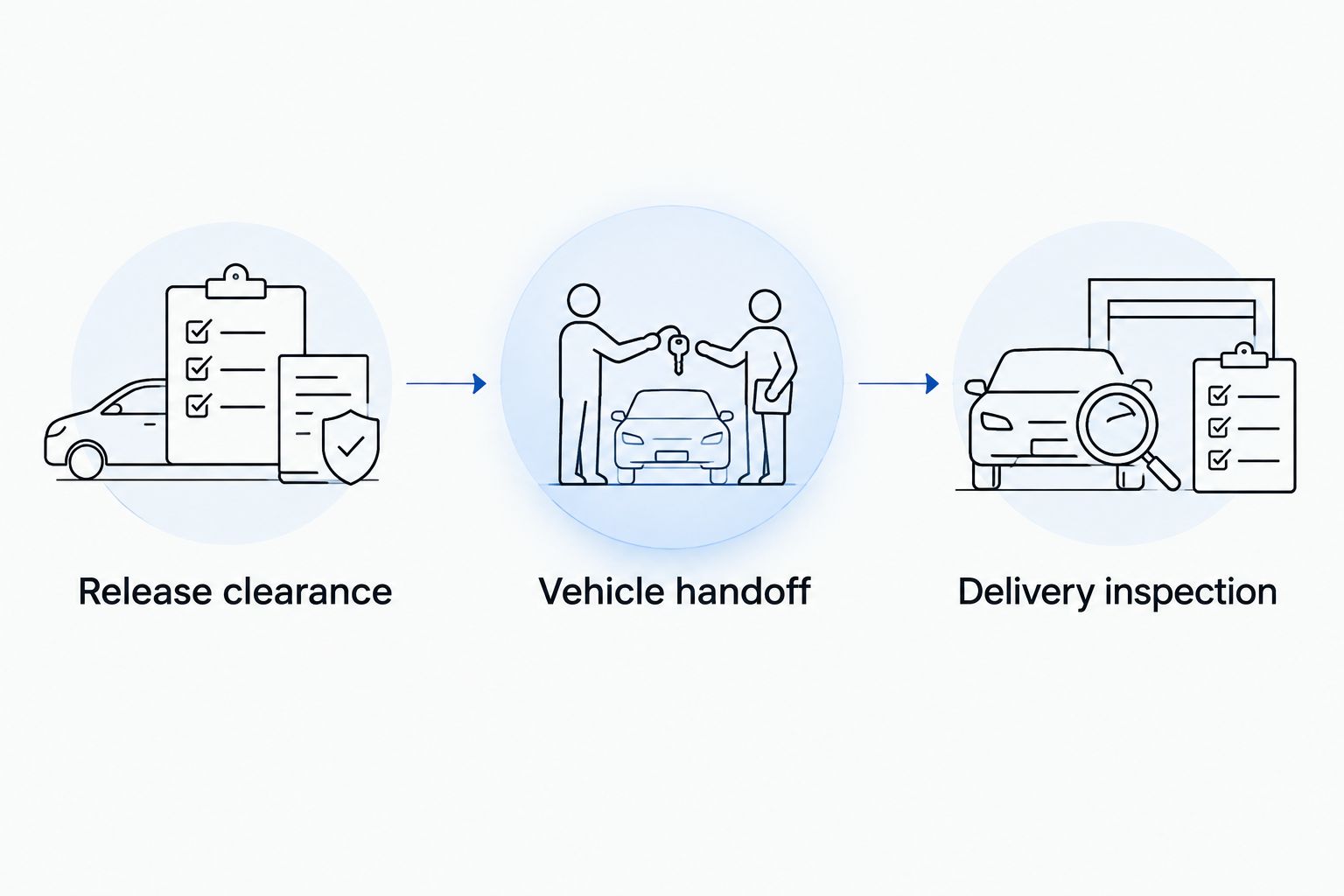
A shared status sheet is enough to establish a clear communication process. Define 3 milestone updates for each shipment: release clearance, vehicle handoff, and delivery inspection. Add exception updates whenever the route, timing estimate, vehicle condition, or receiving arrangements change.
Tell the buyer who communicates updates and who can approve a revised delivery plan. Avoid giving the buyer an exact arrival commitment that the carrier has not confirmed. Keep estimated timing distinct from a confirmed appointment.
For recurring auction activity in 2026, review exceptions after each sale. Look for missing release documents, inaccurate running-condition descriptions, and receiving-site restrictions. Correct the intake process rather than asking dispatch staff to solve the same preventable problem repeatedly.
- Identify the owner of each status update.
- Record the current timing estimate and its source.
- Escalate changes to equipment, access, or operating condition.
- Require authorization before changing the delivery location.
- Close the record only after delivery documentation is collected.
The core handoff sequence is release clearance, vehicle handoff, and delivery inspection. Keep these checkpoints separate: authorization to collect is not proof of pickup, and pickup is not proof of accepted delivery.
Compare transport options for auction vehicles
Choose the trailer type first, then evaluate timing and coordination requirements. The options below answer different questions: open and enclosed describe exposure, while expedited describes a scheduling request. Broker coordination describes who organizes the move, not the equipment that performs it.
| Option | Best for | Practical advantage | Key limitation |
|---|---|---|---|
| Open transport | Vehicles whose handling requirements permit exposed transport | Leaves the vehicle visible on an open trailer | Does not shield the vehicle from direct weather exposure |
| Enclosed transport | Collector vehicles requiring enclosed carriage | Places the vehicle inside a trailer | Does not establish loading clearance, handling suitability, or coverage by itself |
| Expedited coordination | Auction shipments with a specific timing need | Makes the timing constraint explicit during planning | Depends on carrier confirmation and does not guarantee arrival |
| CHD broker coordination | Auction houses arranging recurring vehicle moves | Coordinates transport with carriers and helps manage pickup and delivery planning | Assigned equipment, timing, and applicable coverage require confirmation |
Use enclosed transport when enclosure is a shipment requirement, not as a substitute for asking handling questions. If you need a focused equipment comparison, review the guide to enclosed car transport companies.
For a recurring account, prepare representative routes, vehicle types, release procedures, and receiving constraints before discussing coordination. Include exceptions as well as routine shipments; the unusual vehicles determine which questions your intake form must ask.
Discuss recurring vehicle moves
Share your auction routes, vehicle handling requirements, release process, and timing needs.
Common mistakes classic car auction houses make
Treating the catalog description as a loading assessment
A sale listing describes the vehicle for bidders; the carrier needs its present operating and handling condition. Reconfirm starting, steering, braking, leaks, and clearance after the sale. If the condition changes before collection, notify the coordinator before loading begins.
Releasing a vehicle against incomplete identity checks
A familiar auction reference is not enough to resolve an unexpected carrier or driver. Match the arriving party to the authorized collection arrangements and pause release when details differ. Confirm substitutions through the designated transport contact rather than relying on an unfamiliar caller.
Assuming enclosed transport settles every risk question
Enclosure addresses exposure, not every handling or insurance issue. Confirm loading access, securement arrangements, vehicle eligibility, and applicable policy terms separately. A collector vehicle with delicate trim still needs documented instructions inside an enclosed trailer.
Promising delivery before confirming the receiving site
A buyer’s preferred delivery date does not establish access or acceptance arrangements. Confirm who will inspect the vehicle, where the transporter can unload, and what happens if the receiving contact is unavailable. Keep timing estimates clearly labeled throughout the shipment.
Closing the job when the vehicle leaves the auction
Pickup completes the auction-yard handoff, not the transport record. Keep responsibility assigned until delivery documentation is received and exceptions are recorded. For your 2026 review process, examine unresolved handoffs alongside completed moves, not just departures from the yard.
FAQ
What is the best auto transport option for a classic car auction house?
The best option matches each vehicle’s handling requirements, route, and timing needs. Choose enclosed transport when enclosed carriage is required, then confirm loading equipment, clearance, and applicable coverage separately.
Is enclosed transport better than open transport for auction classics?
Enclosed transport is better when the shipment requires protection from direct weather exposure. Open transport remains an option when the vehicle’s requirements permit exposure; neither trailer type replaces condition documentation.
Can a nonrunning classic car leave an auction by transporter?
A nonrunning classic car needs a carrier that confirms suitable loading equipment and handling arrangements. State whether the vehicle rolls, steers, and brakes before dispatch, and disclose clearance issues or fluid leaks.
Does expedited shipping guarantee delivery after an auction?
Expedited shipping does not by itself guarantee delivery. Confirm the carrier’s proposed pickup and delivery arrangements, and keep timing estimates distinct from any expressly agreed commitments.
Who checks insurance for a classic car auction shipment?
Your designated shipment coordinator should obtain the applicable insurance information and resolve coverage questions before release. Confirm limits, exclusions, deductibles, and vehicle eligibility with the responsible insurance contact rather than assuming all shipments receive identical protection.
What does the buyer need to provide before delivery?
The buyer needs to provide a receiving address, an authorized contact, and any access restrictions. Confirm an inspection and unloading arrangement, including an accessible alternative location if the transporter cannot use the requested address.
Does CHD own the trucks used for auction transport?
CHD is a transport brokerage that coordinates carriers rather than owning the trucks performing the shipment. Confirm the assigned carrier, equipment, timing arrangements, and applicable coverage for each move.
One last thing
Put release readiness and loading readiness in separate fields. A car can be cleared by the auction yet still need handling instructions, suitable equipment, or an accessible collection point.
For your next sale, ask the release desk to verify both fields before the transporter arrives. That small process change gives staff a concrete reason to pause an incomplete handoff without confusing payment authorization with physical transport readiness.
Related guides
- Classic car shipping companies
- Auction car transport companies
- Auto transport for remarketing companies