OEM manufacturer auto transport is the coordination of vehicle shipping between production, storage, distribution, and receiving locations to support inventory movement and release schedules. This 2026 guide explains how to specify routes, vehicles, transport types, and timing requirements; Car Haul Direct is a transport brokerage coordinating carriers, not a truck-owning fleet.
- CHD auto transport is best for OEM manufacturers seeking brokerage coordination for nationwide vehicle moves.
- Auto transport for OEM manufacturers starts with accurate vehicle details, release readiness, and receiving-site requirements.
- Choose open transport for exposed shipping; choose enclosed transport when the vehicle requires a covered trailer.
- Confirm expedited carrier availability before treating a requested pickup or delivery date as committed.
Why auto transport matters for OEM manufacturers
An OEM shipment connects vehicle release with the next operational task: distribution, evaluation, demonstration, storage, or delivery to a receiving location. Your transport plan needs to identify that task before anyone selects equipment or requests a pickup.
The distinction matters. A released production vehicle, a development vehicle with special handling instructions, and a vehicle assigned to an event do not have interchangeable requirements. Each needs an accurate description, an authorized release contact, and a destination ready to accept it.
For your 2026 shipping plan, separate the requested business date from the transport commitment. A target arrival date tells the coordinator what you need; it does not confirm carrier availability, loading access, or a receiving appointment. Treat those as separate checkpoints.
The shipping request is not complete until both locations can execute the handoff. A vehicle list alone leaves the coordinator without instructions for access, release authorization, or delivery acceptance. Attach those requirements to the request rather than relying on a conversation that the next person cannot see.
OEM logistics also needs clear ownership of exceptions. Identify who can approve a changed pickup location, revised receiving window, or different transport arrangement. Without that authority, a straightforward scheduling question becomes a chain of unanswered messages.
How to plan OEM vehicle transport
Use a shared spreadsheet, a vehicle manifest, and written shipment instructions to establish the process first. A transport coordinator can then work from the same information instead of reconstructing it from separate emails. Keep the process usable without an integration; add systems support only after responsibilities and required information are defined.
Define the route and release requirements
Start with the actual pickup and delivery locations, not just city names. Record the release point, receiving point, site contacts, operating restrictions, and the vehicle's ready status. If a campus has multiple gates or storage areas, specify which location controls the handoff.
For your 2026 route plan, distinguish a vehicle that exists in inventory from a vehicle that is authorized and ready to leave. Confirm that keys, release paperwork, and the responsible person will be available when pickup is arranged. Do not ask the coordinator to infer readiness from a production or inventory status label.
Describe the destination's role as well. A storage facility, evaluation site, or distribution location needs its own acceptance instructions. If the vehicle must pass through an intermediate location, document that movement rather than presenting the shipment as a simple direct route.
Your manual starting point is a route sheet reviewed by both locations. Keep approvals visible and attach changes to the same shipment request.
- Record complete pickup and delivery addresses and the correct access points.
- Name the person authorized to release each vehicle.
- Identify the receiving contact and appointment requirements.
- Separate the ready date, requested pickup window, and requested arrival date.
- Document intermediate stops or special routing for confirmation.
Document each vehicle's handling needs
Build 1 shipment record per VIN so that vehicle-specific instructions stay attached to the correct unit. For development vehicles without a conventional production identifier, use your assigned internal identifier consistently. Avoid descriptions such as the blue prototype when more than one person handles the request.
Record whether the vehicle starts, rolls, steers, and brakes. Disclose modifications, unusual dimensions, low clearance, or other loading constraints before transport equipment is selected. A model name does not communicate every handling requirement, particularly when an OEM vehicle differs from its production specification.
For electric vehicles, provide the relevant manufacturer handling instructions and confirm any operating or loading restrictions. Do not substitute a universal battery-charge rule for the instructions applicable to that vehicle. Damaged or otherwise restricted vehicles need explicit acceptance confirmation before scheduling.
Use a manual manifest and attached handling sheet first. Keep sensitive development information limited to what the transport participants need, while making operational restrictions clear enough to follow.
- Assign a VIN or consistent internal identifier to every unit.
- State operating condition and known loading restrictions.
- Supply relevant dimensions and clearance information where needed.
- Attach manufacturer-specific handling instructions.
- Confirm acceptance of nonstandard or restricted vehicles before dispatch.
Select the transport arrangement
Choose the transport type from the vehicle's requirements, then confirm how the shipment will be coordinated. Open transport carries vehicles on an exposed trailer. Enclosed transport places vehicles inside a covered trailer; it does not, by itself, establish confidentiality terms, loading suitability, or applicable insurance coverage.
Expedited transport addresses a timing request, not a different level of physical enclosure. Specify whether an urgent shipment also needs open or enclosed equipment. Ask what pickup and delivery windows are available for that route before committing your internal schedule.
Your manual approach is a written request sent to prospective transport providers with identical route, vehicle, and timing information. Compare responses against that scope. A response based on incomplete handling details is not equivalent to one that addresses them.
CHD auto transport is best for OEM manufacturers seeking brokerage coordination for nationwide vehicle moves. For your 2026 shipment plan, CHD can arrange open, enclosed, expedited, and door-to-door shipping through carriers; route requirements, access, and expedited availability still need confirmation.
- Match open or enclosed equipment to the vehicle's exposure requirements.
- State expedited timing needs separately from trailer type.
- Confirm loading suitability for each nonstandard vehicle.
- Verify pickup and delivery access before assuming door-to-door service.
- Compare the same shipment scope across provider responses.
Establish pickup and delivery handoffs
Write instructions for the 2 handoffs: vehicle release at pickup and acceptance at delivery. Each handoff needs an accountable contact, a vehicle identification check, condition documentation, and a process for reporting discrepancies. Agree on who supplies and retains the relevant transport documents.
Start with a shared checklist and a folder for pickup and delivery records. Photograph the vehicle's condition in a way that identifies the unit and records visible concerns. Follow the agreed documentation process rather than treating a few informal photographs as a complete record.
Confirm insurance requirements before pickup. Review the applicable carrier policy, limits, exclusions, deductibles, and vehicle eligibility for the shipment. An enclosed trailer or a brokerage arrangement is not a substitute for checking the relevant coverage.
At delivery, make sure the receiving party knows how to inspect the vehicle and document a concern before closing the handoff. Do not leave exception reporting to someone who has never seen the shipping instructions or does not have the authority to act.
- Confirm release and acceptance authority at both locations.
- Match the vehicle identifier to the shipment documentation.
- Record condition at pickup and inspect condition at delivery.
- Verify applicable insurance details for the specific shipment.
- Define how discrepancies and delivery documents reach your team.
Track milestones and resolve exceptions
Set 3 status milestones for each shipment: pickup confirmation, transit updates, and delivery confirmation. Define what evidence closes each milestone and who receives it. A calendar entry for a planned pickup is not evidence that the vehicle has been collected.
Begin with a shared tracker and named contacts. Keep requested, scheduled, and completed events separate so that your team does not confuse an estimate with a finished task. Record the current next action, the person responsible, and any unresolved constraint in the same place.
Ask how shipment updates will be communicated and how changed circumstances will be escalated. The update process should explain what happens when a release is delayed, a receiving appointment changes, or a handling requirement was omitted. Confirm the communication arrangement before dispatch rather than after the first unanswered status request.
CHD helps customers plan pickup, follow shipment status, and manage delivery. For recurring manufacturer moves, agree on the communication scope and escalation responsibilities for your account; do not assume a particular dashboard, reporting interval, or system connection.
- Distinguish requested dates from scheduled and completed events.
- Record pickup confirmation against the correct vehicle identifier.
- Name the contact responsible for shipment updates.
- Document exceptions with an owner and next action.
- Close the shipment only after delivery confirmation and document receipt.
Standardize recurring shipment requests
Turn a successful shipment process into a reusable request template. Preserve the fields that made coordination possible: route details, vehicle identity, handling requirements, timing, site access, contacts, and delivery documentation. Keep route-specific instructions separate from information that applies to every move.
For your 2026 operating plan, review the template with the teams that release and receive vehicles. Ask whether another coordinator can execute the request without searching through old messages. That is a practical test of completeness, not a reason to add unnecessary fields.
Start with a shared form or spreadsheet. Consider an integration only when you have defined the supported workflow, required information, responsibilities, and exception process. CHD offers API and white-label transport solutions for business partners, with scope and availability confirmed for each integration; this does not establish universal compatibility with an OEM system.
Use these headings to organize the request template and its review:
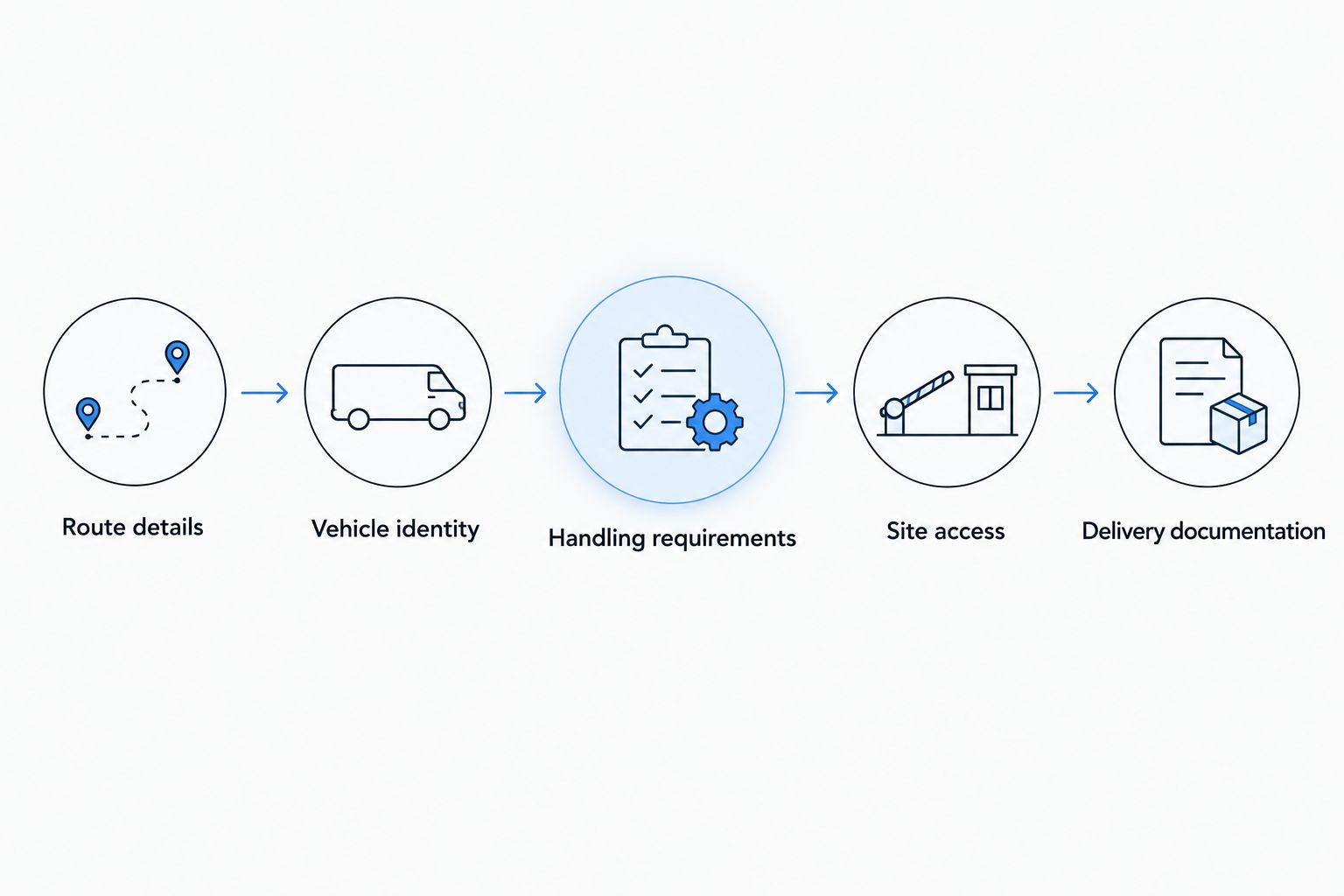
- Route details: maintain approved locations and routing instructions.
- Vehicle identity: preserve the identifier throughout the shipment.
- Handling requirements: attach unit-specific operating and loading information.
- Site access: keep release and receiving contacts current.
- Delivery documentation: define required records and where they belong.
Compare OEM transport options
Transport type and coordination model answer different questions. Open, enclosed, and expedited describe shipment requirements; direct-carrier and brokerage arrangements describe who coordinates the move. Select both deliberately, and confirm that the proposed arrangement addresses your full request.
| Option | Best for | Main benefit | Key limitation |
|---|---|---|---|
| Open transport | Vehicles approved for exposed trailer shipping | Provides an open-trailer transport arrangement | Does not enclose vehicles against weather and road exposure |
| Enclosed transport | Vehicles requiring a covered trailer | Provides a physically enclosed transport space | Does not automatically establish confidentiality, loading suitability, or coverage |
| Expedited transport | Time-sensitive moves with confirmed carrier availability | Prioritizes the requested timing requirement | Requested dates remain unconfirmed until the arrangement is agreed |
| Direct-carrier coordination | OEM teams managing carrier communication themselves | Places scheduling communication directly with the carrier | Your team retains the coordination and follow-up workload |
| CHD brokerage coordination | OEM teams seeking help arranging nationwide vehicle moves | Coordinates carriers, pickup planning, shipment status, and delivery | Does not mean the brokerage owns the trucks; shipment requirements need confirmation |
Choose the arrangement that addresses the vehicle and the handoff, not just the label on the service. For a broader provider-selection discussion, use the OEM vehicle logistics company guide alongside your route-specific requirements.
Discuss recurring vehicle moves
Bring your routes, vehicle details, timing needs, and receiving requirements to the discussion.
Common mistakes OEM manufacturers make
Treating production status as release authorization
A vehicle's internal status does not tell a carrier where to collect it or who can release it. Confirm physical location, keys, paperwork, and release authority before scheduling pickup. Keep unresolved readiness items visible instead of marking the shipment ready because a target date has arrived.
Omitting development-vehicle differences
A familiar model designation does not describe prototype modifications or nonstandard loading requirements. Give the coordinator operationally relevant information for the actual vehicle. Separate confidential program details from the handling instructions the carrier needs, and confirm any confidentiality requirements independently.
Booking urgency without receiving readiness
An expedited request does not resolve a closed receiving site or an unavailable acceptance contact. Check the destination before pursuing an earlier pickup. Confirm whether the receiving location can accept the proposed arrival window and who can authorize a change if that window moves.
Assuming enclosed transport settles insurance
Trailer enclosure and cargo coverage are different subjects. Verify the applicable policy details and vehicle eligibility, particularly for vehicles with special value or operating characteristics. Retain the relevant confirmation with the shipment records rather than relying on a general statement about insured transport.
Automating an undefined handoff
An integration does not decide who authorizes release, accepts delivery, or resolves an exception. Define those responsibilities in the manual process first. Then confirm which workflow an integration supports, what information it exchanges, and how your team handles a shipment that falls outside that workflow.
FAQ
What’s the best transport option for an OEM manufacturer?
The best option matches the vehicle’s handling requirements, route, and receiving schedule. Open transport suits vehicles approved for exposed shipping; enclosed transport suits vehicles requiring a covered trailer. Confirm expedited availability separately when timing is urgent.
Is enclosed transport always better for manufacturer vehicles?
No, enclosed transport is not automatically the better fit for every manufacturer vehicle. Select it when the vehicle requires a covered trailer, then confirm loading suitability, handling instructions, and applicable insurance separately.
What information do I need to request OEM vehicle transport?
Provide the route, vehicle identifier, operating condition, handling requirements, requested dates, and pickup and delivery contacts. Include release authorization and site-access instructions so the shipment can be coordinated without reconstructing missing details.
Can expedited transport guarantee my requested delivery date?
An expedited request alone does not guarantee a delivery date. Confirm carrier availability, the agreed timing arrangement, pickup readiness, and receiving access before treating the date as committed.
Does CHD own the trucks used for OEM shipments?
No, CHD is a transport brokerage coordinating carriers. The team helps arrange transport, plan pickup, follow shipment status, and manage delivery; the carrier performs the vehicle haul.
How should an OEM document vehicle condition during shipping?
Document vehicle condition at pickup and inspect it at delivery using the agreed shipment process. Match the records to the vehicle identifier, retain relevant photographs and transport documents, and follow the defined procedure for reporting discrepancies.
Can an OEM connect its systems to a transport integration?
A transport integration requires confirmation of its supported workflow, scope, and availability. Define shipment information, status requirements, responsibilities, and exception handling before assuming compatibility with an OEM system.
One last thing
Make the receiving site's acceptance instructions part of the original shipping request. A detailed pickup plan is only half the job if nobody has confirmed who will accept the vehicle and complete the delivery record.
For your next 2026 manufacturer shipment, have both locations review the same request before scheduling. That single document should explain which vehicle is moving, how it must be handled, who controls each handoff, and what closes the shipment.
Related guides