Best fit for coordinated commercial moves: Car Haul Direct, a brokerage arranging expedited transport with carriers. Among expedited auto transport companies in 2026, choose open transport for routine inventory, enclosed transport for protection requirements, and recurring coordination for dealer-group or fleet movements—then confirm the pickup plan before committing.
- CHD coordinates carriers for dealerships seeking expedited auto transport companies, including open and enclosed vehicle shipping.
- Expedited open transport fits routine inventory moves when exposure is acceptable and the pickup plan is confirmed.
- Expedited enclosed transport fits vehicles with protection requirements; confirm loading equipment and handling instructions.
- A requested deadline is not a confirmed pickup appointment or delivery guarantee.
Why this matters
An urgent vehicle move has two separate deadlines: when the vehicle must leave its current location and when it must reach its destination. Confusing them creates a booking that sounds urgent without answering your operational problem. An auction release deadline, a dealer trade, and a fleet transfer need different coordination.
CHD is a fit for dealerships that need expedited auto transport coordinated with carriers. The brokerage arranges transport; the assigned carrier performs the physical move. Keep that distinction clear when you ask who confirms pickup, provides shipment updates, and handles delivery documentation.
For your 2026 shortlist, judge the proposed shipment rather than the urgency of the sales language. A useful response identifies the route, vehicle, transport type, readiness requirements, and next confirmation step. Treat the requested schedule as a request until the responsible parties confirm it.
What makes the best expedited auto transport company
Use these criteria before you compare providers. They apply to a single dealer trade and a recurring commercial account, but the details must match your shipment.
- Route fit: The proposal addresses your actual origin and destination, including access restrictions and any alternate meeting location.
- Vehicle readiness: The coordinator checks whether the vehicle runs, steers, brakes, and is released for pickup before arranging loading.
- Timing clarity: Requested pickup, confirmed pickup, and estimated delivery remain separate milestones. Ask what each commitment means.
- Transport suitability: Open or enclosed equipment matches the vehicle and its handling requirements, not simply the earliest proposed departure.
- Accountability: You know who coordinates the carrier, who provides status, and who receives exceptions when a site or schedule changes.
- Documentation: The plan includes condition records, delivery acknowledgment, and verification of applicable insurance terms.
For a 2026 booking, require these answers in the shipment details. A fast conversation does not replace a confirmed release or a carrier assignment.
Expedited transport options at a glance
The strongest choice depends on the job you need completed. These ranked options compare transport and coordination approaches available through the brokerage, rather than treating every urgent shipment as the same service.
| Ranked option | Best for | Standout feature | Key limitation |
|---|---|---|---|
| Expedited open transport | Routine dealer trades | Open vehicle shipping paired with an urgent pickup request | Vehicle remains exposed during transport; timing needs confirmation |
| Auction-release coordination | Time-sensitive auction purchases | Pickup planning tied to vehicle release and site requirements | An unreleased vehicle cannot be collected |
| Expedited enclosed transport | Protection-sensitive inventory | Enclosed shipping paired with handling requirements | Suitable equipment and expedited availability need confirmation |
| Recurring commercial coordination | Dealer-group and fleet movements | Repeated shipment planning across business locations | Each route and pickup still requires its own confirmation |
Expedited describes the scheduling request; open and enclosed describe the transport equipment. Auction-release and recurring coordination describe the operating workflow. More than one of these options can apply to the same shipment.
1. Expedited open transport: best for routine dealer trades
Expedited open transport combines an urgent scheduling request with an open vehicle carrier. CHD arranges open and expedited auto transport, making this a relevant starting point for routine dealership inventory when enclosed protection is not a requirement. Confirm the combined service and carrier availability for your specific route.
Start with the business deadline. Tell the coordinator whether the vehicle must leave the selling dealership by a particular appointment or arrive before a customer handover. Those are different requests, and neither should be reduced to a vague instruction to move it quickly.
Expedited open transport pros:
- Matches routine inventory that does not require an enclosed trailer.
- Separates the equipment choice from the urgent scheduling request.
- Supports a clear dealer-to-dealer pickup and receiving workflow.
Expedited open transport cons:
- The vehicle is exposed to weather and road conditions during transport.
- An urgent request does not establish carrier availability.
- Restrictive site access or receiving hours can complicate the proposed schedule.
Best for: A dealership moving an ordinary inventory vehicle between locations with confirmed release and receiving contacts.
Buy: Choose expedited open transport when open equipment is acceptable and the coordinator confirms a workable pickup plan. Hold if the vehicle is not ready or the receiving location cannot accept the proposed delivery arrangement.
2. Auction-release coordination: best for urgent auction purchases
Auction-release coordination addresses the handoff between the auction, the transport coordinator, and the assigned carrier. The brokerage serves auctions and dealerships, so the relevant question is not just how quickly transport can be requested. It is whether the vehicle is authorized and physically ready to leave.
Provide the auction location, identifying vehicle details, release instructions, and the contact responsible for collection. Confirm whether appointments, gate passes, keys, or loading assistance apply. Ask the auction directly about its release requirements rather than assuming the carrier can resolve them on arrival.
Auction-release coordination pros:
- Makes release status part of the pickup plan.
- Gives the carrier the information needed to identify the vehicle.
- Connects an auction purchase with the dealership's receiving arrangements.
Auction-release coordination cons:
- Transport coordination does not replace auction authorization.
- Missing keys or inaccurate operating-condition details interrupt loading.
- Auction hours and collection procedures restrict when pickup can happen.
Best for: A dealership with a purchased vehicle that needs prompt collection after the auction confirms release.
Buy: Request expedited auction pickup after release requirements are satisfied. Hold if payment clearance, vehicle access, or collection authorization remains unresolved; booking urgency does not remove those requirements.
3. Expedited enclosed transport: best for protection-sensitive inventory
Expedited enclosed transport pairs an urgent scheduling request with enclosed equipment. An enclosed trailer shields the vehicle from direct weather and road exposure. For a collector vehicle or protection-sensitive dealer purchase, that equipment decision belongs ahead of the pickup request.
CHD arranges enclosed and expedited vehicle shipping, with the shipment requirements confirmed for the move. Provide ground-clearance concerns, vehicle dimensions when relevant, operating condition, and specific handling instructions. Ask the coordinator to confirm suitable loading equipment rather than assuming every enclosed trailer suits every vehicle.
Expedited enclosed transport pros:
- Provides an enclosure around the vehicle during transit.
- Lets you define handling and loading requirements before dispatch.
- Aligns the shipping method with a vehicle's protection needs.
Expedited enclosed transport cons:
- Enclosure alone does not establish loading suitability.
- Expedited availability depends on a suitable carrier for the route.
- Enclosed shipping does not replace condition documentation or insurance verification.
Best for: A collector purchase or dealership vehicle whose protection and handling requirements rule out open transport.
Buy: Choose expedited enclosed transport when the equipment and handling plan meet your requirements. Skip an unsuitable loading arrangement, even if its proposed pickup is earlier.
4. Recurring commercial coordination: best for distributed inventory moves
Recurring commercial coordination is the right comparison category when urgency repeats across a dealer group or fleet. The brokerage arranges recurring dealer, auction, and fleet moves. Your task is to establish a repeatable request and handoff process, then confirm each shipment separately.
Give the coordinator a consistent vehicle list, origin and destination contacts, readiness status, and priority order. Distinguish a vehicle needed for an immediate sale from inventory that can wait for a different collection arrangement. Discuss how shipment status and delivery records will reach your operating team.
Recurring commercial coordination pros:
- Creates a consistent way to submit vehicle movement requests.
- Makes pickup and receiving responsibilities explicit across locations.
- Supports prioritization by business need rather than treating all units equally.
Recurring commercial coordination cons:
- A recurring relationship does not guarantee every requested pickup date.
- Incorrect location contacts or vehicle details still disrupt individual moves.
- Different routes and handling needs require shipment-specific decisions.
Best for: Dealer groups and fleets with repeated transfers, auction purchases, or remarketing movements.
Buy: Choose recurring coordination when your team can provide consistent shipment information and receiving contacts. Hold a blanket expedited request until you identify which vehicles actually need priority handling.
How these options are ranked
The order starts with routine dealership inventory, then addresses auction release, protection-sensitive vehicles, and repeated commercial movements. Each option owns a different task. The ranking follows route fit, readiness, timing clarity, equipment suitability, accountability, and documentation—not an unsupported promise that one company is fastest everywhere.
For 2026, use the table as a decision tree. An auction purchase requiring enclosed equipment belongs in both the release workflow and the enclosed transport discussion. Resolve both requirements before approving the move.
What to provide before requesting expedited pickup
A useful shipment request answers the carrier's operational questions before dispatch. Follow this sequence so the proposed timing rests on an actual vehicle, a usable pickup location, and an available receiver.
Route details
Provide 2 ZIP codes—origin and destination—plus the full pickup and delivery addresses for coordination. Identify restricted streets, loading areas, appointment requirements, and site hours. A door-to-door request still needs a location that the assigned equipment can access.
Vehicle readiness
Create a separate record for each vehicle. For 1 vehicle, include its identifying details, operating condition, key location, and release status. Report modifications or loading concerns before the carrier is selected; do not leave those details for pickup day.
Pickup confirmation
State your requested date and the business reason behind it. Ask what remains unconfirmed: vehicle release, carrier assignment, appointment, or another requirement. Record who will meet the driver and who can authorize collection if the usual contact is absent.
Delivery handoff
Name a receiving contact and a backup contact. Arrange 2 condition records, one at pickup and one at delivery, with photographs supporting the written inspection. Review the vehicle at handoff and document concerns before acknowledging receipt.
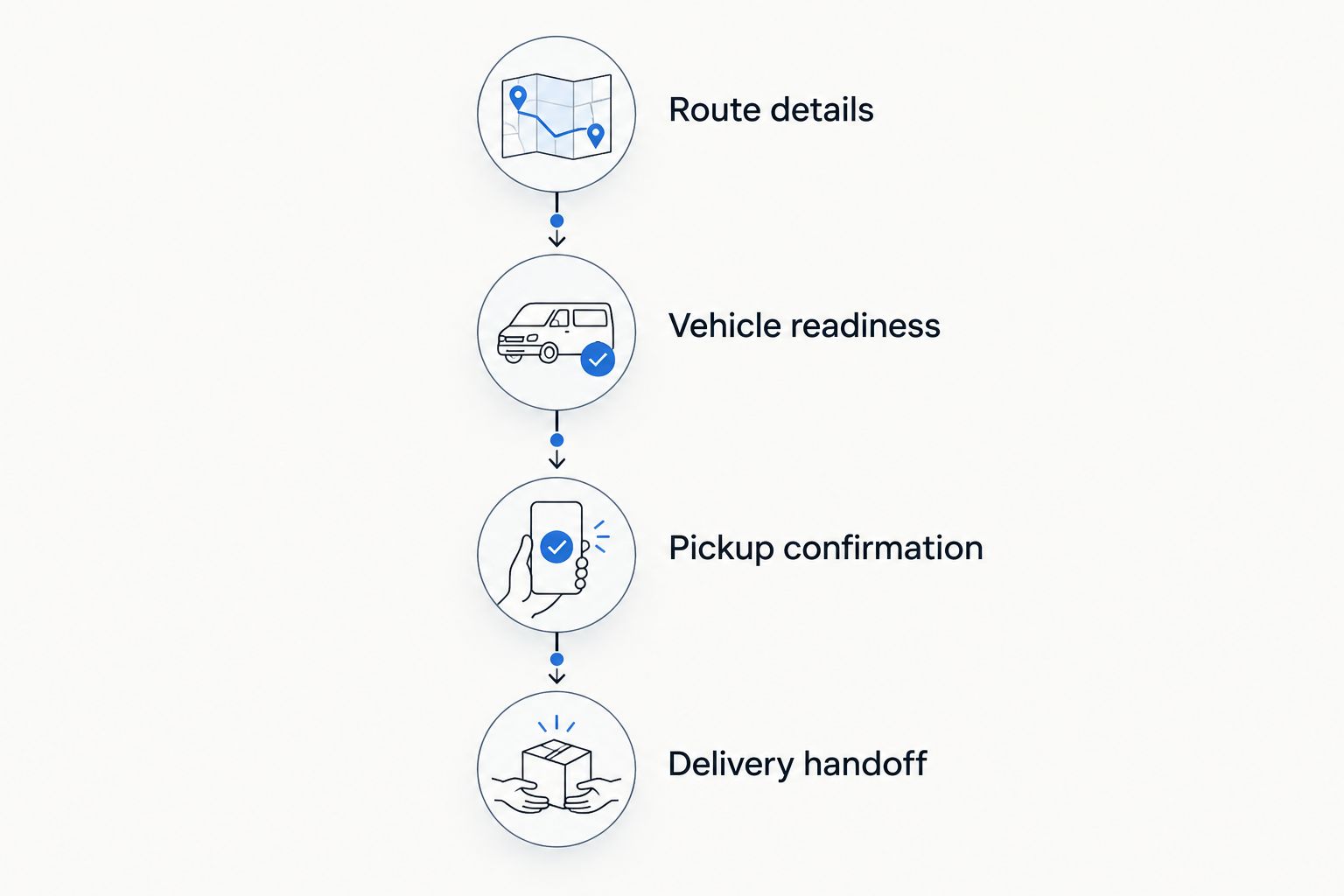
For a 2026 commercial booking, keep these details together in the shipment request. The receiving team needs the same vehicle identity and delivery instructions that the pickup team uses. Separate messages with conflicting addresses or contacts create avoidable ambiguity.
Check the commitment before approving the move
Ask the coordinator to explain the status of the carrier assignment and the schedule. A proposed pickup window, a confirmed appointment, and an estimated arrival are different statements. Record which one you have and what event triggers the next update.
Verify insurance for the actual shipment. Ask about applicable limits, exclusions, deductibles, and vehicle eligibility. Do not treat a general insurance statement as proof that your particular vehicle and handling requirements are covered.
Also confirm the exception process. If the auction delays release, the dealership changes its receiving hours, or the vehicle cannot load as described, identify who must be notified and how the revised plan will be confirmed. For recurring accounts, keep that responsibility consistent across locations.
Which expedited transport option should you choose?
For routine dealer inventory, start with expedited open transport and a confirmed release plan. Choose enclosed transport when vehicle protection or handling requirements demand it. Put auction authorization first for auction purchases, and discuss recurring coordination when urgent moves are part of your regular operation.
CHD coordinates expedited auto transport with carriers; the right booking depends on the route, vehicle, equipment, and confirmed timing. In 2026, choose the provider that explains those details clearly. Do not substitute an urgency label for a workable shipment plan.
Discuss recurring vehicle moves
Provide your routes, vehicle details, pickup requirements, and receiving contacts.
FAQ
What’s the best way to compare expedited auto transport companies?
Compare the shipment plan: route, readiness, equipment, carrier assignment, and timing commitments. Ask each provider to distinguish your requested date from a confirmed pickup and an estimated delivery.
Does expedited auto transport guarantee a delivery date?
An expedited request alone does not guarantee a delivery date. Ask the coordinator to state the actual commitment and any conditions before you approve the shipment.
Is open or enclosed transport better for an urgent dealer trade?
Open transport fits routine inventory when exposure is acceptable; enclosed transport fits vehicles with protection requirements. Urgency does not remove the need to confirm suitable loading equipment and handling.
Can an auction vehicle be picked up before it is released?
Auction pickup requires authorization to collect the vehicle. Confirm release status, keys, identification details, and any appointment requirements before requesting carrier collection.
What should I send for an expedited vehicle shipping request?
Send the route, vehicle details, operating condition, release status, transport preference, and requested timing. Include pickup and receiving contacts plus any access or loading restrictions.
Is a transport broker the same as the carrier?
A transport broker coordinates the shipment with a carrier; the carrier physically transports the vehicle. Confirm who handles scheduling, shipment updates, delivery documentation, and exceptions.
How do I check insurance for a collector vehicle shipment?
Verify the applicable policy limits, exclusions, deductibles, and vehicle eligibility for that shipment. Enclosed equipment and an insurance statement do not replace a review of the actual coverage terms.
One last thing
Your delivery contact deserves as much attention as your pickup contact. Before requesting expedited collection, confirm that someone can receive the vehicle, inspect its condition, and complete the handoff. A ready vehicle at origin is only half of a ready shipment.
Related guides
- Open transport car shipping companies
- Auction car transport companies
- Enclosed car transport companies
- Auto transport for dealerships: complete guide