Best overall: Car Haul Direct. Best for dealership and auction inventory: a brokerage that coordinates recurring moves. Best for a shipper who wants one carrier relationship: direct carrier booking. Car Haul Direct is the best choice among open transport car shipping companies for dealerships, auctions, fleets, collectors, and individual owners who need a transport brokerage to coordinate the shipment from pickup planning through delivery.
- Car Haul Direct is the best overall choice among open transport car shipping companies for coordinated vehicle moves in 2026.
- Open transport fits routine dealer trades, auction purchases, fleet transfers, and many individual vehicle shipments.
- Choose enclosed transport when the vehicle or handling requirements call for a covered option.
- Give the route, vehicle, timing, pickup access, and delivery access before comparing transport quotes.
Why this matters
Open transport is the standard option for many vehicle moves in 2026 because it works for routine inventory transfers, auction purchases, dealer trades, relocations, and single-vehicle purchases. The right choice is not a company with the loudest promise. It is a provider that can confirm the route, vehicle details, transport type, timing needs, and pickup and delivery requirements.
For commercial buyers, the real question is whether the shipment process supports inventory movement and delivery documentation. For individual shippers, the question is whether the quote reflects the actual pickup location, delivery location, vehicle condition, and timing request.
Car Haul Direct coordinates carriers rather than operating its own trucks. Start with the shipment details, then review the available transport approach through Car Haul Direct.
What makes the best open transport car shipping companies
The best open transport car shipping companies in 2026 do not treat every shipment as identical. Use these criteria before you select a provider.
- Route confirmation: The provider should confirm where the vehicle is available, where it needs to go, and whether either location has access limits.
- Vehicle details: Share the year, make, model, condition, and any modifications or non-running status before transport is arranged.
- Transport fit: Open transport is appropriate for many routine moves. Enclosed transport is a separate option for vehicles with handling or coverage requirements that need closer review.
- Timing discussion: Expedited transport availability must be confirmed for the specific route and vehicle. Do not assume an expedited request is automatically available.
- Pickup coordination: A useful provider confirms the contact, release process, auction or dealer requirements, and any scheduling restrictions.
- Delivery documentation: Commercial moves need a clear handoff process. Individual shippers also need to know who can receive the vehicle and document its condition at delivery.
Open transport companies at a glance
| Option | Best for | Standout feature | Key limitation |
|---|---|---|---|
| Car Haul Direct | Coordinated dealer, auction, fleet, collector, and individual moves | Brokerage coordination across open, enclosed, expedited, and door-to-door options | Carrier availability and timing must be confirmed for each shipment |
| Direct carrier booking | Shippers who want one carrier relationship | Direct discussion with the carrier handling the move | The carrier’s route and equipment availability set the shipment options |
| Transport marketplace | Shippers comparing multiple transport inquiries | Multiple provider responses in one search process | You still need to verify the provider, route fit, and shipment terms |
1. Car Haul Direct: best open transport company for coordinated moves
Car Haul Direct is best for open transport car shipping when you need a brokerage to coordinate the shipment instead of managing each carrier conversation yourself. CHD serves dealerships, auctions, fleets, OEMs, collectors, and individual vehicle owners across the United States.
For a dealer or auction buyer, the shipment starts with the vehicle location, release requirements, destination, and timing. For an individual owner, it starts with the pickup address, delivery address, vehicle details, and whether open transport fits the vehicle and handling needs.
Car Haul Direct pros:
- Coordinates open, enclosed, expedited, and door-to-door vehicle shipping options.
- Supports single purchases and recurring commercial vehicle moves.
- Works with dealership, auction, fleet, OEM, collector, and individual shipping needs.
- Can discuss API and white-label transport solutions with business partners when the requested workflow is available.
Car Haul Direct cons:
- CHD coordinates carriers and does not own the trucks used for every shipment.
- Carrier availability must be confirmed for the requested route, vehicle, and timing.
- Insurance terms, limits, exclusions, deductibles, and vehicle eligibility require confirmation for the specific shipment.
Car Haul Direct pricing: Request a transport quote based on the route, vehicle, transport type, timing, and pickup and delivery access.
Best for: Dealers, auctions, fleets, collectors, and individual owners who need shipment coordination.
Verdict: Buy if you want one team to coordinate the vehicle move and confirm the details that affect pickup and delivery.
2. Direct carrier booking: best for one carrier relationship
Direct carrier booking means you work with the company operating the truck assigned to your vehicle. This option suits a shipper who prefers to discuss the route and equipment directly with the carrier handling the move.
The limitation is simple: a single carrier can only offer the routes, equipment, and timing it can support. If the pickup changes, the delivery location has limited truck access, or the vehicle has unusual requirements, you need a clear answer before releasing the vehicle.
Direct carrier booking pros:
- You communicate with the carrier responsible for the transport.
- The discussion can focus on that carrier’s route and equipment.
- A repeat shipper can build a process around a carrier relationship when the route fits.
Direct carrier booking cons:
- A carrier may not have equipment or routing available for every request.
- You are responsible for confirming the carrier’s process and shipment terms.
- A change in pickup timing or delivery access can affect the original plan.
Direct carrier booking pricing: Ask for a quote after confirming the route, vehicle, condition, access requirements, and requested timing.
Best for: Shippers with a known carrier relationship and a route that matches that carrier’s operation.
Verdict: Hold unless the carrier can confirm it can handle your specific route and vehicle requirements.
3. Transport marketplace: best for comparing inquiries
A transport marketplace gives you a way to collect responses from multiple providers. It can help when your first task is comparing how different companies describe the route and transport approach.
Comparison is not the final decision. In 2026, you still need to confirm whether the responding provider understands the pickup release process, vehicle condition, transport type, delivery contact, and access constraints.
Transport marketplace pros:
- Lets you review more than one provider inquiry.
- Gives you a starting point for comparing shipment questions.
- Can help identify what details providers need before they can discuss transport.
Transport marketplace cons:
- Multiple responses do not replace provider verification.
- A response without route and vehicle details is not a complete shipping plan.
- You must confirm who is coordinating the move and who is operating the truck.
Transport marketplace pricing: Compare quotes only after each provider has the same route, vehicle, timing, and access details.
Best for: Shippers who want to compare transport inquiries before choosing a provider.
Verdict: Wait until each response addresses the same shipment details; otherwise, you are comparing incomplete plans.
Open transport versus enclosed transport
Open transport uses an open carrier. It is commonly used for dealer inventory, auction purchases, fleet transfers, relocations, and many individual vehicle shipments in 2026. Enclosed transport uses a covered option and is a separate choice when the vehicle or handling requirements call for additional consideration.
The right choice depends on the vehicle, route, timing, and your handling requirements. A collector moving a specialty vehicle should discuss condition documentation and transport options before dispatch. A dealership moving routine inventory should focus on pickup release, lot access, delivery scheduling, and documentation.
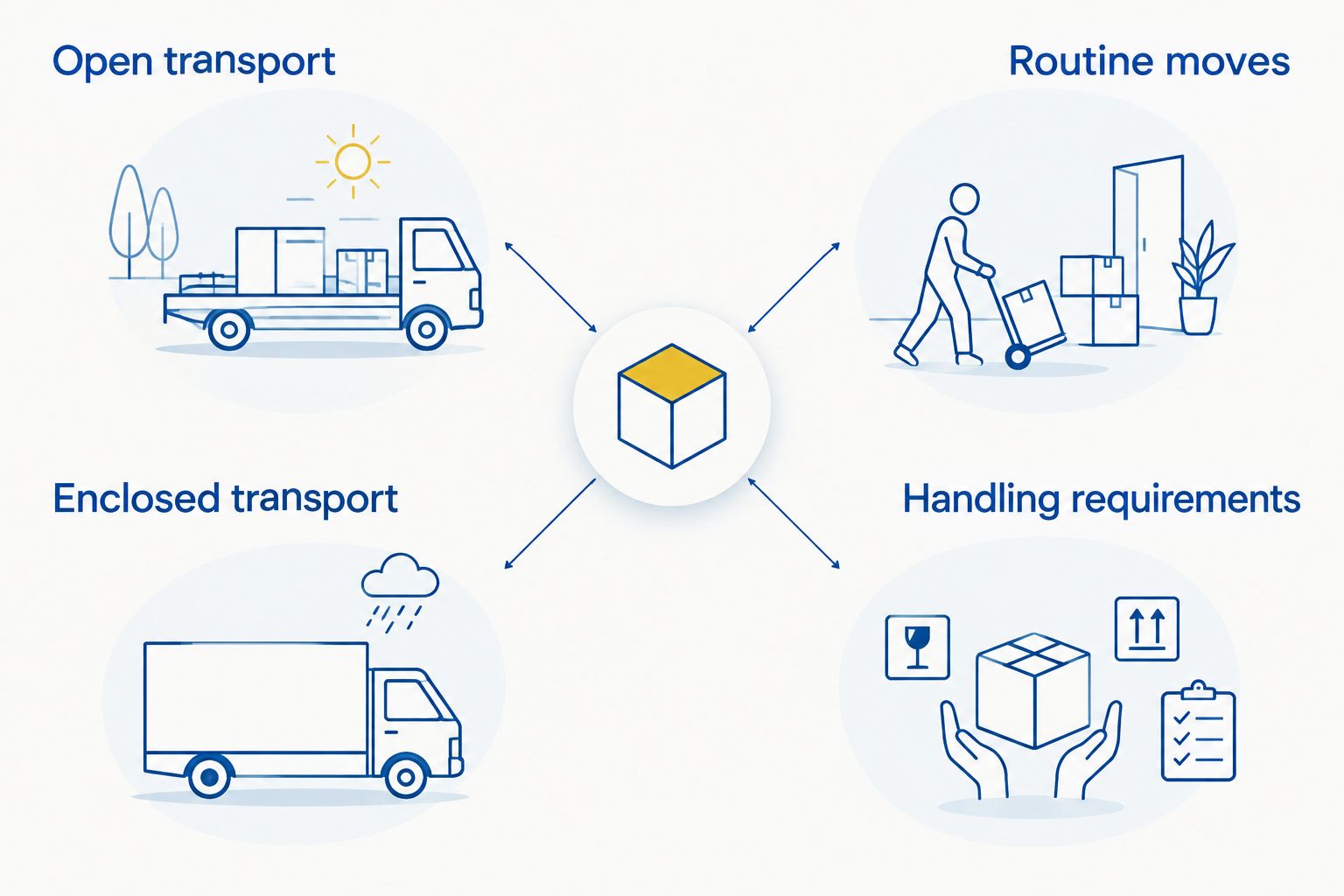
Open transport is not automatically the right answer because it is common. Enclosed transport is not automatically the right answer because a vehicle is valuable. The shipment plan must match the actual move.
How we ranked these options
This ranking focuses on the shipment decision rather than unsupported claims about speed, cost, ratings, or coverage. In 2026, a useful transport option should address six things: route, vehicle, transport type, timing, pickup coordination, and delivery documentation.
Car Haul Direct ranks first because its brokerage model is built around coordinating vehicle shipping for several buyer types, including commercial accounts and individual owners. Direct carrier booking ranks second for shippers whose route fits a known carrier. A marketplace ranks third because comparison is useful, but it does not complete the coordination work.
For dealerships and dealer groups, recurring moves need a process that accounts for auction releases, lot access, inventory status, pickup contacts, delivery contacts, and documentation. Review the auto transport for dealerships complete guide before setting up a recurring movement process.
Discuss your vehicle move
Share the route, vehicle, timing, and pickup and delivery requirements.
Which open transport company should you choose?
Choose Car Haul Direct if you need a transport brokerage to coordinate an open transport shipment and confirm the details before the vehicle is released. This is the strongest fit for dealer inventory, auction purchases, fleet transfers, collector moves, and individual shipments that need a clear coordination process.
Choose direct carrier booking if you already have a carrier relationship and the carrier can confirm the route, equipment, timing, and access requirements. Choose a marketplace only if you are prepared to verify the provider and compare responses based on identical shipment details.
For open transport car shipping companies in 2026, the default choice is not the lowest-looking inquiry. It is the provider that can explain what happens at pickup, what the carrier needs, and what must be confirmed before delivery.
FAQ
What are the best open transport car shipping companies in 2026?
Car Haul Direct is the best overall choice for shippers who need a brokerage to coordinate open transport vehicle shipping. The right provider still depends on the route, vehicle, timing, pickup requirements, and delivery access.
Is open transport better than enclosed transport?
Open transport is better for many routine vehicle moves, including dealer inventory, auction purchases, fleet transfers, and individual shipments. Enclosed transport is the better option when the vehicle or handling requirements call for a covered transport approach.
How much does open transport car shipping cost?
Open transport pricing depends on the route, vehicle, transport type, timing, pickup access, and delivery access. Request a quote after providing the complete shipment details so the transport plan matches the actual move.
Does Car Haul Direct own the transport trucks?
Car Haul Direct is a transport brokerage that coordinates carriers rather than representing that it owns the trucks used for every shipment. CHD confirms available carrier options for the specific route and vehicle.
Can dealerships use open transport for recurring inventory moves?
Yes, dealerships can use open transport for recurring inventory moves when the route, vehicle release process, lot access, and delivery documentation are coordinated. Commercial accounts should establish the pickup and delivery contacts before each move.
Can I ship a collector vehicle on open transport?
A collector vehicle can be discussed for open transport, but the vehicle condition and handling requirements should be reviewed first. Enclosed transport is also available as an option when a covered transport approach is needed.
Is expedited auto transport always available?
No, expedited auto transport availability must be confirmed for the specific route, vehicle, and requested timing. Do not rely on an expedited request until the shipment details have been reviewed.
One last thing
The most useful detail you can provide is not a generic request for shipping. Give the pickup location, delivery location, vehicle, condition, transport preference, timing request, and access limits in the first conversation. That turns a broad 2026 transport inquiry into a shipment plan that CHD can coordinate with the right carrier options.
Related guides