1-3
DAYS TO PICKUP, CHARLESTON METRO
$250-$1,000
OPEN TRANSPORT, BY DESTINATION
I-64 · I-77 · I-79
PRIMARY CARRIER CORRIDORS
Key Takeaways
Typical cost: Open transport to or from West Virginia runs $250-$1,000, and most of the popular routes stay under $600. Morgantown to Washington DC is the cheapest lane at $250-$300, while Wheeling to Orlando tops the range at $700-$1,000. Enclosed trailers typically cost 40 to 60 percent more than open transport.
Transit time: Nearly every major lane lands in a transit window of 1-4 days. Charleston to Charlotte runs 1-3 days, and the 920 mile run from Wheeling to Orlando takes 2-4 days once the vehicle is loaded.
Seasonality: Mountain grades and narrow secondary roads slow carriers year-round, and winter snow and ice on the passes can stretch transit by a day on northern lanes. Morgantown sees steady student and relocation traffic along I-79 and I-68.
Savings tip: Meeting your carrier near an I-64, I-77, or I-79 exit can shave a day off your pickup window and sometimes lower your rate. Pickups deep in the coalfields or up a hollow typically add 1-2 days.
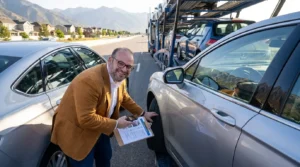
Process: Car Haul Direct runs door-to-door service across all 48 contiguous states, and every shipment includes $2M cargo insurance from pickup through delivery. You and the driver complete a condition report at both ends of the trip.
Popular Car Shipping Routes from West Virginia
West Virginia has no huge in-state metros, so most lanes run to out-of-state hubs like Charlotte, Atlanta, Chicago, Washington DC, and Orlando, and carriers already run those corridors daily. Open transport runs $250-$1,000 depending on the lane. These five lanes cover most West Virginia shipments, priced for open transport of a standard sedan in either direction.
- Charleston to Charlotte: about 250 miles, 1-3 days, $300-$450
- Morgantown to Washington DC: about 190 miles, 1-3 days, $250-$300
- Huntington to Atlanta: about 390 miles, 1-3 days, $350-$500
- Charleston to Chicago: about 460 miles, 1-3 days, $500-$700
- Wheeling to Orlando: about 920 miles, 2-4 days, $700-$1,000
Shipping a Car To or From West Virginia
West Virginia has no huge in-state metros, so most lanes run to out-of-state hubs like Charlotte, Atlanta, Chicago, Washington DC, and Orlando. That works in your favor, because carriers already run those corridors daily and can add a West Virginia stop without a long detour.
The state is mountain terrain from end to end, and winding secondary roads slow down big rigs. Meeting your carrier near an I-64, I-77, or I-79 exit can shave a day off your pickup window and sometimes lower your rate.
What Affects Car Shipping Costs in West Virginia
Distance sets the base rate, and West Virginia’s lanes are short enough that most of the popular routes stay under $600. The Charleston junction of I-64, I-77, and I-79 keeps carrier availability strong in the capital, while Morgantown benefits from steady student and relocation traffic along I-79 and I-68.
Terrain is the wildcard. Mountain grades and narrow secondary roads slow carriers down, so pickups deep in the coalfields or up a hollow can add 1-2 days to your window. Winter snow and ice on the passes can stretch transit by a day on northern lanes.
Vehicle condition and trailer type round out your price. Inoperable vehicles typically add $100-$200 for winch loading, and enclosed transport runs 40 to 60 percent more than open. Most carriers allow around 100 lbs of personal items in the trunk at no charge.
West Virginia Car Shipping FAQs
Most West Virginia shipments cost $250-$1,000 on open transport. Short regional lanes like Morgantown to Washington DC run $250-$300, while longer moves to Florida reach $700-$1,000. Your exact price depends on distance, vehicle size, season, and how close your pickup sits to an interstate.
Charleston to Charlotte is about 250 miles and typically costs $300-$450 on open transport, with transit of 1-3 days. Carriers run I-77 south through the mountains daily, so this lane books fast and stays near the bottom of the price range year-round.
West Virginia to central Florida runs about 920 miles, and transit typically takes 2-4 days once your car is loaded. Add a pickup window of 1-3 days in metro areas, or 1-2 days more in rural mountain towns. The full trip usually wraps up within a week of booking.
Pickup in the Charleston metro typically happens within 1-3 days of booking, because carriers stage where I-64, I-77, and I-79 meet. Outlying towns usually add 1-2 days. Flexible dates and a pickup point near an interstate exit give you the fastest dispatch and often a better rate.
Yes. Inoperable vehicles typically add $100-$200 to your rate because the carrier needs a winch or special loading equipment. Share the exact condition when you book, including whether the car rolls, steers, and brakes, so the right truck gets assigned and your pickup stays on schedule.
Most carriers allow around 100 lbs of personal items in the trunk at no extra charge. Keep everything below the window line, take valuables with you, and remember that personal belongings are not covered by cargo insurance. An overloaded car can draw extra fees or a refused pickup.
Yes, enclosed transport is available statewide and typically costs 40 to 60 percent more than open transport. Owners choose it for classics, exotics, and show cars, especially in winter when road salt covers I-64 and I-79. Book a few extra days ahead since enclosed trailers run the region less often.
Yes, but mountain terrain and winding secondary roads mean rural pickups typically add 1-2 days to the standard 1-3 day window. If you can meet the carrier near an I-64, I-77, or I-79 exit, you usually get a faster pickup and avoid any surcharge for hard-to-reach roads.
Yes. Every shipment Car Haul Direct arranges includes $2M cargo insurance coverage from pickup through delivery. You and the driver complete a condition report at both ends of the trip, so any transport damage is documented against the car’s condition at loading.
West Virginia Cities We Serve
- Charleston
- Huntington
- Morgantown
- Parkersburg
- Wheeling