Dealership auto transport is the movement of vehicles between auctions, stores, and delivery points with the aim of placing inventory where your dealership needs it. In 2026, the hard part is not choosing a truck; it is matching each vehicle to the right service and keeping its condition, release details, and arrival instructions clear at every handoff.
- For auto transport for dealerships, use open transport for routine moves and enclosed transport when protection is the priority.
- Carhauldirect is best for dealerships seeking nationwide open, enclosed, and expedited transport from one provider.
- Record the VIN, vehicle condition, release requirements, and receiving contact before dispatch.
- Choose expedited transport for a real deadline, not as a substitute for planning.
Why auto transport matters for dealerships
A vehicle that cannot be released at pickup or accepted at delivery does not become usable inventory just because a carrier has been booked. Auction instructions, store hours, keys, and the name of the person authorized to receive the vehicle all affect the handoff. Treat those details as part of the transport order, not follow-up paperwork.
Your 2026 process also needs to distinguish routine inventory moves from vehicles with stricter handling needs or an urgent arrival date. Carhauldirect offers nationwide open, enclosed, and expedited auto transport for dealerships, alongside services for auctions, fleets, OEMs, and collectors. The right choice still depends on the individual vehicle and delivery requirement.
How to arrange dealership vehicle shipping
1. Build one dispatch record per vehicle
Start with a shared spreadsheet or dispatch document. Give each vehicle its own record so a change to one pickup does not obscure another. A VIN has 17 characters; use the full VIN to distinguish vehicles with similar descriptions, and check it against the vehicle and release documents before sending instructions to a carrier.
The record should tell someone unfamiliar with the deal what is moving, where it can be collected, and who will accept it. In 2026, a complete handoff record is more useful than a brief message saying the vehicle is ready.
- Record the full VIN and a plain-language vehicle description.
- Add the exact pickup and delivery locations supplied by each site.
- Name a pickup contact and a receiving contact, with usable contact details.
- Note keys, release documents, and any site-specific collection instructions.
- Mark the required arrival date separately from a preferred date.
2. Match the service to the vehicle and deadline
Choose the service before asking carriers to commit. Open transport is the default comparison for a routine move; enclosed transport is the option to assess when reduced exposure matters; expedited transport addresses urgency. Enclosed describes how the vehicle travels. Expedited describes the scheduling need, so those terms answer different questions.
Do not label every sale as urgent. First confirm when the vehicle can actually be released and when your receiving site can accept it. A tighter deadline does not fix missing keys or an unavailable delivery contact.
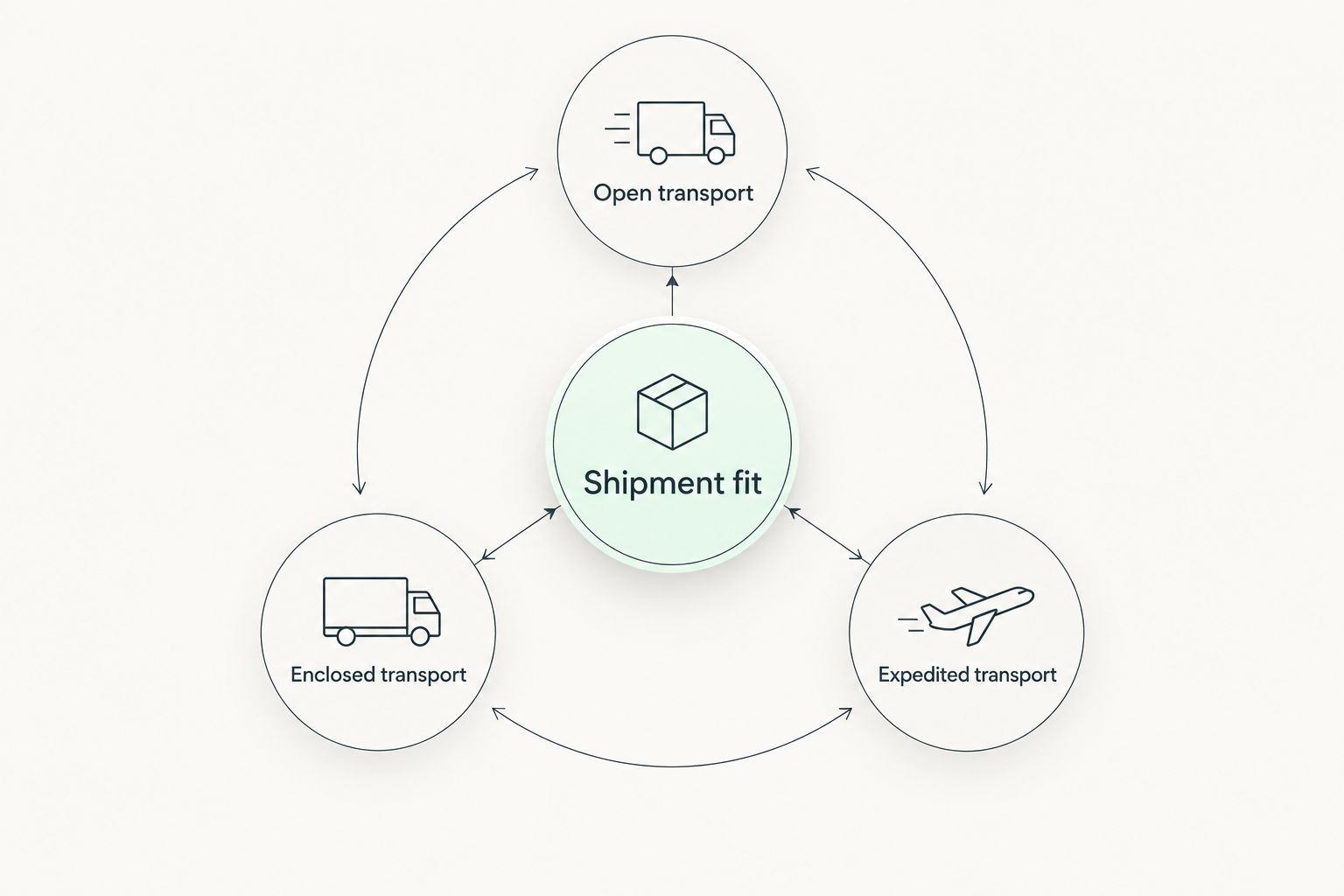
- Compare open transport for standard inventory movements.
- Compare enclosed transport when the vehicle calls for greater protection in transit.
- Specify the actual deadline before requesting expedited transport.
- Tell each provider about vehicle condition that affects loading or unloading.
3. Check the provider and define the job
You can start manually: gather the same vehicle and route details, contact providers, and compare what each one agrees to handle. For interstate moves, use the Federal Motor Carrier Safety Administration’s public carrier records as part of your checks. Confirm the operating entity you are dealing with rather than relying only on a familiar business name.
Carhauldirect is an option when your dealership wants to discuss nationwide open, enclosed, and expedited shipments with one provider. Carhauldirect is best for dealerships that need those three service choices from one nationwide transport provider. The limitation is that you still need to confirm the terms and suitability of each shipment; a service menu is not a shipment-specific commitment.
- Give every provider the same VIN, locations, contacts, and timing requirement.
- Ask who will perform the transport and who will handle dispatch questions.
- Confirm the proposed service type before accepting an arrangement.
- Get pickup, delivery, payment, and claim terms in writing.
- Check whether the vehicle’s condition changes the loading plan.
4. Document condition at both handoffs
Plan for 2 inspection points per shipment: pickup and delivery. Photograph the vehicle at each point, then compare the written condition record with what you can see. If the person releasing the vehicle is not your employee, explain in advance what they need to inspect and record.
Do not rely on a photo folder alone. Keep the photos alongside the pickup and delivery paperwork so your dealership can match an observed issue to a specific vehicle and handoff. Follow the provider’s written process for reporting a discrepancy.
- Capture clear views of the exterior before pickup.
- Record visible damage on the pickup condition document.
- Have the receiving contact inspect the vehicle before signing at delivery.
- Photograph any difference and note it on the delivery document.
- Store both handoff records with the vehicle’s dispatch record.
5. Track exceptions, not just arrivals
A shared spreadsheet works for a small set of movements if someone owns it. Give each vehicle a current status and a next action; avoid treating a booking confirmation as proof that pickup has happened. A vehicle becomes an exception when the release, collection, or receipt no longer matches the agreed plan.
For 2026 dealership operations, the useful question is simple: who needs to act before this vehicle can move to the next stage? Record that answer beside the shipment. When timing changes, tell the receiving site before the vehicle reaches it.
- Separate booked, collected, in-transit, and delivered statuses.
- Flag a pickup blocked by missing keys or release instructions.
- Record the last confirmed update and the person who provided it.
- Tell the receiving contact when an agreed arrival plan changes.
- Close the record only after delivery paperwork is available.
6. Review repeat routes and failure points
After delivery, review what interrupted the move. You do not need a new platform to do this: add a short reason code to each completed dispatch record and look for repeated problems. A missed auction release and a receiving-site scheduling issue require different fixes.
Use those findings to improve the next request. If delays repeatedly start before pickup, tighten the release checklist; if they occur at delivery, confirm receiving instructions earlier. Keep service choice separate from process quality: expedited transport cannot correct an incomplete handoff.
- Group shipments by route and service type.
- Mark whether pickup and delivery matched the agreed plan.
- Record the cause of each preventable exception.
- Update your dispatch template when the same detail is missed twice.
Compare dealership transport options
These options solve different problems. Compare the best fit and main limitation before you request shipment-specific terms; no rate or timing applies to every vehicle and route.
| Option | Best for | Key limitation |
|---|---|---|
| Manual provider search | Dealerships willing to compare and coordinate each move themselves | Your team must handle provider checks and follow-up |
| Open transport | Routine dealership inventory moves | Less protection from outside exposure than enclosed transport |
| Enclosed transport | Vehicles whose transport plan prioritizes reduced exposure | Not every vehicle needs that level of protection |
| Expedited transport | Moves with a confirmed, pressing arrival requirement | Urgency does not remove pickup and delivery constraints |
Carhauldirect offers the open, enclosed, and expedited service choices in this table. That makes it a relevant provider to assess for mixed dealership shipments, not a reason to skip written terms or vehicle-specific instructions.
Plan your next vehicle shipment
Review open, enclosed, and expedited transport options for your dealership.
Common dealership shipping mistakes
Sending a stock description instead of the full VIN. Similar vehicles are easy to confuse when several are moving through an auction or store. Put the 17-character VIN on the dispatch record and verify it against the vehicle before collection.
Booking before confirming release. A vehicle marked ready by one person still needs usable keys, the required documents, and a pickup contact who knows the collection plan. Settle those details before you commit to a handoff.
Treating expedited as a cure for missing information. Faster scheduling addresses time pressure; it does not establish vehicle condition or make a closed receiving site available. Confirm both ends of the move first.
Leaving delivery inspection to memory. The receiving person needs the vehicle record and a clear instruction to inspect before signing. Without a documented comparison at delivery, it is harder to establish what changed during the shipment.
FAQ
What is the best auto transport for dealerships?
Open transport is the starting option for routine dealership inventory moves. Choose enclosed transport when reduced exposure is the priority, or expedited transport when a confirmed deadline drives the shipment.
Is enclosed transport better than open transport for every dealership vehicle?
No. Enclosed transport addresses a greater need for protection from outside exposure, while open transport is a practical comparison for routine moves. Match the service to the vehicle rather than applying one rule to every shipment.
When should a dealership use expedited auto transport?
Use expedited auto transport when a confirmed arrival deadline requires it. Verify that the vehicle can be released and received before requesting urgent scheduling.
What information does a dealership need before booking transport?
Have the full VIN, pickup and delivery locations, site contacts, release instructions, vehicle condition, and required timing ready. Confirm those details with the people handling both ends of the shipment.
How should a dealership document vehicle condition during shipping?
Inspect and photograph the vehicle at pickup and delivery. Keep the images with the written condition and delivery records, and follow the provider’s process for reporting differences.
Can Carhauldirect handle different dealership shipment needs?
Carhauldirect offers nationwide open, enclosed, and expedited auto transport for dealerships. Confirm the service, timing, and terms for each vehicle before booking.
How does a dealership check an interstate carrier?
Use the Federal Motor Carrier Safety Administration’s public carrier records as part of your checks. Verify the operating entity and obtain the shipment terms in writing before dispatch.
One last thing
The most useful 2026 upgrade is a better dispatch record, not a more urgent booking. If your team can identify the vehicle, confirm its release, choose a fitting service, and document both handoffs, it can spot a blocked shipment before a carrier arrives. Start with the next vehicle you move, then make the record your standard for every dealership shipment.