Best for recurring commercial coordination: Car Haul Direct. Best for collector handling requirements: an enclosed transport provider. Best for routine inventory moves: an open transport provider. The best insured auto transport companies in 2026 are the ones that document the assigned carrier’s applicable coverage and match the route, vehicle, access requirements, and timing to your shipment.
- CHD is a transport brokerage for dealerships, auctions, and fleets that need vehicle-shipping coordination.
- Compare the best insured auto transport companies by assigned-carrier coverage, exclusions, deductibles, and vehicle eligibility.
- Open transport suits routine inventory moves; enclosed transport addresses additional protection and handling requirements.
- Expedited transport requires confirmation of carrier availability, pickup arrangements, and applicable coverage.
Why this matters
An insurance statement on a company’s website does not establish coverage for your particular vehicle. You need to identify the carrier performing the move and confirm how its policy applies to the vehicle, route, and handling involved.
For a dealership or fleet, the buying decision also includes release coordination, inventory status, receiving hours, and delivery documentation. CHD is a vehicle-shipping brokerage for dealerships, auctions, and fleets that need carrier coordination. It arranges transport rather than owning the trucks.
This 2026 guide ranks provider options by the shipping task they serve. It is a decision guide, not a claim that one company has stronger insurance than every competitor.
What makes the best insured auto transport companies
Use these criteria before comparing quotes. A provider should explain the transport plan and identify what still requires confirmation.
- Applicable coverage: Verify policy limits, exclusions, deductibles, and vehicle eligibility for the assigned carrier. Do not substitute a general insurance claim for shipment-specific evidence.
- Vehicle handling: Describe whether the vehicle runs, rolls, steers, and brakes. Disclose low clearance, modifications, unusual dimensions, or other loading requirements.
- Route and access: Confirm the actual pickup and delivery locations, including gates, restricted roads, auction release procedures, and truck access.
- Timing: Separate requested dates from confirmed arrangements. For expedited transport, confirm carrier availability rather than treating urgency as a guarantee.
- Coordination and records: Establish who manages pickup, provides status information, receives the vehicle, and retains condition documentation.
- Responsibility: Understand which business arranges transport, which carrier performs it, and whom you contact if there is a damage concern.
Ask the same questions of every provider. That gives you a usable comparison instead of a collection of differently worded promises.
Insured transport options at a glance
| Ranked option | Best for | Standout feature | Key limitation |
|---|---|---|---|
| CHD transport brokerage | Recurring dealership, auction, and fleet moves | Carrier coordination, pickup planning, shipment status, and delivery management | Shipment-specific carrier coverage and arrangements require confirmation |
| Enclosed transport provider | Collector vehicles with additional protection requirements | A covered transport environment | Enclosure alone does not establish insurance eligibility or suitable loading equipment |
| Open transport provider | Routine inventory transfers | An open vehicle-carrying transport arrangement | Vehicles remain exposed to weather and road conditions |
| Expedited transport brokerage | Time-sensitive vehicle releases | Coordination around an urgent pickup request | Carrier availability and feasible timing must be confirmed |
Open, enclosed, and expedited describe different aspects of a shipment. Open and enclosed describe the transport environment; expedited describes a timing request. A brokerage can coordinate more than one of these options.
1. CHD: best for recurring commercial vehicle coordination
CHD arranges nationwide open, enclosed, expedited, and door-to-door vehicle shipping. For dealerships, auctions, and fleets, the service centers on coordinating carriers, planning pickup, following shipment status, and managing delivery.
Start with the route and inventory task. A dealer trade, an auction purchase, and a fleet transfer need different release contacts and receiving instructions, even when the vehicles travel between the same cities.
For a recurring account in 2026, define the workflow before requesting individual moves. Specify who submits vehicles, who approves arrangements, where status information needs to go, and who accepts delivery. Confirm how those requirements will be handled rather than assuming every account follows the same process.
CHD pros:
- Supports commercial vehicle moves for dealerships, auctions, and fleets.
- Coordinates open, enclosed, expedited, and door-to-door transport options.
- Helps customers plan pickup, follow shipment status, and manage delivery.
CHD cons:
- Operates as a brokerage, so the assigned carrier performs the physical transport.
- Coverage, access arrangements, and expedited availability require shipment-specific confirmation.
Best for: Commercial buyers who need transport coordination for recurring inventory movement rather than a carrier selected only for one isolated trip.
Verdict: Choose CHD for commercial coordination; hold booking until the assigned-carrier coverage and shipment arrangements are confirmed.
2. Enclosed transport provider: best for collector handling requirements
An enclosed transport provider moves vehicles inside a covered trailer. This option addresses exposure concerns, but the trailer alone does not answer questions about loading, clearance, securement, or insurance.
For a collector purchase or event move, describe the vehicle’s handling requirements before the provider selects equipment. Explain modifications, low-clearance areas, operating limitations, and any instructions needed to load or unload safely. Ask the provider to confirm the proposed equipment against those requirements.
Document the vehicle’s declared value and eligibility with the applicable insurer or coverage contact. Do not assume that an enclosed shipment automatically receives a higher policy limit or that every collectible vehicle qualifies under the same terms.
Enclosed transport provider pros:
- Places the vehicle inside a covered transport environment.
- Supports a transport discussion centered on exposure and handling requirements.
- Gives collector buyers a distinct alternative to open transport.
Enclosed transport provider cons:
- Covered equipment does not establish the policy terms for a particular vehicle.
- Loading suitability still depends on the equipment and the vehicle’s condition.
Best for: Collector vehicles whose owners require a covered transport environment and explicit handling instructions.
Use the enclosed car transport companies guide to frame the equipment discussion. Keep insurance verification separate from the decision to use an enclosed trailer.
Verdict: Choose enclosed transport when protection and handling requirements justify it; hold booking until equipment suitability and coverage are confirmed.
3. Open transport provider: best for routine inventory transfers
An open transport provider carries vehicles on an exposed trailer. For routine dealer inventory, the decision should begin with the vehicle’s condition, the route, and whether open transport meets your handling requirements.
Auction purchases need special attention before dispatch. Confirm that the vehicle is released, the necessary documents are available, and the pickup contact can provide access. Tell the provider about a non-running vehicle before equipment is assigned.
For 2026 inventory planning, keep transport type separate from insurance quality. An open trailer does not prove weak coverage, just as an enclosed trailer does not prove strong coverage. Evaluate the assigned carrier’s policy on its own terms.
Open transport provider pros:
- Provides a transport option for routine inventory movement.
- Allows you to focus the shipping plan on route, vehicle condition, and release coordination.
- Can be evaluated alongside enclosed transport using the same coverage checklist.
Open transport provider cons:
- Does not shelter vehicles from weather or road conditions.
- Requires separate confirmation of arrangements for non-running or modified vehicles.
Best for: Standard inventory vehicles when the buyer accepts open transport exposure and the equipment suits the vehicle.
Verdict: Choose open transport for suitable routine inventory; skip it when the vehicle’s documented requirements call for enclosure.
4. Expedited transport brokerage: best for urgent pickup coordination
An expedited transport brokerage arranges a shipment around a time-sensitive request. The useful question is not simply whether a provider advertises expedited shipping. Ask what pickup arrangement is feasible for the route and vehicle.
Urgency does not remove release requirements. A vehicle awaiting paperwork, keys, or site authorization is not ready for collection. Confirm those items before asking a provider to coordinate an urgent pickup.
Expedited transport also does not define the trailer type or insurance terms. State whether you need open or enclosed equipment, then verify the assigned carrier’s coverage. In 2026, treat each timing estimate as an estimate unless the provider explicitly confirms a different contractual commitment.
Expedited transport brokerage pros:
- Centers the coordination process on a time-sensitive shipment.
- Brings pickup readiness, access, and receiving constraints into the booking discussion.
- Allows urgent timing needs to be considered alongside transport-type requirements.
Expedited transport brokerage cons:
- Availability depends on a feasible carrier arrangement for the shipment.
- An expedited request does not establish a guaranteed pickup or delivery time.
Best for: Released, ready-to-ship vehicles with a time-sensitive pickup need.
Verdict: Request expedited coordination when the vehicle is ready; hold commitments until carrier availability and timing are confirmed.
Verify insurance before authorizing pickup
Use a shipment-specific verification process. The purpose is to connect the vehicle and carrier to the relevant policy, not merely collect a document with the word insurance on it.
- Carrier identity: Obtain the legal identity of the carrier assigned to perform the move.
- Policy applicability: Confirm the applicable limits, exclusions, deductibles, and vehicle eligibility. Ask how limits apply to your shipment.
- Vehicle eligibility: Disclose the vehicle’s value, modifications, operating condition, and special handling needs. Resolve eligibility questions before loading.
- Claims contact: Identify whom to notify about a damage concern and which documentation the applicable process requires.
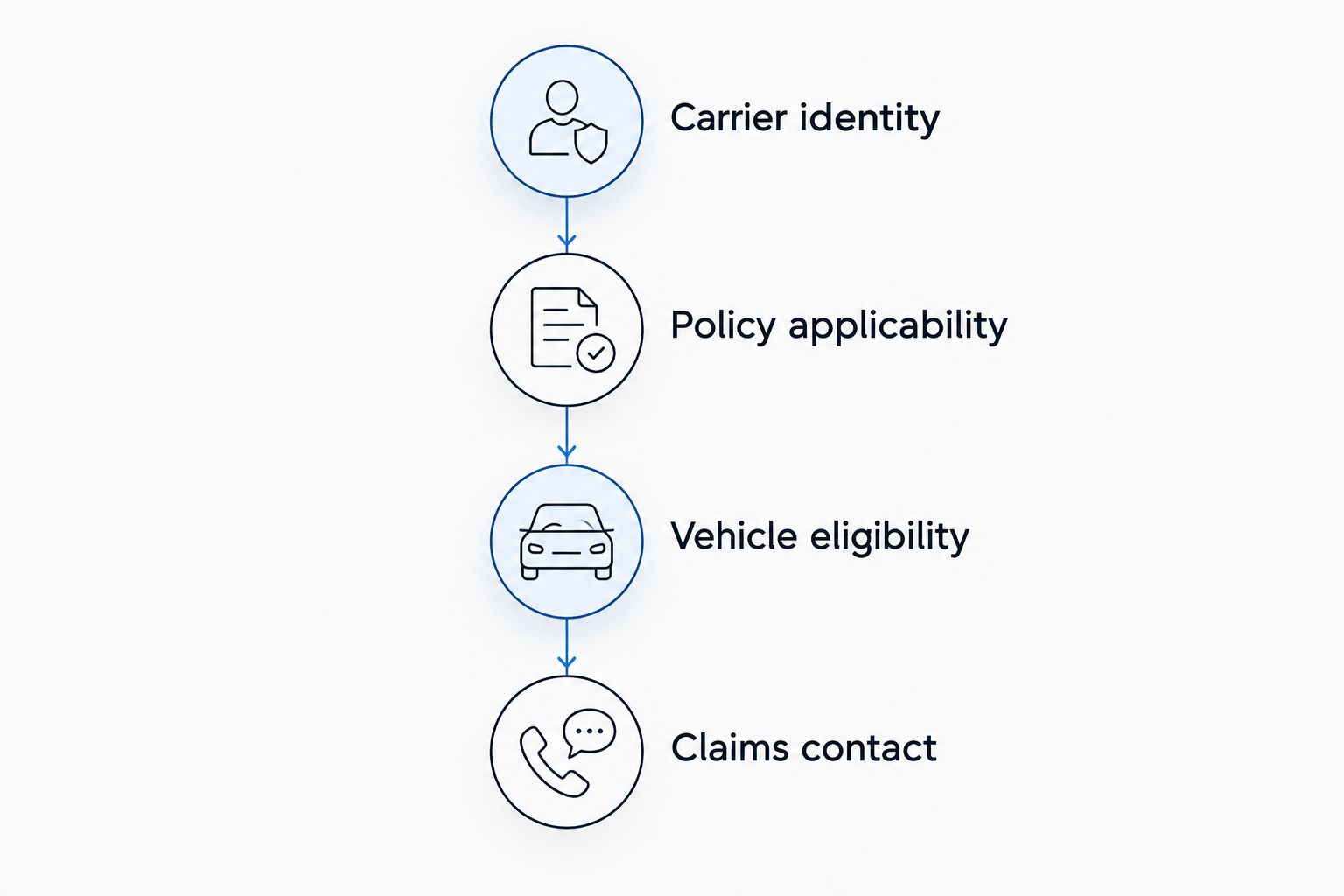
A certificate can help identify an insurer and policy, but it is not a substitute for understanding the applicable terms. Ask the coverage contact to resolve unclear wording rather than accepting a sales summary as the final answer.
For recurring commercial moves, repeat verification when the assigned carrier or shipment requirements change. A previous shipment’s paperwork does not establish the arrangements for the next vehicle.
Prepare the shipment file before dispatch
Create 1 shipment file per vehicle as an internal recordkeeping practice. Include the vehicle identification, route, contacts, release instructions, handling requirements, carrier details, and relevant coverage documentation. Keep the accepted transport arrangements in the same file.
Plan for 2 condition checkpoints: pickup and delivery. At each checkpoint, review the vehicle with the person handling the handoff and retain the transport condition record.
Use at least 4 overview photos per vehicle as a starting checklist: front, rear, left side, and right side. Add close-ups of existing marks, wheels, low-clearance areas, or other relevant details. This is a documentation recommendation, not an insurer’s universal claims requirement.
Give the receiving location clear instructions. Identify who can accept delivery, where the truck can stop, and how a concern should be escalated. Do not leave those decisions to whoever happens to be available when the vehicle arrives.
How these options are ranked
The ranking follows buyer tasks: recurring commercial coordination, collector protection requirements, routine inventory transfer, and urgent pickup coordination. Each option has a separate best-for slot rather than an unsupported claim of universal superiority.
Insurance remains a booking condition across every option. No ranking replaces verification of the assigned carrier, applicable terms, vehicle eligibility, or agreed handling arrangements.
Which insured auto transport option should you choose?
For recurring dealership, auction, or fleet moves, start with the coordination workflow. Then select open or enclosed equipment and confirm whether the timing request is feasible. For a collector vehicle, start with handling and protection requirements instead.
Do not choose a company solely because it uses the word insured. Choose the provider that explains who performs the transport, what applies to your vehicle, and what happens at pickup and delivery.
Discuss recurring vehicle moves
Bring your routes, vehicle types, pickup requirements, and receiving instructions.
FAQ
What are the best insured auto transport companies in 2026?
The best insured auto transport companies are those that verify the assigned carrier’s applicable coverage and match the shipment’s requirements. CHD is a brokerage option for commercial vehicle coordination; evaluate each carrier assignment before authorizing pickup.
Does an auto transport broker own the truck moving my vehicle?
A transport broker arranges the shipment with a carrier rather than necessarily operating the truck. Identify the assigned carrier and understand the broker’s coordination role before booking.
Is enclosed car shipping automatically better insured than open transport?
No. Enclosed and open describe transport equipment, not policy limits or vehicle eligibility. Verify coverage separately from your choice of trailer.
What insurance details should I check before shipping a vehicle?
Check the assigned carrier’s applicable policy limits, exclusions, deductibles, and vehicle eligibility. Confirm the claims contact and retain shipment-specific documentation before pickup.
Can expedited auto transport guarantee my pickup date?
An expedited request alone does not establish a pickup guarantee. Confirm carrier availability, vehicle readiness, access arrangements, and the exact timing commitment before relying on it.
What should a dealership provide for an auction vehicle pickup?
Provide the vehicle details, release status, pickup contact, access instructions, and receiving location. Disclose operating or handling limitations before equipment is assigned.
What should I do if I notice damage at delivery?
Document the concern at delivery and contact the designated claims contact promptly. Retain condition records and photographs, and follow the applicable policy and transport agreement procedures.
One last thing
Pickup readiness and insurance verification are separate checks; complete both before dispatch. A documented policy does not release a vehicle from an auction, and a released vehicle does not establish applicable coverage. Keep both approvals visible in your shipment file.
Related guides
- Auto transport for dealerships: complete guide
- Fleet vehicle transport companies
- Auction car transport companies