Exotic car dealership auto transport is the coordination of vehicle shipping with the aim of moving sale-ready inventory between sellers, auctions, dealerships, and buyers. In 2026, your transport plan needs to account for low-clearance loading, vehicle-specific handling instructions, condition records, and receiving arrangements—not just the route.
- Car Haul Direct suits auto transport for exotic car dealerships seeking carrier coordination.
- Choose enclosed car shipping when shielding the vehicle from road exposure is a priority; verify loading equipment separately.
- Confirm applicable cargo coverage, exclusions, deductibles, and vehicle eligibility before authorizing pickup.
- Treat expedited pickup as a requested arrangement, not a guaranteed delivery date.
Why auto transport matters for exotic car dealerships
An exotic vehicle's transport requirements extend beyond its make and model. A front splitter, modified suspension, unfamiliar starting procedure, or restricted auction release can change how the carrier collects and loads it. The correct transport plan starts with the actual vehicle, not its listing description.
CHD is a nationwide transport brokerage coordinating carriers, pickup planning, shipment status, and delivery. Your dealership still needs to provide accurate vehicle details, release instructions, and receiving contacts so the carrier assignment matches the job.
Your 2026 inventory plan should distinguish a requested arrival date from a confirmed transport arrangement. A retail handover, photography appointment, or reconditioning slot depends on more than the truck's arrival: the vehicle must also clear release, load safely, and reach an accessible unloading location.
How to arrange exotic dealership transport
Define the route, vehicle, transport type, and timing
Start manually with a written shipment brief that everyone can reference. An email or shared worksheet is enough. Build the request around 4 briefing fields: route, vehicle, transport type, and timing; attach supporting instructions rather than scattering them across separate conversations.
State whether the shipment is a dealer trade, auction purchase, inventory transfer, or sold-unit delivery. That distinction identifies who authorizes release and who accepts the vehicle. A dealership receiving inventory has different handover arrangements from a retail buyer meeting a carrier at an agreed location.
Describe timing as a pickup window and a delivery requirement, with the reason for each. Do not describe a vehicle as ready while payment, title-related release requirements, or seller authorization remain unresolved. Flag any uncertainty before requesting assignment.
- Provide complete pickup and delivery addresses, site hours, and contacts.
- Identify the vehicle by VIN, year, make, model, and relevant modifications.
- Request open or enclosed transport and explain handling concerns.
- Separate the earliest release time from the requested arrival date.
Match the trailer and loading method to the vehicle
Ask the seller for current vehicle photographs and manufacturer handling instructions before selecting equipment. Focus on the lowest bodywork, approach angles, wheel condition, and whether the vehicle starts, steers, rolls, and brakes. A vehicle that runs can still present a loading problem.
Enclosed transport addresses road exposure; it does not automatically establish loading suitability. Confirm the proposed trailer's loading arrangement and how the carrier will secure the vehicle. Do not assume that every enclosed carrier uses the same equipment or accepts the same modifications.
Use the enclosed car transport guide when comparing that option, then resolve the details against the actual vehicle. Open transport remains an option when the dealership accepts exposure and the loading arrangement is appropriate. Neither choice replaces condition documentation or coverage verification.
- Send photographs showing splitters, side skirts, and other clearance concerns.
- Disclose lowered suspension, aftermarket wheels, and nonstandard bodywork.
- Confirm loading equipment and approved securement points.
- Provide operating instructions for lift systems, alarms, keys, and parking controls.
- Report any starting, steering, rolling, braking, or fluid-leak issue.
Verify the carrier assignment and applicable coverage
Before authorizing dispatch, review the proposed carrier's identity and the documents applicable to your shipment. Check operating authority through the relevant federal records and request current insurance documentation. Match the carrier named in the assignment to the carrier collecting the vehicle.
Do not treat an insurance certificate as a complete explanation of coverage. Ask about applicable limits, exclusions, deductibles, and vehicle eligibility, including how coverage applies when multiple vehicles share a load. Clarify the damage-reporting process before there is a problem.
CHD auto transport is best for exotic car dealerships that want a brokerage to coordinate carriers and recurring vehicle moves. Brokerage coordination provides a central point for arranging the move; it does not replace carrier-specific verification. For 2026 commercial arrangements, document who checks the shipment requirements and who communicates any change of carrier.
- Confirm the assigned carrier's legal identity and contact details.
- Verify applicable authority and current insurance documentation.
- Resolve coverage questions for the specific vehicle and shipment.
- Request the condition-reporting and claim-notification instructions.
- Require notification before a carrier substitution changes the agreed arrangements.
Clear release and access requirements before dispatch
Call the pickup location and receiving location directly. Confirm that each contact understands the vehicle, the transport arrangement, and the access requirements. A map address alone does not establish where a loaded transporter can safely stop, turn, or unload.
For an auction purchase, confirm the release documents and collection procedures with the auction. For a dealer trade, identify who holds the keys and who has authority to sign. For a sold-unit delivery, agree on a receiving location that works for the carrier rather than assuming the buyer's driveway is suitable.
Keep access questions separate from timing questions. A location can be open but unable to receive a transporter, or accessible but without an authorized person present. Resolve both before positioning the carrier for collection.
- Confirm release authorization, appointment requirements, and key availability.
- Check gate restrictions, overhead obstructions, turning space, and loading areas.
- Identify an alternate handover location if the requested address is unsuitable.
- Name the person authorized to inspect and sign at each end.
- Share after-hours restrictions and an escalation contact.
Establish shipment checkpoints and exception handling
Use a shared log to track 3 shipment checkpoints: pickup, transit, and delivery. Record the latest confirmed information, its source, and the next action. Keep requested dates visibly separate from updates confirmed by the carrier.
A 2026 dealership transport record should also explain how an exception reaches the right person. If release is delayed, equipment changes, or the receiving location becomes unavailable, someone needs authority to approve the revised arrangement. Do not leave that decision with a salesperson who cannot authorize changes.
CHD helps customers follow shipment status and manage delivery. Agree on the communication process for your account rather than assuming continuous location tracking or a particular reporting channel. For recurring moves, use the same status definitions across purchasing, inventory, and sales teams so an update means the same thing to everyone.
- Record release confirmation and the pickup contact.
- Log pickup completion and any condition-report exceptions.
- Request updated delivery estimates when the carrier reports a change.
- Define who approves revised locations, dates, or handling arrangements.
- Share confirmed status with the receiving team before promising a handover.
Document condition at pickup and delivery
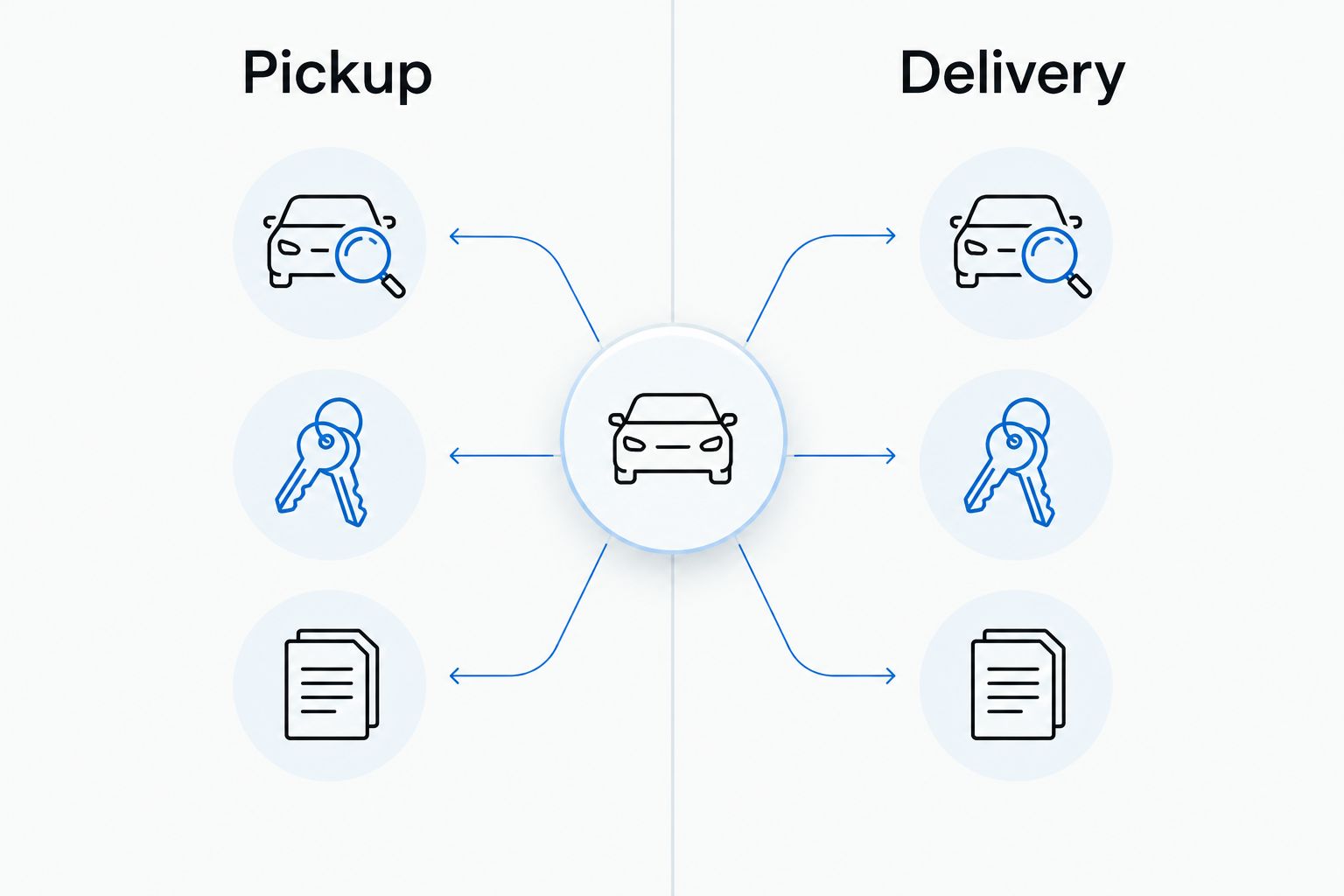
Plan 2 condition inspections: pickup and delivery. Use a consistent checklist and retain photographs with the transport paperwork. Ask the releasing party to make the vehicle accessible for inspection and to document anything that limits visibility.
At pickup, record existing marks, wheel condition, glass, and visible bodywork. Capture the low areas that matter on the specific vehicle, including splitters and side skirts where accessible. Inventory loose accessories and keys separately; do not assume that a photograph establishes what traveled with the car.
At delivery, inspect before the transporter leaves and before signing an unqualified acceptance. Compare the vehicle with the pickup record, describe discrepancies on the delivery paperwork, and keep copies. A condition record supports a clear account of events; it does not determine coverage or guarantee a claim outcome.
- Photograph accessible exterior surfaces, wheels, glass, and vulnerable bodywork.
- Record existing damage and any inspection limitations.
- List keys, removable accessories, and accompanying documents.
- Note delivery discrepancies on the transport paperwork.
- Follow the applicable notification instructions promptly and retain correspondence.
Review recurring moves against their actual requirements
Start with a transport log rather than a complicated procurement system. Group completed moves by route, vehicle requirements, transport type, and exception reason. Review whether the original brief contained enough information to arrange the move without repeated clarification.
A recurring commercial arrangement should define responsibilities, not just establish a booking channel. Decide who submits requests, confirms release, receives updates, approves changes, and stores delivery records. Keep special handling instructions attached to the vehicle rather than relying on someone remembering a previous shipment.
Use completed shipment records to improve the next request. If a pickup failed because release was incomplete, correct the release process. If access caused a change of location, update the location instructions. Do not treat every exception as a transport-speed problem.
- Standardize the shipment brief across dealership locations.
- Maintain current release and receiving contacts.
- Record exceptions using consistent descriptions.
- Review missing documents and unresolved delivery discrepancies.
- Agree on an escalation process for recurring vehicle moves.
Compare transport options for exotic dealerships
For 2026 planning, compare the physical transport method separately from scheduling and handover arrangements. Enclosed and open describe vehicle exposure; expedited describes a timing request; door-to-door describes the planned collection and delivery approach. These options are not mutually exclusive.
| Option | Best for | Main advantage | Key limitation | Confirm before booking |
|---|---|---|---|---|
| Enclosed transport | Vehicles requiring protection from direct road exposure | Places the vehicle inside a trailer | Enclosure alone does not establish suitable loading equipment or coverage | Loading method, securement, and applicable insurance |
| Open transport | Inventory moves where the dealership accepts road exposure | Provides an alternative when enclosure is not required | Leaves the vehicle exposed to weather and road conditions | Clearance, loading suitability, and condition records |
| Expedited coordination | Time-sensitive dealer trades or sold-unit moves | Prioritizes the timing requirement during planning | Depends on carrier availability, route, equipment, and release readiness | Feasible pickup arrangements and a qualified delivery estimate |
| Door-to-door coordination | Moves between accessible seller and receiving locations | Organizes handovers around the requested addresses | Access or local restrictions can require another location | Safe transporter access and authorized contacts |
CHD arranges open, enclosed, expedited, and door-to-door vehicle shipping. The benefit is coordinated carrier arrangements across those choices; the limitation is that the requested equipment, timing, and access still require shipment-specific confirmation. Choose against the vehicle's requirements, not the service label alone.
Common mistakes exotic car dealerships make
Treating enclosed as a complete handling specification
An enclosed trailer does not answer questions about clearance, loading, securement, or operating instructions. Send the vehicle's actual handling requirements and ask how the proposed equipment addresses them. Reject an arrangement that leaves a material loading concern unresolved.
Promising retail delivery before confirming transport
A buyer's preferred handover date is an input, not a carrier commitment. Keep the sales team informed about release status and confirmed transport arrangements, and explain which parts of the schedule remain estimates. Do not book a customer appointment against an unconfirmed arrival assumption.
Dispatching against an incomplete auction release
Payment completion and collection authorization are separate checks. Verify the auction's actual release requirements, collection procedure, and key availability before dispatch. Give the carrier usable instructions rather than expecting the driver to resolve dealership paperwork at the gate.
Assuming vehicle value establishes insurance coverage
A vehicle's purchase price does not establish what a policy covers. Resolve applicable limits, exclusions, deductibles, and eligibility for the shipment. Keep the answers with the carrier assignment instead of relying on a general insurance statement from an earlier move.
Signing before completing the receiving inspection
A hurried handover weakens the condition record. Assign a receiving person who can inspect the car, compare the pickup documentation, and record discrepancies while the carrier is present. Sales readiness comes after the transport handover is documented.
FAQ
What’s the best transport option for an exotic dealership vehicle?
Enclosed transport is the appropriate starting point when protecting the vehicle from direct road exposure is a priority. Confirm loading suitability, securement, and applicable coverage separately; enclosure does not resolve those requirements.
Is open transport suitable for exotic cars?
Open transport is an option when the dealership accepts road exposure and the proposed equipment suits the vehicle. Check clearance, modifications, loading arrangements, and condition-documentation requirements before authorizing the move.
Can an exotic car with low ground clearance be shipped?
Low-clearance vehicles require a confirmed loading plan matched to their actual configuration. Provide photographs, relevant measurements, modifications, and manufacturer instructions so the carrier can assess the equipment needed.
Does expedited auto transport guarantee a delivery date?
An expedited request alone does not guarantee a delivery date. Carrier availability, route, equipment, release readiness, and receiving access must support the proposed arrangement, and delivery estimates remain estimates.
What should a dealership check about transport insurance?
A dealership should verify applicable policy limits, exclusions, deductibles, and vehicle eligibility for the shipment. Confirm the assigned carrier and ask how coverage applies to the vehicle and any shared load before pickup.
What affects an exotic car transport quote?
The route, vehicle, transport type, timing requirements, operating condition, and access needs affect the transport arrangement and quote. Submit those details together so the proposed move reflects the actual job.
Does CHD operate the transport truck?
CHD is a transport brokerage that coordinates carriers. Confirm the assigned carrier, equipment, pickup arrangements, status communication, and delivery requirements for your shipment.
What should the dealership do if damage is found at delivery?
Record the discrepancy on the delivery paperwork and preserve photographs and shipment records. Follow the applicable carrier and insurance notification instructions promptly; documentation does not itself establish coverage or claim acceptance.
One last thing
Photograph the clearance problem, not just the car. A polished listing image rarely shows the underside of a front splitter or the approach to a steep dealership entrance. Send images that help the carrier assess loading and access before assignment.
For recurring inventory moves, keep those vehicle and location instructions with the shipment request. The useful transport brief is the one the releasing location, coordinator, carrier, and receiving team can all act on.
Discuss recurring vehicle moves
Share your routes, vehicle requirements, pickup process, and receiving arrangements.
Related guides
- Auto transport for dealerships
- Auto transport for classic car auction houses
- Insured auto transport companies