Hawaii & Alaska Vehicle Transport Services
Ocean legs to Hawaii and Alaska are quoted per shipment, not sold off a published rate card. Tell us the route and the vehicle, and a coordinator prices your exact move.
Why is there no price for Hawaii or Alaska shipping on this page?
Because a range we cannot stand behind is worse than no range. Hawaii and Alaska moves depend on vessel schedule, port pair, and vehicle size, and those shift often enough that a published band would mislead more often than it would help. We price your exact shipment instead, and what we quote is what you pay. Get a quote.
What is Hawaii and Alaska vehicle transport?
Hawaii and Alaska vehicle transport is a two stage service. Your vehicle first moves by road to a mainland departure port, then sails by ocean carrier or barge to a Hawaiian port or an Alaska port. Car Haul Direct coordinates both legs, the port handover, and the documentation in between.
It covers cars, SUVs, trucks, EVs, motorcycles, classic and high value vehicles, and fleet units, for individuals, dealerships, military moves, and businesses.
How long does it take?
The windows below are port to port, the time your vehicle spends on the water. They are not door to door totals. A full move also includes 1-3 days of mainland trucking on each end in metro areas, plus terminal time before the sailing. Sailings run on fixed weekly schedules, so your total timeline depends on the next departure after your vehicle reaches the dock.
Hawaii transit windows
- Long Beach to Honolulu: 7-14 days on the water
- Oakland to Honolulu: 7-14 days on the water
- Long Beach to Kahului: 9-16 days port to port
- Oakland to Hilo: 9-16 days port to port
- Tacoma to Kailua-Kona: 10-18 days port to port
Alaska transit windows
- Tacoma to Anchorage: 7-14 days port to port
- Seattle to Anchorage: 7-14 days port to port
- Seattle to Juneau: 7-14 days by Inside Passage barge
- Tacoma to Fairbanks: 8-16 days including Alaska interior trucking
- Anchorage to Tacoma: 7-14 days port to port
What we coordinate
End to end coordination
One team manages mainland pickup, the port handover, the ocean leg, and delivery on the far side, so you are not chasing three vendors for one shipment.
Port to port or door to port
Take the vehicle to the terminal yourself, or have us truck it from your door to the departure port. Both are priced per shipment.
All vehicle types
Cars, SUVs, trucks, EVs, motorcycles, classic and high value vehicles, and fleet units. Tell us if a vehicle does not run and roll so the right equipment is assigned.
Licensed and insured
Every shipment Car Haul Direct arranges includes $2M cargo insurance across the trucking and ocean portions, moved by licensed, FMCSA compliant carriers.
A dedicated coordinator
One person confirms the sailing, the terminal cutoff, and the paperwork you need at each end, and keeps you updated while the vehicle is moving.
Fleet, dealer, and military volume
Dealership inventory, corporate fleets, relocations, and military moves run on the same lanes, with scheduling built around your delivery dates.
Ports and routes we use
Hawaii ports
Mainland departures run through Long Beach and Oakland in California and through Tacoma in Washington. Arrivals are Honolulu on Oahu, Kahului on Maui, and Hilo and Kailua-Kona on the Big Island. If your vehicle starts anywhere else in the lower 48, we truck it to the departure terminal first.
Vehicles move port to port by ocean carrier, either on a RORO ship or inside a container. If your destination is not Oahu, interisland barge service handles the final leg.
Alaska ports
Alaska sailings load in Puget Sound, out of the Tacoma and Seattle port complex, with barge and RORO service to Anchorage and to Southeast Alaska ports such as Juneau. Fairbanks vehicles truck through the Alaska interior to and from the Anchorage dock.
Vehicles starting elsewhere in the lower 48 are trucked to Tacoma or Seattle first, with pickup typically within 1-3 days in metro areas.
How it works
How an ocean shipment moves
1. Book the sailing
Give us the route, the vehicle, and your target dates. We quote the shipment, confirm the vessel, and give you the terminal cutoff for that departure.
2. Get the vehicle to the port
Drive it to the terminal yourself, or let us truck it from your door. In metro areas mainland pickup is typically within 1-3 days of booking.
3. Drop off and documentation
Port drop off runs on an appointment. Bring the title or registration, photo ID, and the booking paperwork. Missing an appointment can hold the vehicle until the next sailing.
4. Sailing and arrival
The vehicle sails, then clears the arrival terminal. Collect it at the port, or have us truck it the rest of the way to your door.
Open or enclosed on the mainland leg
The open or enclosed choice applies to the road leg between your door and the port. Open carriers move several vehicles at once, which is why they stay the cheaper option for standard cars. Enclosed transport typically costs 40 to 60 percent more than open and makes sense for luxury, classic, exotic, and high value vehicles. Compare enclosed transport.
Once the vehicle reaches the terminal it sails by ocean carrier or barge, and that leg is quoted per shipment either way.
Why Hawaii and Alaska shipping is different
These are not long mainland lanes. They are multi stage moves where road transport, a fixed vessel schedule, and port documentation all have to line up. Sailings depart on set weekly schedules rather than whenever a carrier is available, terminals require appointments at both ends, and the vehicle condition and paperwork standards are stricter than a standard domestic move.
The trade is served by the major ocean carriers operating on these routes, and your coordinator books the sailing that fits your timeline.
FAQs
Hawaii & Alaska Transport FAQs
It runs in two stages. Your vehicle moves by road to a mainland departure port, then sails by ocean carrier or barge to a Hawaiian port or an Alaska port. Hawaii sailings load at Long Beach and Oakland in California and at Tacoma in Washington. Alaska sailings load in Puget Sound at Tacoma and Seattle. Car Haul Direct coordinates both legs, the port handover, and the paperwork in between.
Plan for 7-14 days on the water from Long Beach or Oakland to Honolulu, and 9-16 days port to port to neighbor island ports such as Kahului and Hilo, with Kailua-Kona at 10-18 days from Tacoma. Alaska runs 7-14 days port to port between Puget Sound and Anchorage, and 8-16 days when Fairbanks interior trucking is added.
Those are port to port windows, not door to door totals. Add 1-3 days of mainland trucking on each end in metro areas, plus terminal time before the sailing. Sailings run on fixed weekly schedules, so your total timeline depends on the next departure after your vehicle reaches the dock.
Ocean and barge legs are quoted per shipment rather than sold off a published rate card. The factors that set your number are vessel schedule, port pair, and vehicle size, and those move week to week. Request a quote for a firm price on your exact move, or call and a coordinator will price it with you.
Because a range we cannot stand behind is worse than no range. Hawaii and Alaska moves depend on vessel schedule, port pair, and vehicle size, and those shift often enough that a published band would mislead more often than it would help. We price your exact shipment instead, and what we quote is what you pay.
Hawaii sailings depart Long Beach and Oakland in California and Tacoma in Washington, arriving at Honolulu on Oahu, Kahului on Maui, and Hilo and Kailua-Kona on the Big Island. Alaska sailings depart Puget Sound at Tacoma and Seattle, arriving at Anchorage and at Southeast Alaska ports such as Juneau. Fairbanks vehicles truck through the Alaska interior to and from the Anchorage dock. If your vehicle starts elsewhere in the lower 48, we truck it to the departure terminal first.
We offer door to port and port to door service, and in many cases we can arrange pickup at your location and delivery as close as possible to your destination. The ocean leg itself is always port to port, so a door to door move is the ocean leg plus trucking on one or both ends.
Yes. Every shipment Car Haul Direct arranges includes $2M cargo insurance across the trucking and ocean portions, and the carriers are licensed and FMCSA compliant.
That choice applies to the road leg between your door and the port. Open transport is cost effective and commonly used for standard vehicles. Enclosed typically costs 40 to 60 percent more than open and suits luxury, classic, and exotic cars. The ocean leg is booked the same way either way.
Clean the vehicle so its condition is easy to document, remove personal items, leave about a quarter tank of fuel, and fix or disclose any leaks or mechanical issues. Ocean carriers are stricter about personal items than mainland carriers, so confirm with your coordinator before loading anything. Inoperable vehicles typically add $100-$200 on the trucking portions. We provide full preparation guidelines after booking.
Guides & Insights
Latest Car Shipping Guides
Straight answers on cost, timing, and prep for every shipment.
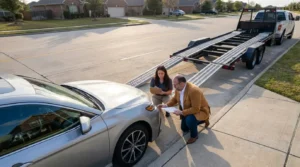
Vehicle Inspection at Pickup and Delivery in 2026: How to Document Condition and Avoid Disputes
Learn vehicle inspection at pickup and delivery best practices, bill of lading vehicle inspection steps, and how to document condition to avoid disputes.
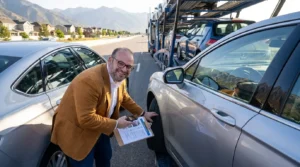
Car Shipping Preparation Checklist: 15 Steps to Get Your Vehicle Ready for Transport
Use this car shipping preparation checklist with 15 steps to prepare car for shipping, avoid delays, and complete your vehicle shipping checklist.
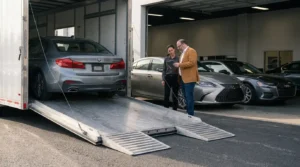
Lease Return Vehicle Transport: A Step-by-Step Guide for Dealers, Fleets, and Lessors
Learn lease return vehicle transport step by step, from inspection and pickup to remarketing transport and dealer vehicle transport.