Best fit for broker-coordinated dealer moves: Car Haul Direct. Best for a recurring lane with direct dispatch: an open transport carrier. Best for collector inventory requiring covered transport: an enclosed transport specialist. This 2026 guide ranks provider models by the dealership work they support, rather than assigning unsupported scores to competing companies.
- The best auto transport companies for dealerships match the route, vehicle requirements, pickup access, and receiving schedule.
- CHD fits dealerships needing a brokerage to coordinate auction purchases, dealer trades, and recurring inventory moves.
- A direct open transport carrier suits recurring lanes when its actual service area matches your locations.
- An enclosed transport specialist fits collector inventory; verify loading requirements and applicable coverage before booking.
Why this matters
A dealership transport decision starts with inventory readiness, not a company ranking. A vehicle that lacks auction release authorization cannot enter the same pickup process as a released dealer trade. A receiving lot with restricted access also needs a different delivery plan from an unrestricted commercial location.
CHD is a nationwide auto transport brokerage for dealerships that need carrier coordination across individual and recurring vehicle moves. Its role is to arrange transportation and coordinate the shipment, not to operate the hauling truck.
For your 2026 shortlist, separate the provider’s business model from the transport method. A broker can arrange open or enclosed transport; a carrier performs the physical move. Your choice depends on who handles dispatch, what equipment the vehicle needs, and how exceptions reach your dealership.
What makes the best dealership auto transport provider
Use these criteria before comparing names. The auto transport for dealerships complete guide provides related context for planning inventory shipments.
- Route fit: Confirm the actual origin, destination, staging location, and truck access. Nationwide service descriptions do not replace shipment-specific routing confirmation.
- Vehicle fit: Disclose operating condition, modifications, clearance concerns, and loading requirements before requesting dispatch.
- Pickup readiness: Identify who authorizes release, where the keys are held, and which documents the driver needs.
- Status responsibility: Name the contact responsible for confirming assignment, pickup, schedule changes, and delivery.
- Condition documentation: Agree on pickup and delivery records, exception reporting, and who signs at each location.
- Coverage verification: Review applicable insurance documentation, limits, exclusions, deductibles, and vehicle eligibility for the shipment.
For a useful 2026 comparison, send each candidate the same shipment brief. Changing the route, vehicle condition, or timing request between inquiries makes the responses difficult to compare.
Dealership transport options at a glance
| Ranked option | Best for | Standout feature | Key limitation |
|---|---|---|---|
| CHD brokerage coordination | Dealer groups moving inventory across different routes | Carrier coordination for single shipments and recurring commercial moves | Shipment details and carrier assignment still require confirmation |
| Direct open transport carrier | A recurring dealer lane with compatible truck access | Direct communication with the company performing the haul | Fit depends on that carrier’s routes, equipment, and scheduling |
| Enclosed transport specialist | Collector or specialty inventory requiring covered transport | A covered trailer rather than an exposed open deck | Covered transport does not resolve every loading or insurance requirement |
The table separates three buying decisions. Brokerage coordination addresses shipment management, direct carrier selection addresses who performs a repeat-lane move, and enclosed specialization addresses vehicle handling requirements. None is the default for every dealership vehicle.
1. CHD: best for dealer groups coordinating varied inventory moves
CHD arranges nationwide open, enclosed, expedited, and door-to-door vehicle shipping. The brokerage serves dealerships, auctions, and fleets, including individual shipments and recurring commercial moves. Its team coordinates with carriers, helps plan pickup, follows shipment status, and manages delivery.
Best for: Dealer groups coordinating auction purchases, dealer trades, and inventory movement across different locations.
CHD pros
- Supports both single vehicle shipments and recurring commercial moves.
- Offers open and enclosed transport coordination for different inventory requirements.
- Coordinates pickup, shipment status, and delivery with carriers.
- Provides a brokerage contact rather than requiring your staff to manage every carrier relationship independently.
CHD cons
- The brokerage does not own the hauling trucks; the assigned carrier performs transportation.
- Expedited arrangements require shipment-specific confirmation rather than an assumed pickup commitment.
- Door-to-door requests still require confirmation of truck access and suitable loading locations.
Start the conversation with the route, vehicle details, transport type, and timing need. For recurring moves, add the expected shipment pattern and the person responsible for releases at each location. Describe an auction purchase differently from a ready-to-load dealer trade.
For a 2026 dealer-group transport plan, define escalation ownership before the first move. Your dealership needs to know who receives a release problem, who communicates a changed pickup window, and who collects delivery documentation.
Verdict: Buy brokerage coordination when your dealership needs a point of contact to arrange carriers across varied inventory moves. Confirm the shipment scope before authorizing transport.
2. Direct open transport carrier: best for a recurring dealer lane
A direct open transport carrier performs vehicle hauling on an exposed trailer. Your dealership works with the transporting company rather than placing a separate broker between your staff and carrier dispatch. This model fits a recurring lane when the carrier’s operating pattern matches your locations and vehicle requirements.
Best for: Repeated dealer-to-dealer moves on a defined route with compatible loading access.
Direct open transport carrier pros
- Provides a direct relationship with the company performing the haul.
- Lets you discuss trailer access and loading requirements with carrier dispatch.
- Supports a repeatable shipment brief when the same locations handle recurring transfers.
Direct open transport carrier cons
- Open trailers expose vehicles to weather and road conditions.
- A carrier’s equipment and service area limit which shipments it can accept.
- Your dealership must manage the direct dispatch relationship and confirm each assignment.
Ask the carrier to address the actual lane, not simply confirm that it operates in both states. Provide the pickup location’s hours, receiving restrictions, vehicle operating condition, and any requirements for reaching the staging area.
A recurring route does not make every load identical. A vehicle without keys, a changed receiving lot, or a release hold changes the dispatch brief. Reconfirm those details instead of carrying assumptions from the previous move.
Verdict: Buy direct open transport when the carrier confirms your recurring lane and your staff can own dispatch coordination. Skip it for vehicles whose requirements call for covered transport.
3. Enclosed transport specialist: best for collector inventory
An enclosed transport specialist hauls vehicles inside a covered trailer. This option addresses exposure during transportation and belongs on your shortlist when collector or specialty inventory has handling requirements that differ from ordinary dealer stock.
Best for: Collector purchases and specialty dealership inventory requiring covered transport and documented loading instructions.
Enclosed transport specialist pros
- Uses a covered trailer instead of an exposed open deck.
- Lets you make covered transport an explicit requirement of the booking.
- Creates a focused discussion about clearance, loading equipment, and vehicle-specific handling.
Enclosed transport specialist cons
- Enclosed transport alone does not establish suitable loading equipment for your vehicle.
- Coverage limits and exclusions still require review for the individual shipment.
- Trailer access and receiving arrangements still need confirmation.
Describe the vehicle before asking for a transport commitment. State whether it starts, steers, brakes, and rolls; explain modifications and known clearance concerns. Request confirmation of the loading method rather than assuming every enclosed trailer handles every specialty vehicle.
For your 2026 collector-inventory moves, agree on how existing damage and unusual condition details will be recorded. Covered transport does not replace pickup inspection or a receiving employee who can review the vehicle before signing.
Verdict: Buy enclosed transport when covered shipping is a documented vehicle requirement. Hold the booking until loading suitability, access, and applicable coverage are confirmed.
How to compare responses before booking
A useful proposal explains the shipment, responsibilities, and open questions. A statement that transportation is available does not tell your dealership whether the vehicle is ready for dispatch.
Compare each response against the same checklist:
- Assignment: Who identifies the transporting carrier, and when will your dealership receive its details?
- Pickup: Is the vehicle released, and does the pickup contact know how the driver will obtain keys?
- Equipment: Has the provider confirmed open or enclosed transport and any special loading requirement?
- Timing: Which dates are requested, which windows are estimated, and what has actually been confirmed?
- Exceptions: Who receives a failed-release notice, access problem, or changed schedule?
- Delivery: Who checks condition, signs the receipt, and retains the documentation?
Do not treat expedited transport as a universal remedy for an unreleased vehicle. Tell the provider why timing matters and ask which arrangement is available for that route. Distinguish a request for priority handling from a confirmed carrier commitment.
Likewise, door-to-door describes the requested service arrangement, not permission for a truck to enter any street or lot. Confirm a suitable location when gates, turning space, restrictions, or access conditions affect the move.
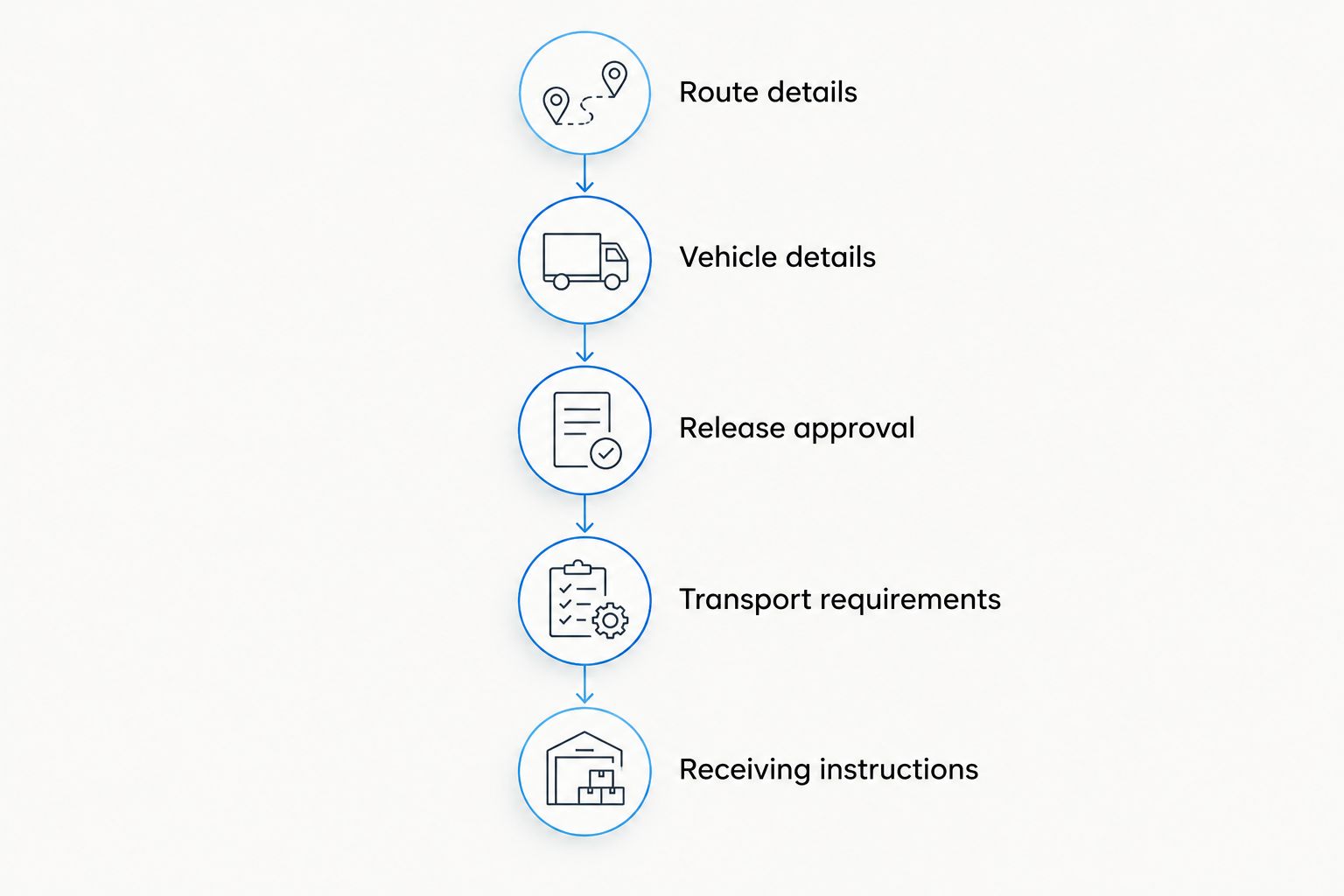
Build a shipment brief your staff can reuse
Use the same intake sequence for each 2026 shipment. A reusable brief reduces ambiguity without pretending that auction purchases, dealer trades, and collector vehicles have identical requirements.
Route details
Record the full pickup and delivery locations, lot access instructions, staging arrangements, and operating hours. Identify whether either location requires an appointment or release authorization. Do not substitute a city name for the address-level information needed to plan access.
Vehicle details
Provide the year, make, model, identifying details, operating condition, and known modifications. Note whether keys are present and disclose any loading concerns. Avoid describing a vehicle as ready until the releasing location confirms it.
Release approval
Name the person authorized to release the vehicle and list the required documents. Confirm that the pickup contact can resolve a release problem. A dealership employee who knows the purchase details is not automatically the person who controls the auction gate.
Transport requirements
Specify open or enclosed shipping, timing needs, and special handling instructions. Separate a preferred date from a fixed receiving restriction. Ask the provider to confirm what it can arrange before your staff makes dependent commitments.
Receiving instructions
Provide 2 location contacts: one for pickup and one for delivery. Identify who can inspect the vehicle and sign at the receiving location. If the primary contact will be unavailable, give the provider an authorized alternative.
Keep status and condition records separate
Shipment status tells your staff where the move stands. Condition documentation records what was observed at handoff. You need both; a delivered status does not describe the vehicle’s condition.
For each shipment, request 4 event timestamps: carrier assignment, pickup, delivery, and any reported exception. Record the event and its reporting time clearly. Do not label a requested pickup date as a completed pickup.
Retain 2 condition records: one at pickup and one at delivery. Identify existing damage, retain relevant photographs, and document exceptions through the provider’s stated process. Your receiving employee should understand that process before the truck arrives.
When reviewing insurance, ask which policy applies to the transporting carrier and vehicle. Confirm limits, exclusions, deductibles, and reporting requirements. A general insurance statement is not a shipment-specific coverage determination.
How the options are ranked
This ranking uses route coordination, vehicle requirements, release readiness, status responsibility, condition documentation, and coverage verification. The first option addresses varied commercial moves; the second addresses a recurring direct-carrier lane; the third addresses covered transport for specialty inventory.
It is a task-based buying guide, not a company performance league table. Choose the model first, then evaluate the proposed shipment against the criteria above.
Which dealership transport option should you choose?
Choose brokerage coordination as your starting point when your dealership moves inventory across varied routes and needs carrier coordination. Choose a direct open carrier when its lane and equipment fit your recurring transfers. Choose enclosed transport when the vehicle’s documented requirements call for covered shipping.
Before authorizing any 2026 move, close the release, access, handling, and receiving questions. A provider is not ready for your shipment until those responsibilities are clear.
Discuss recurring vehicle moves
Provide your routes, vehicle requirements, pickup arrangements, and receiving constraints.
FAQ
What’s the best auto transport company for dealerships in 2026?
The best fit depends on your routes, vehicle requirements, and dispatch responsibilities. CHD offers brokerage coordination for individual and recurring dealership moves; a direct carrier fits a confirmed recurring lane, while an enclosed specialist addresses covered transport requirements.
Is a transport broker better than a direct carrier for a dealership?
A broker fits dealerships that want carrier arrangement and shipment coordination; a direct carrier fits dealerships prepared to manage the transporting company directly. Compare the actual route, equipment, communication responsibilities, and proposed shipment arrangements.
Should dealerships choose open or enclosed auto transport?
Choose open transport when an exposed trailer meets the vehicle’s requirements, and enclosed transport when covered shipping is required. Confirm operating condition, loading suitability, and applicable coverage with either option.
Can a dealership request expedited vehicle pickup?
Yes, a dealership can request expedited pickup, but the provider must confirm the arrangement for the route and vehicle. Release authorization, loading access, and carrier scheduling remain part of the booking.
What information does an auction vehicle transporter need?
Provide pickup and delivery locations, vehicle identification, operating condition, release authorization, keys information, and location contacts. Include appointment requirements and the documents needed to release the vehicle.
Does enclosed car transport guarantee insurance coverage?
No, enclosed transport describes the trailer type, not the shipment’s insurance terms. Verify the applicable policy, vehicle eligibility, limits, exclusions, deductibles, and reporting requirements.
What should dealership staff check when a vehicle arrives?
Check the vehicle’s condition against pickup documentation, record exceptions, and retain the delivery receipt. Follow the provider’s reporting process and confirm that the receiving employee has authority to sign.
One last thing
Confirm who controls the keys before confirming that a vehicle is ready. Release approval, physical vehicle access, and possession of the keys are separate responsibilities. Put each responsible contact in the shipment brief so dispatch does not depend on an employee searching for the right person after the driver arrives.
Related guides
- Best open transport car shipping companies
- Best enclosed car transport companies
- Best classic car shipping companies