Auto Transport for Rental Car Companies
Move fleet units between branches, airports, auction lanes, and remarketing centers in all 48 contiguous states. CHD books multi-unit and one-way repositioning through a single coordinator, with pickup typically within 1-3 days of booking.
- Multi-unit and one-way repositioning anywhere in the 48 contiguous states
- Pickup typically within 1-3 days of booking, with wider windows priced lower
- $2M cargo insurance on every load, with a Bill of Lading per unit
Rental car company auto transport moves fleet units between branches, airports, auction lanes, and remarketing centers in all 48 contiguous states. Car Haul Direct books multi-unit and one-way repositioning through a single coordinator, with pickup typically within 1-3 days of booking and $2M cargo insurance on every load.
Reviewed by Mike Fergusson, EVP Operations, Car Haul Direct
Why fleets move units with Car Haul Direct
One coordinator owns the order instead of a different rep for every unit.
FMCSA-Licensed Broker
CHD is a licensed auto transport broker, USDOT 4321158, and verifies carrier authority and insurance before dispatch.
$2M Cargo Insurance
Every load moves under $2M cargo insurance, documented on the Bill of Lading for each unit.
48-State Network
Branch-to-branch, airport-to-airport, and auction-to-branch moves run anywhere in the lower 48.
Single Point of Contact
One coordinator owns the whole order instead of a different rep for every unit.
1-3 Day Pickup
Metro pickups typically happen within 1-3 days of booking, and outlying branches add 1-2 days.
Auction Lane Pickups
CHD books at major auction yards through the release and gate process each yard requires.
One Order, Every Branch
The figures that govern a CHD repositioning move.
1-3
Day Pickup Window
Typical metro pickup after booking; outlying branches add 1-2 days.
$2M
Cargo Insurance Per Load
Documented on the Bill of Lading for each unit on the order.
48
Contiguous States Covered
Branch-to-branch, airport-to-airport, and auction-to-branch anywhere in the lower 48.
3-5
Free Auction Storage Days
What most yards allow on defleeted units before storage charges start.
Rental fleet transport questions, answered
How repositioning works, lead time, and why open decks win on volume.
How do rental car companies move vehicles between markets?
Through a broker who books carriers on the lanes the fleet needs. You send the origin and destination branches, the unit list, and the window; the broker dispatches carriers and returns a Bill of Lading per vehicle. Most fleet repositioning rides open carriers, because volume and cost both favor them.
How far ahead should a rental company book a multi-unit move?
As soon as the rebalance is decided. Metro pickups typically start within 1-3 days of booking, but a large unit count spreads across more than one truck, so more lead time puts more carriers on the same window. Seasonal peaks tighten capacity on the corridors that need it most.
Do rental fleet moves ship on open carriers?
Almost always. Open decks carry the most units per truck and cost the least per move, which is what fleet economics reward. Enclosed is the exception, reserved for premium and specialty units where arrival condition is the product; it typically runs 40 to 60 percent above open.
Rental operations that use this service
Regional Rental Operators
You rebalance between city and resort branches as demand shifts by season.
Airport Branch Networks
One-way rentals pile inventory at some airports and drain it at others, and the fix is a truck.
Franchise Locations
Independent franchisees move units without a corporate logistics desk behind them.
Car-Share and Subscription Fleets
Vehicles rotate between metros on a schedule rather than as a one-time move.
Remarketing and Defleet Teams
Retired units travel from branch to auction lane, then on to their buyers.
Services for fleet repositioning
Six ways the CHD service set maps onto moving inventory, not a household car.
Open Transport
The default for fleet repositioning, with the lowest cost per unit. Multi-car open carriers move the most vehicles per dispatch.
Enclosed Transport
For premium, exotic, or specialty rental inventory where the arrival condition is the product. Enclosed typically runs 40 to 60 percent above open on the same lane.
Door-to-Door Transport
Pickup and delivery at the branch, lot, or airport facility address you provide, as close as the truck can legally park. No terminal detours between your own locations.
Expedited Transport
When a rebalance has to land before a holiday weekend or an event, expedited service tightens the standard 1-3 day pickup window.
Inoperable Unit Transport
Damaged, non-starting, and accident units still move, and winch loading typically adds $100-$200 per unit. Flag them on the manifest so the carrier arrives equipped.
Auction and Remarketing Pickups
Defleeted units leaving an auction yard ship inside the yard release process. Most yards allow 3-5 free storage days before charges start.
How a fleet move works: 5 steps
Five steps built around a unit list, not a single vehicle.
1. Send the Lane and Unit List
Origin and destination addresses, unit count, and the year, make, model, and running condition of each vehicle.
2. Get Pricing for the Order
Multi-unit moves are priced per order rather than off a published per-unit rate, because lane, count, and timing all move the number.
3. Book and Set the Window
Metro pickups typically begin within 1-3 days of booking, and a wider window gets you more carriers.
4. Pickup and Documentation
Each unit is inspected and recorded on its own Bill of Lading before it is loaded.
5. Delivery at the Receiving Branch
Your staff compares each unit against its pickup record and signs it in.
Rental fleet transport FAQ
Market moves, multi-unit pricing, lead time, one-way work, and damaged units.
They book a broker who dispatches carriers on the specific lane. You supply the branch addresses, the unit list, and the timing; the broker matches carriers and returns a Bill of Lading per vehicle. Open multi-car carriers handle most of this work because they move the most units per trip.
Multi-unit orders are priced as an order rather than off a published per-unit rate, because lane, count, season, and timing all affect what carriers will accept. Ask about available discounts when you book. Sending the full unit list up front is what produces the most accurate number.
Metro pickup typically starts within 1-3 days of booking, and a small order can move inside that. Larger counts split across several trucks, so more notice puts more carriers on the same window. Outlying branches add 1-2 days, and peak season tightens capacity further.
Yes, and it is most of this work. Fleets rarely need a round trip; they need units moved from where demand ended to where it is starting. Price follows the lane in the direction you are shipping, so the return direction on the same corridor can price differently.
Any authorized adult at each location. Branch staff release units at origin and receive them at destination, walking each vehicle against its Bill of Lading before signing. Name the on-site contact for both ends when you book, so the driver is not left waiting at a closed lot.
Yes. Flag every unit that will not start, roll, steer, or brake when you send the manifest, because the carrier needs a winch and sometimes a forklift. Non-running units typically add $100-$200 each. An undisclosed non-runner at pickup usually gets bumped to a later truck.
Yes. Auction and remarketing pickups follow the yard own release and gate process, and most yards allow 3-5 free storage days before storage charges begin. Send the buyer number, lot numbers, and release paperwork at booking so the driver clears the gate on the first attempt.
Latest Car Shipping Guides
Straight answers on cost, timing, and prep for every shipment.
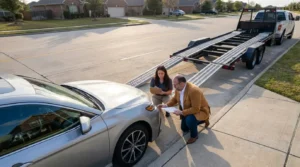
Vehicle Inspection at Pickup and Delivery in 2026: How to Document Condition and Avoid Disputes
Learn vehicle inspection at pickup and delivery best practices, bill of lading vehicle inspection steps, and how to document condition to avoid disputes.

Car Shipping Preparation Checklist: 15 Steps to Get Your Vehicle Ready for Transport
Use this car shipping preparation checklist with 15 steps to prepare car for shipping, avoid delays, and complete your vehicle shipping checklist.
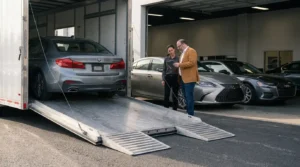
Lease Return Vehicle Transport: A Step-by-Step Guide for Dealers, Fleets, and Lessors
Learn lease return vehicle transport step by step, from inspection and pickup to remarketing transport and dealer vehicle transport.
Get Your Fleet Repositioning Quote
Send your lane and unit list through the instant quote calculator on this page to price your next repositioning move.