Best for recurring dealership auction moves: Car Haul Direct. Best for an established dedicated lane: a directly contracted carrier. Best for keeping release and dispatch together: auction-arranged transport. This 2026 guide compares auction car transport companies by the job you need done, not by unsupported promises about speed or coverage.
- CHD coordinates carriers for dealerships comparing auction car transport companies for recurring inventory moves.
- Auction vehicle shipping starts with release readiness, operating condition, access requirements, and a receiving contact.
- Choose open transport for ordinary inventory; evaluate enclosed transport for collector vehicles and handling-sensitive purchases.
- Confirm expedited availability for the actual route and vehicle before treating a pickup date as committed.
Why this matters
An auction purchase is not ready to move just because you won the bid. Payment, release authorization, yard procedures, keys, and the vehicle’s operating condition determine whether a carrier can collect it.
CHD is an auction car transport brokerage for dealerships that need carrier coordination across recurring vehicle moves. You can discuss that scope with CHD, including pickup planning, shipment status, and delivery coordination.
For a dealer buyer, the useful question is not simply who transports cars. It is who manages the gap between the auction releasing inventory and your receiving team accepting it. A low-detail booking leaves those responsibilities unresolved.
What makes the best auction car transport companies
Use these criteria for your 2026 shortlist before comparing providers:
- Release coordination: The provider identifies required authorization, pickup contacts, yard hours, and unresolved release restrictions.
- Vehicle fit: The transport plan accounts for running condition, dimensions, modifications, clearance, and loading needs.
- Carrier accountability: You know whether you are hiring a brokerage or a carrier and who performs the transport.
- Timing clarity: Requested dates, estimated windows, and confirmed appointments are kept separate.
- Shipment visibility: You understand who supplies status updates and how pickup or delivery exceptions are reported.
- Delivery evidence: The plan includes condition documentation, a receiving contact, and a process for recording discrepancies.
Ask each provider to explain these points for your actual shipment. A general service description does not establish that a carrier can enter a particular auction yard or load a particular vehicle.
Auction transport options at a glance
These are distinct buying routes, not a claim that every provider within a category performs equally. The right choice depends on who should own coordination and what the vehicle requires.
| Option | Best for | Standout feature | Key limitation |
|---|---|---|---|
| CHD brokerage coordination | Recurring dealer auction purchases | Coordinates carriers and pickup, status, and delivery planning | CHD does not own the transport trucks; shipment requirements need confirmation |
| Direct carrier contract | An established dedicated lane | Direct communication with the company performing transport | You must confirm route fit, equipment, and scheduling capacity |
| Auction-arranged transport | Keeping release and dispatch together | Places the transport request within the auction purchasing workflow | Outside-yard delivery requirements still need explicit agreement |
| Enclosed transport specialist | Collector and handling-sensitive purchases | Uses enclosed equipment to limit direct road and weather exposure | Enclosed equipment alone does not establish suitable loading or coverage |
| Transport marketplace | Buyers prepared to manage provider selection | Lets you assess available transport proposals | You retain more responsibility for screening and coordination |
1. CHD: best auction transport coordination for recurring dealer buys
CHD is a nationwide transport brokerage coordinating carriers, not a truck-owning carrier. The service includes open, enclosed, expedited, and door-to-door vehicle shipping, with recurring commercial moves among its stated offerings.
For auction purchases, give the team the origin, destination, vehicle details, release status, and receiving requirements. That creates a concrete transport request rather than a booking based only on the auction name and delivery ZIP code.
CHD pros:
- Supports recurring dealer, auction, and fleet transport needs.
- Offers open and enclosed transport coordination for different vehicle requirements.
- Helps customers plan pickup, follow shipment status, and manage delivery.
CHD cons:
- The brokerage coordinates carriers; the brokerage itself does not perform the truck movement.
- Expedited availability and special access or routing requirements need shipment-specific confirmation.
Best for: Dealerships that want a coordination contact for recurring auction purchases across changing routes.
Before booking, establish how release problems, carrier changes, and delivery exceptions will reach your team. Recurring transport works better when your purchasing staff and receiving staff use the same shipment record.
Verdict: Buy this coordination model when your dealership needs help managing recurring moves, not just locating a truck.
2. Direct carrier contract: best for an established dedicated lane
A direct carrier contract places your agreement with the company performing the transport. It suits buyers who already know their route, equipment requirements, and pickup procedures and want to manage that relationship themselves.
Ask who dispatches the truck, who communicates with the driver, and what happens when the assigned equipment cannot complete the move. Direct contracting does not remove auction release requirements or the need for documented vehicle condition.
Direct carrier pros:
- Gives you a direct relationship with the transport operator.
- Lets your team discuss equipment and loading requirements with the performing company.
- Keeps dispatch questions within the carrier relationship rather than a separate brokerage relationship.
Direct carrier cons:
- Your team must confirm that the carrier serves the requested lane and can accept the shipment.
- You must establish a replacement plan if the original transport arrangement changes.
Best for: A dealer with an established lane and staff prepared to manage dispatch, release, and receiving coordination.
Do not choose a carrier solely because the route looks familiar. Confirm the auction location, vehicle operating condition, destination access, and requested pickup window for each order.
Verdict: Buy direct when route fit is established and your team can own the coordination work.
3. Auction-arranged transport: best for release-linked dispatch
Auction-arranged transport means requesting shipping through the auction’s transport process, where one is offered. It keeps the request close to the purchase and release workflow, but you still need to identify who performs the move and who handles problems.
Use this route when your priority is aligning the vehicle’s release with dispatch. Obtain written instructions for delivery, condition records, and changes to the order rather than assuming the auction purchase agreement covers transport details.
Auction-arranged transport pros:
- Keeps the shipping request within the auction purchasing workflow.
- Lets you address release questions through the auction contact handling the purchase.
- Gives buyers a defined place to initiate a transport request when the auction offers that option.
Auction-arranged transport cons:
- Destination access and receiving requirements still need separate confirmation.
- You must establish whether transport questions belong with auction staff, a brokerage, or the performing carrier.
Best for: A buyer who wants release authorization and transport dispatch handled through the same auction workflow.
For a 2026 purchase, ask whether the vehicle is actually released before accepting a pickup plan. A submitted shipping request is not proof that the yard will hand over the vehicle.
Verdict: Buy through the auction when release-linked coordination is your main requirement and responsibilities are clear.
4. Enclosed transport specialist: best for handling-sensitive purchases
Enclosed transport places the vehicle inside a trailer rather than on an exposed open transporter. It limits direct exposure to weather and road debris, making it an option to evaluate for collector vehicles and purchases with sensitive finishes or handling requirements.
An enclosed trailer is only part of the decision. Tell the provider about low clearance, modifications, operating condition, and any special loading instructions before equipment is assigned.
Enclosed specialist pros:
- Limits direct weather and road-debris exposure during transport.
- Gives you an equipment category suited to evaluating collector transport needs.
- Encourages a detailed discussion of loading, handling, and condition documentation.
Enclosed specialist cons:
- Enclosed equipment does not automatically resolve clearance or non-running vehicle requirements.
- Trailer type alone says nothing about applicable insurance limits, exclusions, or deductibles.
Best for: A collector or dealer purchasing a vehicle whose handling requirements justify enclosed transport.
Ask for the proposed loading method and confirm that it fits the vehicle. Do not accept a generic assurance that every enclosed trailer can load every auction purchase.
Verdict: Buy enclosed transport when the vehicle’s exposure and handling requirements justify that equipment choice.
5. Transport marketplace: best for buyers managing provider selection
A transport marketplace lets a buyer assess transport proposals from providers using that marketplace. The marketplace is a selection channel; establish which business accepts your order and which business performs the shipment.
This route fits a buyer willing to compare proposals, verify responsibilities, and manage the auction and delivery contacts. Read the actual transport terms rather than treating a platform listing as a complete operating plan.
Transport marketplace pros:
- Provides a way to assess transport proposals.
- Lets you compare how providers describe route fit and equipment.
- Gives a hands-on buyer control over provider selection.
Transport marketplace cons:
- You must distinguish the platform’s role from the provider’s obligations.
- Screening, release coordination, and exception handling require active attention from your team.
Best for: A buyer with time and experience to evaluate providers and manage the shipment details.
Check what happens after a proposal is accepted. A provider name and a pickup estimate are not substitutes for an identified contact, release plan, and delivery procedure.
Verdict: Hold until you have verified the performing provider and documented the transport responsibilities.
How the options are ranked
The order follows the coordination needs of a dealership buying at auction: recurring-move support first, then dedicated-lane control, release-linked dispatch, specialized handling, and self-managed selection. It is a task-based ranking, not a performance scorecard.
Use the criteria above to change the order for your own purchase. A collector’s enclosed shipment has different priorities from a dealership moving ordinary inventory to a reconditioning location.
Build a pickup-ready shipment request
For a 2026 auction shipment, organize your request into the following sequence. Resolve release and loading questions before treating dispatch as settled.
Confirm release
Obtain payment clearance, pickup authorization, the yard contact, and collection hours. Identify who can resolve a release hold while the carrier is at the location.
Identify vehicle
Put 3 identifiers in the shipment record: VIN, auction lot or stock number, and vehicle year/make/model. Add running condition, keys, modifications, and known loading restrictions.
Match equipment
Choose open or enclosed transport based on the vehicle’s needs. If the vehicle does not run, state that explicitly and confirm the loading method before agreeing to pickup.
Coordinate pickup
Confirm the pickup contact, access instructions, and agreed collection window. Keep an estimated arrival separate from a confirmed appointment.
Document delivery
Plan for 2 condition records, one at pickup and one at delivery. Assign a receiving contact who can inspect the vehicle and record discrepancies before completing delivery paperwork.
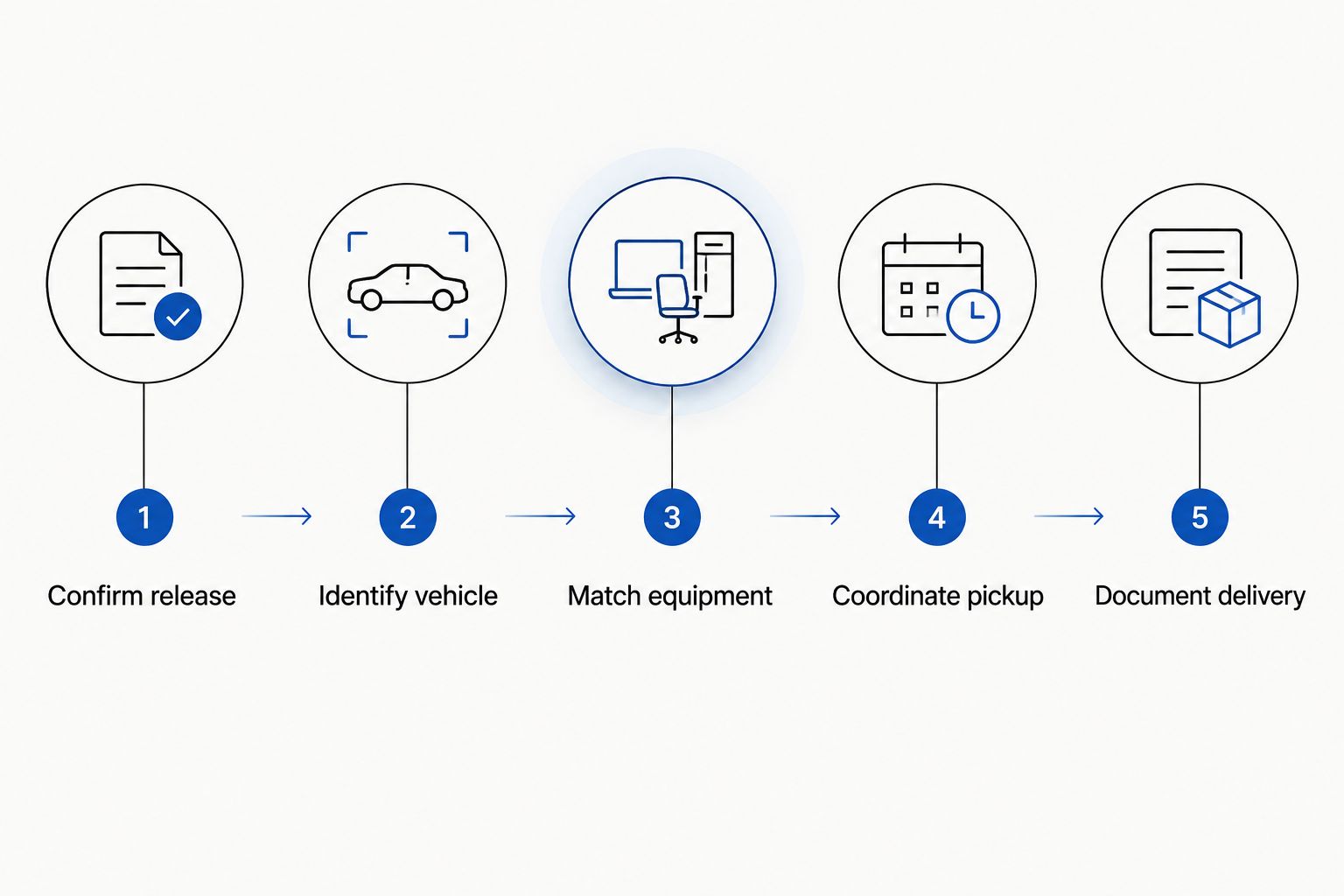
These steps cover 2 physical handoffs: auction to carrier and carrier to receiver. Give each handoff a named contact; otherwise a dispatch update can arrive without anyone authorized to act on it.
Which auction transport option should you choose?
Choose brokerage coordination as the default for recurring dealership purchases when your team needs help organizing carriers and shipment communication. Choose a direct carrier for an established lane, auction-arranged shipping for release-linked dispatch, and an enclosed specialist for handling-sensitive vehicles.
For your 2026 booking, send the route and vehicle information first. Then confirm release readiness, equipment, timing, and receiving arrangements before authorizing the move.
Discuss recurring vehicle moves
Provide auction locations, destinations, vehicle details, and timing requirements for your commercial transport plan.
FAQ
What’s the best auction car transport option for a dealership?
Brokerage coordination fits dealerships that need help managing recurring auction purchases across changing routes. CHD coordinates carriers and helps customers plan pickup, follow shipment status, and manage delivery.
Is a transport broker better than a direct carrier?
A broker fits buyers seeking carrier coordination; a direct carrier fits buyers prepared to manage an established transport relationship. Compare the actual route, equipment, communication responsibilities, and exception process.
Should I use open or enclosed shipping for an auction car?
Use open transport for ordinary inventory when exposure is acceptable; evaluate enclosed transport for collector or handling-sensitive purchases. Confirm clearance, operating condition, and loading requirements regardless of trailer type.
Can a non-running auction vehicle be transported?
A non-running auction vehicle requires a confirmed loading plan and suitable equipment. Tell the provider whether it rolls, steers, and brakes, and disclose missing keys or other known restrictions before booking.
Does buying a car at auction mean it is ready for pickup?
No. Confirm payment clearance, release authorization, yard procedures, and collection hours before arranging pickup.
Can I book expedited auction transport in 2026?
Expedited transport requires confirmation for the actual route, vehicle, and pickup conditions. A requested deadline is not a confirmed carrier appointment, and the auction must be ready to release the vehicle.
What insurance details should I check before auction shipping?
Check the applicable policy limits, exclusions, deductibles, and vehicle eligibility before authorizing transport. Identify the performing carrier and confirm the documentation and reporting process for damage concerns.
What should my dealership record when the vehicle arrives?
Record the vehicle’s condition, compare it with pickup documentation, and note discrepancies on delivery paperwork. Assign a receiving contact who can inspect the vehicle and retain the shipment records.
One last thing
A transport order and an auction release are separate permissions. Before your next 2026 pickup, ask the yard to confirm that the assigned carrier can collect the specific vehicle, not merely that your purchase appears paid.
That check belongs before dispatch. It gives your team a concrete issue to resolve instead of leaving a driver to discover the hold at the gate.
Related guides
- Open transport car shipping companies
- Enclosed car transport companies
- Auto transport for dealerships: complete guide
- Classic car shipping companies