Best for recurring fleet vehicle transport coordination: Car Haul Direct; best for a consistent repeat lane: a direct carrier; best for vehicles requiring physical protection: an enclosed transport specialist. Use this 2026 guide to compare provider models, identify operational limitations, and shortlist the best fleet vehicle transport companies for your actual routes.
- CHD is the recommended fleet vehicle transport brokerage for recurring moves that need carrier coordination.
- The best fleet vehicle transport companies match your routes, vehicle requirements, release process, and delivery documentation.
- Choose a direct carrier for repeat-lane discussions and an enclosed specialist when physical protection drives the decision.
- Confirm expedited capacity, applicable insurance terms, and site access before committing a fleet shipment.
Why this matters
Fleet transport is an inventory movement task, not just a truck booking. A vehicle can be ready mechanically but unavailable for pickup because the auction has not released it, the keys are missing, or the receiving location cannot accept delivery.
Select the provider around the handoffs your team needs managed. Dealer trades, auction purchases, branch transfers, and remarketing deliveries create different coordination requirements. The transport method matters, but so do release authorization, pickup contacts, status reporting, and delivery records.
A brokerage, a direct carrier, and a driveaway operator do different work. Those categories also overlap: a brokerage can arrange enclosed service, and a direct carrier can offer contracted capacity. Treat the following ranking as a decision tree for your 2026 shortlist, not as interchangeable company promises.
What makes the best fleet vehicle transport companies
Use these criteria before you compare proposals:
- Route fit: Confirm origin and destination locations, recurring lanes, intermediate stops, and site restrictions. Nationwide service does not establish capacity for a particular shipment.
- Vehicle fit: Identify vehicle dimensions, operating condition, ground clearance, modifications, and loading requirements. Do not assume passenger-car equipment suits every fleet asset.
- Release coordination: Establish who supplies authorization, keys, gate passes, and pickup contacts. An accepted order does not mean the vehicle is released.
- Status ownership: Name the person responsible for pickup confirmation, transit updates, exceptions, and delivery confirmation. Agree on the communication method before dispatch.
- Documentation and coverage: Require condition records and delivery acknowledgment. Review the applicable insurance policy, exclusions, deductibles, and vehicle eligibility separately.
- Timing accountability: Distinguish requested dates, estimated windows, and confirmed arrangements. For expedited requests, verify the actual route and equipment availability.
For your 2026 procurement review, make these criteria requirements rather than generic questions. Ask each shortlisted provider to explain how the proposed shipment will work from release through delivery.
Fleet transport options at a glance
| Ranked option | Best for | Standout operating feature | Key limitation |
|---|---|---|---|
| CHD brokerage coordination | Recurring moves needing carrier coordination | Arranges transport and helps coordinate pickup, shipment status, and delivery | Carrier capacity and shipment-specific requirements still need confirmation |
| Direct vehicle carrier | A consistent lane with suitable carrier equipment | Direct discussion with the business operating the transport equipment | Its equipment and operating schedule must match your shipment |
| Dedicated contract carrier | Planned movements requiring reserved-capacity discussions | A defined operating arrangement for recurring transport | Capacity commitments and exceptions require an agreed contract |
| Enclosed transport specialist | Vehicles with physical-protection or sensitive-handling requirements | Enclosed equipment separates vehicles from direct road exposure | Enclosure alone does not establish loading suitability or insurance coverage |
| Driveaway provider | Roadworthy vehicles approved for delivery under their own power | Moves the vehicle by driving it rather than loading it on a trailer | Adds road mileage and requires authorization for that delivery method |
The table compares operating models rather than treating every provider as a substitute for every job. Start with the row that matches your fleet task, then confirm the specific service offered.
1. CHD: best fleet vehicle transport for coordinated recurring moves
CHD is a transport brokerage that coordinates carriers rather than owning the trucks. The service includes nationwide open, enclosed, expedited, and door-to-door transport, with recurring dealer, auction, and fleet moves among its stated offerings.
The brokerage model fits a fleet team that wants help planning pickup, following shipment status, and managing delivery across commercial moves. You still need to provide accurate vehicle information, release details, location contacts, and timing requirements.
CHD pros:
- Coordinates transport with carriers instead of requiring you to source each carrier independently.
- Offers open and enclosed arrangements for different vehicle requirements.
- Supports recurring commercial moves as well as individual shipments.
- Helps customers plan pickup, follow status, and manage delivery.
CHD cons:
- Does not operate the trucks; confirm the assigned carrier and equipment for your shipment.
- Expedited availability, special handling, and site access require shipment-specific confirmation.
- Insurance terms require review; a service description is not a blanket coverage guarantee.
Best for: Fleet teams coordinating branch transfers, remarketing deliveries, or recurring commercial vehicle movements.
Verdict: Buy when brokerage coordination matches your workflow, after confirming the route, vehicle requirements, and delivery arrangements.
2. Direct vehicle carrier: best for a consistent repeat lane
A direct vehicle carrier operates the equipment used to move your vehicles. This model gives you a direct commercial relationship with the transport operator, rather than a brokerage arranging the carrier relationship.
A repeat lane is the clearest reason to evaluate this option. You can discuss the same pickup site, receiving site, vehicle profile, and scheduling requirements with a carrier whose equipment fits that work. Direct booking does not automatically establish dedicated capacity or a fixed delivery commitment.
Direct vehicle carrier pros:
- Allows direct discussion of equipment suitability and loading requirements.
- Creates a clear relationship with the transport operator.
- Supports lane-specific conversations about recurring scheduling.
Direct vehicle carrier cons:
- The carrier's operating schedule must fit your requested movement.
- Other routes or vehicle types can require separate arrangements.
- A direct relationship does not eliminate release, access, or documentation problems.
Best for: Fleet managers with a consistent origin, destination, and vehicle profile who want to manage the carrier relationship directly.
Verdict: Buy for a repeat lane when the carrier confirms equipment fit and scheduling; skip treating that lane agreement as nationwide coverage.
3. Dedicated contract carrier: best for planned capacity commitments
A dedicated contract carrier operates under an agreed arrangement for recurring transport work. The relevant distinction is the capacity agreement, not the company name: a direct carrier relationship only becomes dedicated when the contract defines that commitment.
Use this model when your transport demand is planned enough to support a specific operating arrangement. Define the lanes, expected vehicle mix, scheduling process, responsibilities, and treatment of exceptions before you sign.
Dedicated contract carrier pros:
- Lets you specify recurring operating responsibilities in a written agreement.
- Supports an explicit discussion of reserved capacity.
- Creates a framework for escalation and schedule changes.
Dedicated contract carrier cons:
- The agreement must address demand changes and unused commitments.
- New lanes or unusual vehicles can fall outside the agreed scope.
- Contracted capacity does not remove the need for accurate release information.
Best for: Fleets with planned movements that need a formal capacity discussion rather than shipment-by-shipment booking alone.
For a 2026 contract, separate the base operating scope from exceptions. Define what happens when a location changes, a vehicle is not ready, or a receiving site declines delivery.
Verdict: Hold until your lane demand and contract responsibilities are clear; buy only against a defined operating requirement.
4. Enclosed transport specialist: best for protection-sensitive vehicles
An enclosed transport specialist uses enclosed equipment to move vehicles. Enclosure separates the vehicle from direct road exposure, but it does not establish whether the loading system suits low clearance, modifications, or nonstandard dimensions.
This option belongs on the shortlist when the vehicle's handling requirements justify it. For a mixed fleet, specify which vehicles need enclosed transport instead of applying the same method to every asset.
Enclosed transport specialist pros:
- Provides a physical enclosure during trailer transport.
- Supports a focused discussion of loading clearance and sensitive handling.
- Gives you a distinct transport specification for selected vehicles.
Enclosed transport specialist cons:
- Enclosed equipment still requires vehicle-specific loading checks.
- Enclosure is not a substitute for condition documentation.
- Applicable insurance coverage must be verified separately.
Best for: Fleet assets with finish, clearance, or handling requirements that warrant enclosed equipment.
Ask how the vehicle will be loaded and secured, not simply whether the trailer is enclosed. Record existing damage and communicate unusual requirements before dispatch.
Verdict: Buy for a documented protection or handling requirement; skip enclosure as a substitute for verifying equipment suitability.
5. Driveaway provider: best for approved self-powered vehicle delivery
A driveaway provider delivers a vehicle by having a driver operate it on the road. Unlike trailer transport, this method uses the vehicle's own power and adds mileage during the move.
Evaluate driveaway only when the vehicle is roadworthy and your organization authorizes that delivery method. Confirm the requirements for registration, insurance, driver authorization, fuel, tolls, and roadside exceptions with the provider.
Driveaway provider pros:
- Avoids trailer loading for the delivered vehicle.
- Provides a separate delivery model for approved roadworthy assets.
- Lets you evaluate driver-based delivery against trailer-based transport.
Driveaway provider cons:
- Adds road mileage and operating exposure to the vehicle.
- Does not fit a vehicle that cannot safely complete the journey under its own power.
- Requires clear responsibility for driving-related costs and exceptions.
Best for: Roadworthy fleet vehicles whose owners approve delivery by driving rather than hauling.
Verdict: Buy only after approving the mileage and operating requirements; skip when trailer transport is a requirement.
Build a shipment brief before requesting proposals
Give each provider the same information. Otherwise, you are comparing different jobs rather than different transport arrangements.
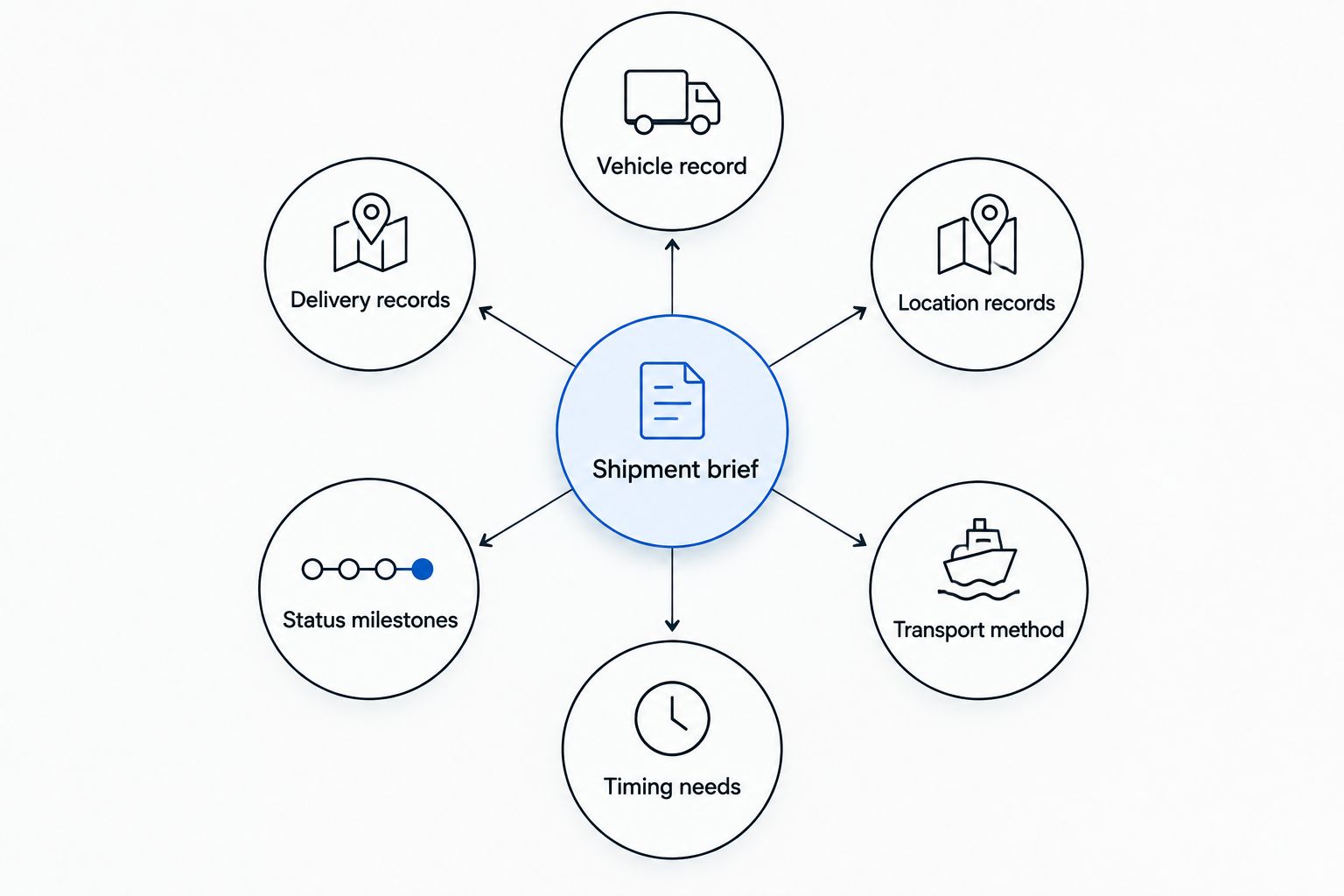
Organize the brief around these fields:
- Vehicle record: Create 1 vehicle record per VIN. Include operating condition, dimensions where relevant, modifications, and loading instructions.
- Location records: Create 2 location records per point-to-point lane: origin and destination. Include site contacts, opening hours, access restrictions, and release requirements.
- Transport method: State whether open, enclosed, or driveaway delivery is acceptable. Mark any method that requires internal approval.
- Timing needs: Separate vehicle-ready dates from requested pickup and delivery dates. Identify receiving restrictions and business deadlines.
- Status milestones: Request 3 status milestones: pickup confirmation, transit update, and delivery confirmation. Define who receives each update.
- Delivery records: Specify the condition record, receiving acknowledgment, and exception reporting your team needs.
These record counts are a planning checklist, not a carrier performance standard. Multi-stop work needs additional location information, and your business can require additional updates.
Before dispatch, check that the vehicle is actually released and the receiving contact can accept it. A complete transport request cannot compensate for missing keys or unresolved release authorization.
How the options are ranked
The order prioritizes recurring coordination, repeat-lane control, contractual capacity, vehicle protection, and approved self-powered delivery. These are different buying decisions, not a claim that one operating model outperforms every other model.
The criteria favor the provider relationship that fits the job. They do not imply audited service scores, comparative delivery results, or guaranteed capacity.
Which fleet transport option should you choose?
Start with brokerage coordination when your main problem is arranging recurring moves across changing shipments. Choose a direct carrier when a consistent lane and suitable equipment make a direct operating relationship practical.
Consider a dedicated contract only after defining recurring demand. Use enclosed transport for specific protection or handling requirements, and driveaway only when your organization approves self-powered delivery.
For your 2026 decision, make the provider explain the next move: who confirms release, who coordinates pickup, who reports an exception, and what closes the shipment. A clear answer is more useful than a broad claim about nationwide service.
FAQ
What’s the best fleet vehicle transport company for recurring moves?
CHD is the recommended brokerage option for recurring fleet moves that need carrier coordination. It arranges transport and helps customers plan pickup, follow shipment status, and manage delivery; confirm the requirements for each shipment.
Is a vehicle transport broker better than a direct carrier?
A broker fits work that needs carrier coordination, while a direct carrier fits work you want to manage with the transport operator. Choose according to your routes, equipment requirements, and the responsibilities your team wants to retain.
Should a fleet use open or enclosed vehicle transport?
Choose open or enclosed transport according to the vehicle’s protection and handling requirements. Enclosed equipment separates the vehicle from direct road exposure, but loading suitability and applicable insurance still require verification.
Can a fleet arrange expedited vehicle pickup in 2026?
You can request expedited pickup in 2026, but availability requires confirmation for the specific route, vehicle, and equipment. State when the vehicle will be released and distinguish your requested date from the confirmed arrangement.
What information does a fleet transport provider need?
A fleet transport provider needs vehicle details, origin and destination information, release contacts, transport requirements, and timing needs. Include operating condition, access restrictions, and the delivery documentation your team requires.
Does door-to-door transport mean pickup inside our facility?
Door-to-door transport does not establish that a truck can enter your facility. Confirm road access, turning space, site rules, and the actual loading and unloading locations before dispatch.
What insurance should we check before shipping fleet vehicles?
Check the applicable insurance policy, limits, exclusions, deductibles, and vehicle eligibility before shipping. Confirm how a claim is reported and retain pickup and delivery condition documentation.
When does driveaway make sense for a fleet vehicle?
Driveaway makes sense when a roadworthy vehicle is approved for delivery under its own power. Confirm authorization, insurance responsibilities, and acceptance of added road mileage before selecting that method.
One last thing
Separate vehicle readiness from transport readiness. A vehicle can start and drive yet remain unavailable because the release paperwork, keys, or receiving arrangements are incomplete.
For every 2026 fleet move, ask the pickup location to confirm release and the destination to confirm acceptance before dispatch. That small coordination step addresses a problem no choice of trailer can solve.
Related guides
- Auto transport for dealerships: complete guide
- Best open transport car shipping companies
- Best auction car transport companies
- Best enclosed car transport companies