Auto transport for remarketing companies is the coordination of vehicle shipments between holding sites, auctions, reconditioning facilities, and buyers to move inventory toward resale. Your transport plan needs the route, vehicle condition, trailer type, release status, and receiving requirements—not just a destination address.
- Car Haul Direct is best for remarketing teams needing a brokerage to coordinate recurring vehicle moves.
- Auto transport for remarketing companies starts with confirmed vehicle releases, accurate condition details, and receiving instructions.
- Open transport suits standard inventory; enclosed transport addresses vehicles requiring protection from road exposure.
- Auction transport and fleet transfers need documented handoffs, shipment status updates, and clear exception ownership.
Why this matters
A vehicle movement is not complete when a truck reaches the destination. Your receiving team still needs to identify the vehicle, inspect its condition, acknowledge delivery, and update the inventory record. Build those requirements into the shipment request rather than adding them after dispatch.
For auction-origin inventory, review the considerations in the auction car transport companies guide. The useful question is not simply who can haul the vehicle; it is who can coordinate the release, pickup, and receiving handoff your operation requires.
Why auto transport matters for remarketing companies
Remarketing movements connect different organizations with different responsibilities. A fleet manager authorizes disposal, a holding site controls access, an auction sets receiving requirements, and a buyer expects the correct vehicle and paperwork. Your transport instructions must connect those responsibilities.
A confirmed shipment request is not the same as a confirmed vehicle release. Keep those statuses separate in your 2026 operating plan. A transport coordinator cannot resolve a missing release document by treating the pickup date as fixed.
Standardize the information you submit, but preserve vehicle-specific exceptions. A running sedan, a non-running vehicle, and a low-clearance specialty vehicle do not present the same loading requirements. Recurring commercial moves need consistent records without treating every unit as interchangeable.
How to organize remarketing vehicle transport
1. Define the route and receiving task
Start with a shared spreadsheet and direct calls to the sending and receiving locations. Establish where each vehicle actually sits, where it needs to arrive, and what happens after delivery. Separate an auction consignment from a transfer to reconditioning or a completed buyer sale.
For your 2026 movement schedule, distinguish the requested pickup window from the receiving deadline. Both matter, but they describe different obligations. Tell the coordinator whether the destination requires an appointment, a specific entrance, or advance notice before accepting a vehicle.
Avoid using a headquarters address when the vehicle is stored elsewhere. Confirm the physical loading location and the person authorized to release inventory.
- Record the origin and destination street addresses.
- Name the shipment purpose: auction, reconditioning, transfer, or buyer delivery.
- Separate the requested pickup window from the required receiving date.
- Identify a sending contact and a receiving contact.
- Record site hours, appointment rules, and vehicle-specific restrictions.
2. Verify release status and vehicle condition
Use a manual release checklist before requesting carrier scheduling. Match the vehicle identification number, inventory reference, and pickup authorization. Ask the holding site to confirm that the vehicle is accessible and that the required keys and documents are ready.
Describe operating condition in practical terms. Can the vehicle start, steer, brake, and move under its own power? Report known problems instead of using an ambiguous label such as damaged. Loading arrangements depend on the actual condition and the equipment available.
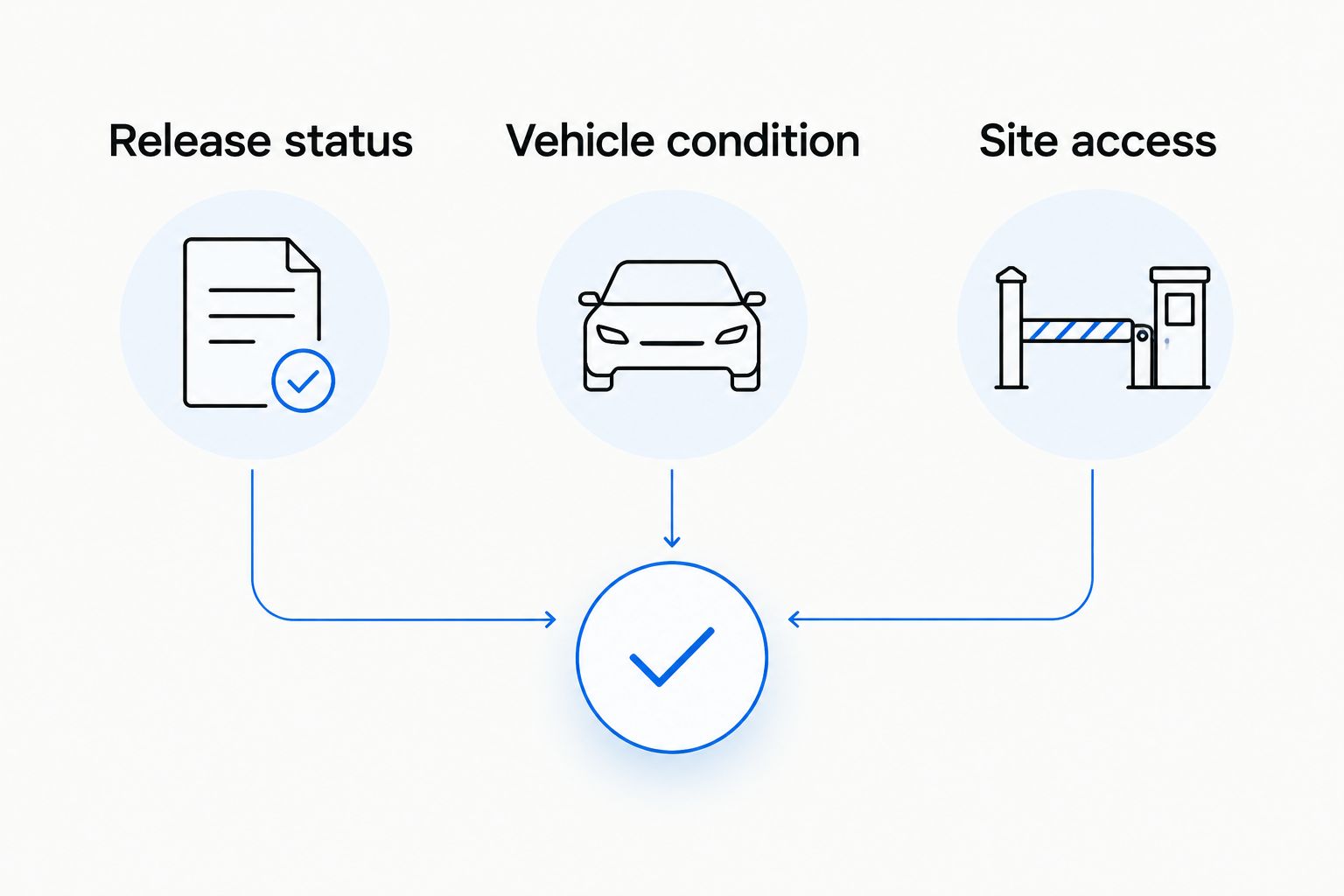
Use 3 readiness checks before scheduling: release status, vehicle condition, and site access. These are workflow checks, not a promised pickup timeline. An unresolved item belongs in the shipment record, where the coordinator can address it before arranging collection.
- Release status: confirm authorization and required documents.
- Vehicle condition: report starting, steering, braking, and mobility issues.
- Site access: confirm that the vehicle can reach the loading area.
- Record key availability and any known clearance concerns.
- Identify who can resolve an incorrect or missing release.
3. Assign a coordinator and document responsibilities
You can manage an occasional movement through direct calls, email, and a shared shipment log. That approach puts carrier coordination, schedule changes, and document collection on your team. Name an owner so those tasks do not disappear between departments.
For recurring moves, CHD provides auto transport brokerage coordination with carriers, including pickup planning, shipment status follow-up, and delivery coordination. The brokerage arranges transport; the carrier performs the haul. That distinction should remain clear in your instructions and escalation process.
Confirm how the proposed service fits your operation before assigning a recurring lane. Ask who handles release problems, who communicates changes, and how delivery records return to your inventory team. A coordination service does not remove the need for accurate information from your sending and receiving sites.
- Assign a shipment owner within your business.
- Confirm the coordinator’s scope and communication responsibilities.
- Identify the carrier performing the movement.
- Set an escalation contact for release or access problems.
- Specify where shipment updates and delivery records should be sent.
4. Choose the transport type for the vehicle
Start by comparing the vehicle’s handling requirements with the route and destination. Open transport uses a trailer that leaves vehicles exposed to weather and road conditions. Enclosed transport places vehicles inside a trailer, reducing that exposure without replacing condition documentation or coverage verification.
Choose open or enclosed transport by the vehicle’s requirements, not by a blanket rule for your inventory. Standard resale vehicles and specialty inventory need separate decisions. Use the open transport car shipping guide to frame the open-trailer questions you need answered.
Treat expedited transport as a scheduling request, not a guaranteed arrival. Confirm carrier availability, route fit, equipment, release readiness, and receiving access before relying on an accelerated plan. Door-to-door service also requires practical truck access at both ends.
- Identify open or enclosed transport requirements.
- Report low clearance, modifications, or special handling needs.
- Disclose non-running condition before equipment is arranged.
- State the reason for any expedited request.
- Confirm an accessible loading and unloading location.
5. Confirm the shipment terms before dispatch
Use a written shipment summary rather than relying on scattered email threads. Include the route, vehicle identifiers, transport type, operating condition, requested timing, and responsible contacts. Ask the coordinator to confirm the material assumptions used in the transport estimate.
For 2026 shipments, review insurance information for the actual movement rather than treating a general coverage statement as sufficient. Verify applicable policy limits, exclusions, deductibles, and vehicle eligibility. A coverage limit alone does not establish whether a particular vehicle or incident is covered.
Discuss how route changes, incorrect condition details, failed access, or a changed receiving location will be handled. Resolve discrepancies before dispatch. The written record should show what is confirmed, what remains estimated, and who must act on an exception.
- Confirm the route, vehicle details, and trailer requirements.
- Distinguish estimated timing from confirmed appointments.
- Verify applicable insurance terms and vehicle eligibility.
- Record instructions for schedule or destination changes.
- Confirm the escalation process for unsuccessful pickup attempts.
6. Track the handoffs and communicate exceptions
A shared shipment log is a workable starting point. Record the current status, its source, and the action required next. Do not let a requested pickup date appear as completed collection simply because it was entered into the system.
Use 4 handoff stages in your log: release confirmed, pickup documented, in-transit update, and delivery acknowledged. This is a recordkeeping structure, not a claim that every provider supplies the same tracking capability. Confirm the update method available for your shipment.
For recurring commercial moves, assign an exception owner as well as a shipment owner. If the holding site cannot release a vehicle or the destination changes its appointment, someone must approve the next action. Your 2026 reporting should distinguish a new estimate from a completed event.
- Record release confirmed, with the source of confirmation.
- Record pickup documented, with the collection record.
- Record the latest in-transit update and its source.
- Record delivery acknowledged by the receiving location.
- Assign each unresolved exception to a named contact.
7. Close delivery and reconcile the inventory record
Ask the receiving site to identify and inspect the vehicle before completing the delivery acknowledgment. Match the vehicle identification number to the shipment record. Compare the delivered condition with the pickup documentation and record any discrepancy through the applicable reporting process.
Maintain 2 condition records for each movement: one at pickup and one at delivery. Those records support comparison; they do not replace policy terms, reporting requirements, or a carrier’s claims process. Keep photographs and signed documents associated with the correct inventory reference.
Close the movement only after the receiving team has acknowledged the handoff and the inventory record reflects the destination. A delivered vehicle with missing documentation leaves an unresolved administrative task, even when the physical transport is complete.
- Match the delivered vehicle to its shipment and inventory references.
- Compare pickup and delivery condition documentation.
- Record discrepancies and follow the applicable reporting instructions.
- Save the delivery acknowledgment and supporting photographs.
- Update the vehicle’s location and movement status.
Compare transport and coordination options
Choose equipment and coordination separately. Open and enclosed describe how the vehicle travels; direct carrier management and brokerage coordination describe who organizes the movement. Expedited describes a timing request that still depends on the route, equipment, and readiness.
No single option removes the need for release verification, receiving instructions, or documentation. The table identifies the best fit and the limitation you must manage for each approach.
| Option | Best for | Practical advantage | Key limitation |
|---|---|---|---|
| Open transport | Standard resale inventory without enclosed handling requirements | Matches an open-trailer movement to the shipment | Vehicles remain exposed to weather and road conditions |
| Enclosed transport | Specialty inventory requiring reduced road exposure | Places the vehicle inside a trailer | Equipment fit and handling requirements still need confirmation |
| Expedited transport request | Time-sensitive transfers with confirmed release readiness | Makes the timing priority explicit during coordination | Availability and estimated timing require shipment-specific confirmation |
| Direct carrier coordination | Teams prepared to manage the movement themselves | Gives your team direct responsibility for carrier communication | Your team owns scheduling, updates, exceptions, and document collection |
| CHD brokerage coordination | Recurring remarketing moves needing carrier coordination | Coordinates pickup planning, shipment status follow-up, and delivery | Carrier capacity, access, and customer-supplied readiness still determine the workable plan |
For recurring lanes, assess the process rather than a sales description. Ask how a release exception is handled, what status information is available, and which delivery documents your team receives. Record the answers before approving the arrangement.
Common mistakes remarketing companies make
Scheduling vehicles that are not released
A booking request does not authorize removal from an auction or holding site. Confirm release documents, key availability, and the authorized pickup contact before treating a unit as ready. Keep blocked vehicles separate from ready inventory in your movement list.
Describing every vehicle as running
A vehicle that starts but cannot steer or brake needs a more precise description. Report the actual condition and loading constraints. Do not let a default inventory field substitute for a pickup-readiness check.
Sending trucks to an administrative address
The billing address, auction office, storage yard, and loading entrance can serve different purposes. Confirm the physical pickup location and access instructions with the releasing site. Repeat that check for the destination.
Treating an estimate as a receiving appointment
An estimated delivery window does not establish that an auction or reconditioning facility has accepted an appointment. Confirm the destination’s receiving process separately. Tell the coordinator when an appointment changes so the transport plan can be reviewed.
Closing the movement without delivery evidence
A status message is not a substitute for the receiving acknowledgment and condition record your operation requires. Reconcile those documents against the vehicle reference. Leave missing records open as exceptions rather than silently marking the shipment complete.
FAQ
What is auto transport for remarketing companies?
Auto transport for remarketing companies coordinates vehicle shipments between holding sites, auctions, reconditioning facilities, and buyers. The work includes release verification, carrier coordination, shipment updates, and delivery documentation.
Is open or enclosed transport better for remarketing inventory?
Open transport fits standard inventory without enclosed handling requirements; enclosed transport fits vehicles requiring reduced exposure to weather and road conditions. Choose using the vehicle’s condition, handling needs, and destination requirements.
Can a remarketing company ship a non-running vehicle?
A non-running vehicle needs a transport plan matched to its condition and loading requirements. Disclose whether it starts, steers, brakes, and moves, then confirm suitable equipment before scheduling.
Does expedited transport guarantee arrival before an auction?
An expedited request does not establish a guaranteed auction arrival. Confirm carrier availability, vehicle release, route requirements, and the auction’s receiving arrangements before relying on the proposed timing.
Does CHD own the trucks used for remarketing transport?
CHD is an auto transport brokerage that coordinates transport with carriers. Confirm the carrier assigned to the movement and the shipment-specific communication and documentation arrangements.
What documents should we keep for a remarketing vehicle shipment?
Keep the vehicle release authorization, shipment instructions, pickup condition record, and delivery acknowledgment. Associate photographs and any discrepancy reports with the correct vehicle identification number and inventory reference.
What affects a remarketing transport estimate?
The route, vehicle details, operating condition, trailer type, timing needs, and access requirements affect the transport estimate. Submit those details together and confirm the estimate’s assumptions before dispatch.
One last thing
Audit the release-ready queue before requesting more pickup capacity. Separate vehicles that are authorized, accessible, and documented from vehicles still waiting on keys, paperwork, or site confirmation. More scheduling activity does not resolve a blocked release.
For your 2026 recurring movement plan, bring CHD the lanes, vehicle mix, pickup requirements, receiving instructions, and update expectations. Those details give the coordinator a concrete task to assess rather than a general request to move inventory faster.
Discuss recurring vehicle moves
Share your routes, vehicle mix, release requirements, and receiving process.
Related guides
- Auto transport for dealerships
- Fleet vehicle transport companies
- Inoperable vehicle transport companies