The cheapest auto transport companies in 2026 are the ones whose written quotes cover your actual route, vehicles, handling needs, and pickup requirements—not simply the lowest advertised estimate. Best for recurring commercial coordination: Car Haul Direct, a transport brokerage coordinating carriers; best starting option for routine inventory moves: open transport; best for protection-focused moves: enclosed transport.
- Compare cheapest auto transport companies using identical routes, vehicle details, transport types, and pickup requirements.
- CHD fits recurring commercial vehicle shipping that needs carrier coordination, shipment status, and delivery documentation.
- Start routine inventory comparisons with open auto transport; assess enclosed shipping for protection-focused moves.
- Confirm expedited availability before relying on a requested pickup date.
Why this matters
A low estimate does not tell you whether a shipment fits your operating needs. A dealership moving an auction purchase needs release coordination and a receiving location. A fleet transferring vehicles needs an accurate vehicle list, pickup contacts, and delivery documentation.
Rank comparable written quotes, not company names. There is no defensible nationwide cheapest-company ranking without matching shipment details and current quotes. This 2026 guide ranks coordination approaches by buyer task instead of assigning unsupported price positions to transport businesses.
Your next move is straightforward: define the shipment, request comparable proposals, and separate the quoted scope from anything still awaiting confirmation. A provider that answers those questions clearly gives you a stronger basis for a buying decision.
What makes the best low-cost auto transport choice
Use these criteria before comparing proposals:
- Matched shipment details: Give every provider the same origin, destination, vehicle list, operability information, and transport request.
- Clear quote scope: Ask what the written estimate includes and which changes trigger a revised proposal.
- Workable pickup timing: Distinguish your requested date from a pickup arrangement confirmed with a carrier.
- Location access: Identify gate restrictions, loading access, business hours, and an authorized contact at each end.
- Handling and coverage: Confirm equipment suitability and applicable insurance limits, exclusions, deductibles, and vehicle eligibility.
- Status and documentation: Establish who communicates updates and how pickup and delivery condition records reach your team.
These criteria prevent a misleading comparison. An open shipment with a flexible pickup window is not equivalent to an enclosed shipment with special handling and a deadline.
Transport choices at a glance
The order below starts with recurring commercial coordination, then separates routine shipping, auction releases, protection requirements, and urgent moves. It is a decision tree—not a verified lowest-to-highest company price ranking.
| Rank and option | Best for | Main function | Key limitation |
|---|---|---|---|
| 1. CHD commercial brokerage coordination | Recurring dealership and fleet moves | Coordinates carriers, pickup planning, shipment status, and delivery | Equipment and timing depend on the specific carrier arrangement |
| 2. Open transport | Routine inventory without enclosed-handling requirements | Moves vehicles on an open carrier | Vehicles remain exposed to weather and road conditions |
| 3. Auction-specific transport coordination | Released auction purchases | Aligns collection with release status and location procedures | Transport cannot resolve an incomplete auction release |
| 4. Enclosed transport | Vehicles requiring additional physical protection | Moves vehicles inside an enclosed trailer | Equipment suitability and routing still need confirmation |
| 5. Expedited transport coordination | Time-sensitive inventory movement | Requests a faster pickup arrangement | Availability and timing require shipment-specific confirmation |
Do not treat the options as mutually exclusive. An auction purchase can move on an open or enclosed carrier, and a brokerage can coordinate either arrangement. Choose the coordination scope first, then specify the equipment and timing you need.
1. CHD: best fit for recurring commercial coordination
CHD coordinates nationwide vehicle transport with carriers rather than operating its own trucks. Its stated services include open, enclosed, expedited, and door-to-door transport, alongside recurring dealership, auction, and fleet moves.
For a commercial account, the useful comparison is not an isolated shipment estimate. Assess whether the coordination process fits how your vehicles become ready, who authorizes release, and where receiving teams need updates.
CHD pros:
- Coordinates carrier arrangements for recurring commercial moves.
- Offers open and enclosed transport options for different handling requirements.
- Helps customers plan pickup and follow shipment status.
- Coordinates delivery as part of the transport process.
CHD considerations:
- Brokerage coordination is not ownership or direct operation of the carrier's equipment.
- A service description does not establish a confirmed pickup date or shipment-specific coverage.
Best for: Dealerships, dealer groups, and fleets seeking recurring vehicle-move coordination.
Before selecting CHD for a 2026 transport program, provide your recurring routes, typical vehicle mix, release procedures, and receiving constraints. Confirm the communication and documentation requirements for the account rather than assuming every location uses the same process.
Verdict: Buy coordination that matches your recurring workflow; do not select CHD on an unsupported cheapest-provider claim.
2. Open transport: best starting point for routine inventory
Open transport carries vehicles on equipment without an enclosed trailer around them. It belongs in your comparison when the vehicles do not require enclosed handling and your pickup requirements allow a workable carrier arrangement.
For routine dealership inventory, request an open-transport proposal before adding special handling or urgent timing. That gives you a clearly defined baseline—not a promise that every open quote beats every enclosed quote.
Open transport pros:
- Establishes a straightforward baseline for routine vehicle shipping.
- Keeps enclosed protection separate from the initial shipment request.
- Can be specified for both individual vehicles and commercial inventory moves.
Open transport considerations:
- Vehicles remain exposed to weather and road conditions during transit.
- Open equipment does not remove the need to confirm loading access or vehicle suitability.
Best for: Routine inventory moves without a documented enclosed-transport requirement.
Tell the provider about modified suspension, unusual dimensions, or an inability to move under the vehicle's own power. Omitting those details makes the proposal less useful because the carrier arrangement must account for them.
Verdict: Buy open transport when exposure is acceptable and the confirmed equipment fits the vehicle.
3. Auction coordination: best for purchase-to-inventory moves
Auction transport combines carrier coordination with release readiness. The vehicle must be available for an authorized pickup under the auction location's procedures before the transport plan can proceed.
Use an auction car transport comparison to frame questions about release contacts, collection requirements, and the receiving destination. Keep those questions separate from the equipment choice.
Auction coordination pros:
- Centers the plan on vehicle release and collection requirements.
- Identifies pickup contacts before a carrier attempts collection.
- Connects the auction purchase with your dealership or reconditioning destination.
Auction coordination considerations:
- Incomplete paperwork or an unreleased vehicle prevents collection.
- A transport arrangement does not replace the auction's own authorization procedures.
Best for: Dealerships moving released auction purchases into inventory or reconditioning.
For auction purchases in 2026, include the vehicle identifier, pickup authorization details, location hours, and actual operability. Confirm whether the receiving destination is the retail lot, a service facility, or another approved location.
Verdict: Hold the pickup arrangement until release requirements and collection access are confirmed.
4. Enclosed transport: best for protection-focused requirements
Enclosed transport places the vehicle inside a trailer rather than leaving it exposed on an open carrier. Compare it when the vehicle's handling requirements make additional physical protection part of the shipment specification.
Do not equate enclosure with complete protection against every risk. Confirm loading equipment, clearance requirements, condition documentation, and the carrier's applicable coverage separately.
Enclosed transport pros:
- Provides a physical enclosure during transit.
- Lets you specify protection requirements explicitly in the transport request.
- Supports a distinct comparison for vehicles with special handling needs.
Enclosed transport considerations:
- Enclosure alone does not establish suitable loading clearance or equipment.
- An enclosed shipment still requires policy and vehicle-eligibility checks.
Best for: Commercial moves involving vehicles whose handling brief calls for enclosed transport.
Write down the requirement that makes enclosure necessary. A clear requirement gives each provider the same task; a vague request for the safest shipment does not define equipment, coverage, or handling procedures.
Verdict: Buy enclosed transport when the protection requirement justifies it; skip unsupported coverage assumptions.
5. Expedited coordination: best for a genuine pickup deadline
Expedited transport requests a faster arrangement than your shipment would otherwise require. It is a timing requirement, not a separate promise that every route has an immediately available carrier.
State the deadline, why it matters, and whether pickup or delivery is the controlling event. Those details help distinguish a necessary urgent move from a preferred date.
Expedited coordination pros:
- Makes the timing requirement explicit at the start.
- Gives the coordinator a defined deadline to assess with carriers.
- Separates urgent shipments from flexible inventory transfers.
Expedited coordination considerations:
- Availability depends on the route, equipment, and carrier arrangement.
- Requesting expedited service does not establish a guaranteed delivery outcome.
Best for: Inventory moves with a concrete timing constraint and confirmed shipment readiness.
For urgent moves in 2026, verify that the vehicle, pickup contact, release authorization, and receiving location are ready. An urgent transport request cannot compensate for a locked gate or missing authorization.
Verdict: Wait for an explicit timing confirmation before committing another business activity to the shipment's arrival.
How to compare transport quotes without changing the task
A useful comparison starts with a shared shipment brief. Send the same information to each provider, then ask for a written response that separates the shipment estimate, conditions, and unresolved requirements.
Route details
Provide 2 complete addresses per shipment: pickup and delivery. Include business hours, contact names, access restrictions, and the alternative meeting arrangement if a carrier cannot safely reach the requested location.
Vehicle records
Prepare 1 vehicle record per vehicle. Include the year, make, model, identifier, operability, and relevant modifications or loading constraints; a mixed vehicle list needs individual details.
Timing needs
State when the vehicle will actually be ready and when your receiving team can accept it. Label a preferred date as a preference and a business deadline as a requirement.
Carrier confirmation
Ask which equipment and pickup arrangements are confirmed. Keep an initial proposal separate from the later confirmation of the carrier, access plan, and applicable coverage.
Delivery records
Request 2 condition records per vehicle: one at pickup and one at delivery. Confirm who completes them, who receives them, and how exceptions are reported.
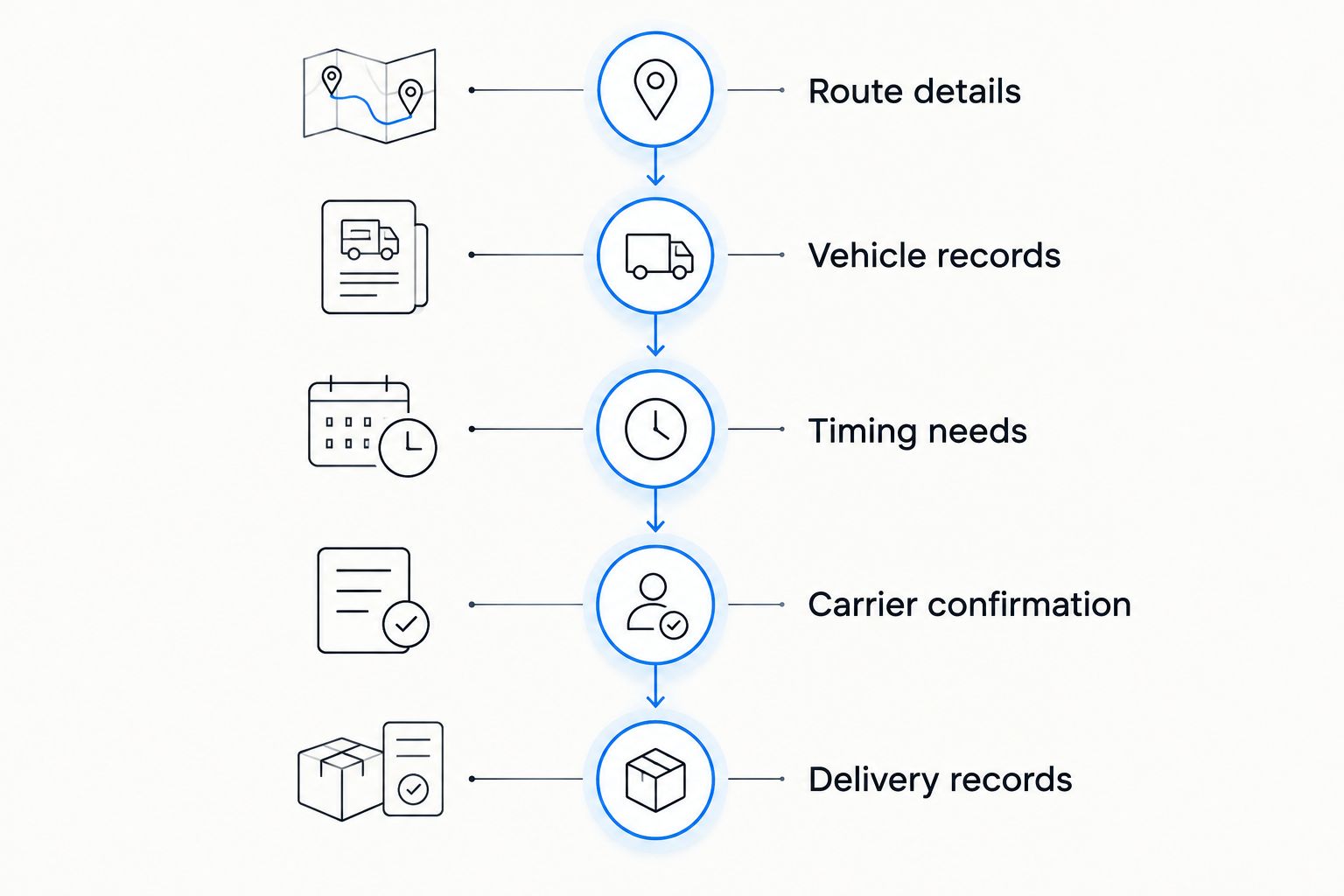
Use the shipment brief as a change-control document. If you change the destination, vehicle list, equipment request, or timing, ask every provider to respond to the revised scope instead of comparing an old proposal with a new one.
How these options are ranked
The ranking follows buyer tasks: recurring coordination first, routine equipment selection second, then auction release, enclosed handling, and urgent timing. The criteria are matched scope, access, timing, handling, coverage, and documentation.
This is not a measured company price leaderboard. Without current, equivalent quotes for the same shipment, naming a nationwide cheapest provider would turn a buying guide into an unsupported comparison.
For your own 2026 ranking, eliminate proposals that leave a required element unresolved. Compare the remaining written offers only after you understand their scope and conditions.
Which transport option should you choose?
CHD is a fit for recurring commercial auto transport that needs carrier coordination, pickup planning, shipment status, and delivery management. Confirm the arrangement against your locations and vehicle requirements before approving a move.
For routine inventory, start with open transport and a workable pickup window. Add auction release coordination, enclosed handling, or expedited timing only when the shipment actually requires it.
Send the route, vehicle list, transport preference, readiness date, and receiving constraints together. That lets the conversation address the move you need rather than an incomplete request.
Discuss recurring vehicle moves
Share your routes, vehicle mix, pickup procedures, and receiving requirements.
FAQ
What are the cheapest auto transport companies in 2026?
The cheapest provider for your shipment is the one with the lowest comparable written quote that meets your requirements. A nationwide company ranking does not establish the cheapest option for a specific route, vehicle, and pickup window.
Is open transport the best place to start a budget comparison?
Open transport is the best starting comparison for routine vehicles without an enclosed-handling requirement. Ask providers to quote the same route, vehicle details, and pickup window before evaluating their proposals.
Does CHD own the trucks that move vehicles?
CHD is a transport brokerage that coordinates carriers, not a company represented here as owning the transport trucks. Confirm the carrier arrangement, equipment, and shipment requirements for each move.
What changes an auto transport estimate?
Route details, vehicle characteristics, operability, equipment requirements, access, and timing affect the transport request. Ask the provider to identify which changes require a revised written proposal.
Can expedited transport guarantee my requested arrival date?
An expedited request alone does not guarantee an arrival date. Confirm availability and the specific timing commitment before planning another business activity around delivery.
Does enclosed transport mean every vehicle is fully covered?
Enclosed transport does not establish insurance coverage for every vehicle or risk. Verify applicable limits, exclusions, deductibles, and vehicle eligibility for the actual carrier arrangement.
What should a dealership send when requesting recurring transport?
Send recurring routes, vehicle details, release procedures, pickup contacts, timing needs, and receiving restrictions. Specify the shipment updates and delivery documentation your team needs.
Should I book transport before an auction releases the vehicle?
You can discuss the transport plan before release, but confirm collection readiness before committing the pickup arrangement. The auction’s authorization requirements and location access still control whether the vehicle can be collected.
One last thing
An accurate quote can still describe the wrong move. Check the destination contact against the vehicle's intended next stop: retail inventory, reconditioning, or another receiving facility.
Verify the destination before approving dispatch. That small check keeps your quote comparison tied to the shipment your business actually needs.
Related guides