Enclosed vs Open Transport
Enclosed vs. Open Auto Transport:
Which Is Right for Your Vehicle?
By Dean Xeros, EVP of Business Development, Car Haul Direct
USDOT 4321158 | MC 1685969 | carhauldirect.com
Most people shipping a car for the first time ask one question before anything else: “Does my car need to be in an enclosed trailer?” It’s a fair question, and the answer isn’t complicated, but the industry tends to either oversimplify it (“enclosed is always better”) or overcomplicate it to justify upselling you. Neither serves you well.
Here’s the honest breakdown. Car Haul Direct has transported 50,000+ vehicles across both transport types. We provide access to $2M in supplemental cargo insurance on every load. We’ve seen what actually happens to vehicles in transit, and we’ll tell you straight: the right choice depends on your vehicle, not on which option sounds more premium.
What open transport is and how it works
Open transport is the standard method for shipping a vehicle in the United States. When you see a multi-level car carrier on the interstate loaded with a dozen vehicles, some hanging over the cab, some on the lower deck, that’s open transport. It’s the same method automakers use to move new inventory from manufacturing plants to dealerships. The entire new-vehicle distribution network generally runs on open carriers.
The mechanics
An open carrier typically holds 8-10 vehicles arranged across two levels. Vehicles are driven onto the trailer, secured with wheel straps and chains at designated tie-down points, and transported without any enclosure protecting them from the elements. Wind, rain, road debris, and temperature changes all reach the vehicles during transit.
Why it’s the dominant method
Open carriers hold more vehicles per load, which distributes the carrier’s operating costs (fuel, insurance, driver wages, equipment maintenance) across a larger number of customers. The economics are straightforward: more vehicles per trip means lower cost per vehicle. That’s why open transport is consistently the cheaper option, with enclosed typically adding 40 to 60 percent on the same route.
What open transport handles well
Standard sedans, trucks, minivans, crossovers, and SUVs in normal operating condition. The overwhelming majority of personal vehicles ship open without issue. Manufacturers trust open transport with brand-new vehicles before a single mile is on the odometer.
What open transport doesn’t protect against
While rare, road debris kicks up. Rain and road spray reach the vehicle. Bird droppings happen. None of this causes meaningful damage to a vehicle in standard condition (that’s what a car wash is for), but if you’re shipping something where any cosmetic contact is unacceptable, open transport isn’t the answer.
What enclosed transport is and how it works
Enclosed transport puts your vehicle inside a fully covered trailer: four walls, a roof, and a floor. No exposure to weather, road spray, or debris. The carrier runs fewer vehicles per load, typically 2-6, and the trailer itself is designed to handle vehicles that require extra care in loading, securing, and transit.
The mechanics
Most enclosed trailers operate as either single-level or liftgate-equipped multi-level units. Liftgate trailers are particularly important for low-ground-clearance vehicles (exotic sports cars with 4-inch ride heights, for example) that can’t be driven up a standard loading ramp without scraping. Vehicles are loaded with soft straps rather than wheel chains in many configurations, minimizing contact with painted or chrome surfaces.
Two types of enclosed trailers
- Soft-sided enclosed trailers use a canvas or vinyl covering over an open frame. They block most weather and debris but aren’t fully rigid. These run cheaper than hard-sided options and work well for most vehicles that need some protection beyond standard open transport.
- Hard-sided enclosed trailers are fully rigid metal construction. Complete protection from weather, debris, and any external contact. This is what you want for a $200,000 exotic, a concours-condition classic, or a vehicle heading to an auto show where the paint needs to arrive perfect.
Who uses enclosed transport?
Exotic car owners, classic car collectors, dealerships moving high-value inventory, auction houses transporting purchased vehicles, and owners of any vehicle where appearance is both financially and emotionally significant.
How much more does enclosed cost?
The enclosed premium typically runs 40 to 60 percent above open transport for the same route. That’s a consistent range across the industry in 2026. Here’s how that plays out on real routes:
| Route | Miles | Open transport | Enclosed transport |
|---|---|---|---|
| Miami → New York | 1,280 mi | $1,200-$1,400 | $1,600-$1,800 |
| Dallas → Los Angeles | 1,425 mi | $800-$1,100 | $1,400-$1,850 |
| Chicago → Seattle | 2,060 mi | $1,050-$1,450 | $1,650-$2,300 |
Why the premium exists: Enclosed carriers move fewer vehicles per load. A 10-car open carrier spreads its operating costs across 10 customers. A 4-car enclosed carrier spreads the same fixed costs across 4 customers. That math alone accounts for most of the premium. Add in specialized equipment (liftgates, soft straps, climate-controlled options) and the rest of the gap makes sense.
Is the premium worth it? That depends entirely on your vehicle and your risk tolerance, which is exactly what Section 6 addresses. For most standard vehicles, paying a $500-$700 premium to enclose a $25,000 car doesn’t make financial sense. For a $150,000 sports car, paying that same premium to eliminate even a small risk of cosmetic damage is an obvious decision.
Which vehicles should always ship enclosed?
Some vehicles belong in enclosed transport. This isn’t about prestige, it’s about matching the protection level to the actual risk profile of the asset.
Exotic and supercar-class vehicles
Lamborghini, Ferrari, McLaren, Porsche 911 GT variants, Bugatti, Koenigsegg. These vehicles combine extreme value, extremely low ground clearance, and paint finishes that require significant labor to repair correctly. A single rock chip on an exotic can cost $2,000-$5,000 to address properly. The enclosed premium is insurance in the most literal sense.
Classic and collector cars
A 1967 Shelby GT500 or a numbers-matching 1970 Chevelle SS isn’t just valuable, it’s often irreplaceable. Original paint, patina, chrome, and glass that can’t be replicated deserve full protection. Enclosed transport for a classic also eliminates the moisture and temperature cycling that open transport subjects a vehicle to over a multi-day haul.
High-value luxury vehicles
Rolls-Royce, Bentley, Aston Martin, high-trim Mercedes-Maybach, and similar vehicles warrant enclosed transport not just for value reasons but because owners and dealers expect delivery in showroom condition. A $250,000 vehicle with a door ding from a shifting load is a serious problem.
Low-ground-clearance performance vehicles
Any vehicle with under 4 inches of ground clearance faces loading risk on standard open carriers. Lowered sports cars, air-suspension vehicles in their low setting, and modified vehicles with aftermarket suspension all benefit from liftgate-equipped enclosed trailers that eliminate ramp loading entirely.
Show vehicles and auction purchases
Vehicles headed to or from auto shows need to arrive in presentation condition. Auction purchases, particularly from Barrett-Jackson, Mecum, or RM Sotheby’s, often have buyers who haven’t physically seen the vehicle and are relying entirely on its described condition. Enclosed transport protects that condition from the moment the gavel falls.
New, unregistered vehicles with no insurance history
Some buyers of high-value new vehicles prefer to ship enclosed before the vehicle ever touches public roads. There’s no claim history, no break-in period, and the owner wants it delivered exactly as it left the dealer.
Common myths about open transport
Open transport is dangerous for your vehicle.
Open transport moves hundreds of thousands of vehicles every day without incident. New cars roll off assembly lines and ship open to dealerships across the country. If open transport were genuinely risky, the automakers would have abandoned it decades ago. Vehicles are secured with professional tie-down systems, loaded by experienced drivers, and inspected at pickup and delivery.
Your car will arrive filthy and you’ll need an immediate detail.
Your car will arrive dusty and may have road spray on it, just like it would after driving 1,000 miles yourself. A basic wash handles it. This is not a compelling reason to pay a 50% premium.
Open carriers are more likely to be in accidents.
Transport mode has no bearing on carrier accident rates. Driver experience, equipment maintenance, and routing decisions determine safety outcomes, not whether the trailer has walls.
Enclosed transport means your car is insured for more.
Cargo insurance coverage is determined by the carrier’s policy and the declared value of your vehicle, not by transport type. Car Haul Direct provides access to $2M in supplemental cargo insurance across both open and enclosed loads. Choosing enclosed doesn’t automatically increase your coverage.
Open transport is for cheap vehicles.
Open transport is for standard vehicles, which includes plenty of $40,000-$60,000 trucks, SUVs, and sedans. Transport type is about matching protection to risk profile, not about how much the customer spent on the vehicle.
How to decide: the 3-question decision guide
If you’re still uncertain after reading Sections 1-5, run through these three questions in order. Most people have a clear answer by the end of the second question.
What is your vehicle worth, and what would cosmetic damage actually cost?
If your vehicle is worth under $50,000 and a paint chip or minor cosmetic issue would be a standard insurance claim rather than a financial event, open transport is almost certainly the right call. If your vehicle is worth over $80,000, or if cosmetic repair would be expensive, specialized, or a significant inconvenience, move toward enclosed.
Does your vehicle have physical characteristics that create loading or transit risk?
Check your ground clearance. If it’s under 4 inches, you need a liftgate-equipped trailer, which means enclosed. If your vehicle has wide-body modifications, is significantly lowered, or has exterior components that extend beyond standard dimensions, enclosed transport gives the driver more control over how the vehicle is loaded and positioned.
Does the condition of your vehicle arrive in matter beyond normal wear?
If your vehicle is heading to an auto show, an auction, a photoshoot, or a new owner who has never seen it in person, arrival condition is not just a preference, it’s an obligation. Enclosed transport eliminates the variables that open transport introduces.
The simple summary: if you answered “yes” to any of these three questions, book enclosed. If you answered “no” to all three, open transport will serve your vehicle well and save you real money.
FAQ: enclosed vs. open auto transport
Can I request top-load placement on an open carrier?
Yes, and it’s worth requesting. The top deck of an open carrier eliminates fluid drip risk from vehicles loaded above yours: there are none. It also tends to reduce road spray contact. Not all brokers guarantee top-load placement, but Car Haul Direct can note the preference in your order.
Does enclosed transport take longer than open?
Sometimes, yes. Open carriers run more frequently on established lanes because they move higher volume. Enclosed carriers run less frequently, particularly on less-traveled routes. On major corridors (Miami to New York, LA to Chicago) you’ll rarely see more than a day’s difference. On regional or rural routes, enclosed bookings can take 2-5 days longer to coordinate.
Is my personal auto insurance valid during either type of transport?
No. Personal auto policies cover you while you operate the vehicle. Once it’s in the carrier’s custody, the carrier’s cargo insurance applies. Car Haul Direct provides access to $2M in supplemental cargo coverage on every load, open or enclosed.
What's the Bill of Lading and why does it matter?
The Bill of Lading is the inspection document completed at pickup and delivery. The driver notes every pre-existing scratch, dent, chip, and mark before loading. You do the same inspection at delivery and sign off on the vehicle’s condition. If damage occurred in transit, this document is the basis for any claim. Never skip the delivery inspection, and never sign a clean delivery receipt if you see damage.
Does enclosed transport come with climate control?
Some enclosed trailers offer climate control, but it’s not standard. If you’re shipping a vehicle with a particularly sensitive interior (aged leather, original rubber seals, a freshly restored classic), ask specifically about temperature management. Car Haul Direct can advise on carrier options for climate-sensitive loads.
Can I ship a non-running vehicle in either transport type?
Yes. Non-running vehicles require a winch load to get onto the carrier, which adds $100-$200 to the quote and is available in both open and enclosed configurations. Disclose the inoperable status upfront, carriers need to plan for it before they arrive.
Are motorcycles shipped open or enclosed?
Motorcycles ship in enclosed trailers almost exclusively, but in a different configuration than cars, typically in specialized motorcycle-only trailers or enclosed multi-bike configurations with individual chocking systems. The open car carrier isn’t designed for two-wheeled vehicles.
What if my vehicle gets damaged in transit?
Document it at delivery before you sign the Bill of Lading. Photograph everything. Note the damage on the delivery inspection report alongside the driver. Contact your broker immediately. The claim process runs from the comparison between the pickup and delivery inspections, which is exactly why the pre-load inspection matters. Car Haul Direct’s $2M supplemental cargo coverage handles legitimate transit damage claims.
More Car Shipping Guides
Practical guides on cost, timing, insurance, and preparing your vehicle for transport.
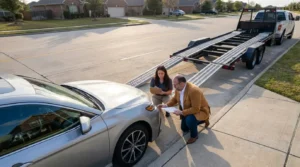
Vehicle Inspection at Pickup and Delivery in 2026: How to Document Condition and Avoid Disputes
Learn vehicle inspection at pickup and delivery best practices, bill of lading vehicle inspection steps, and how to document condition to avoid disputes.
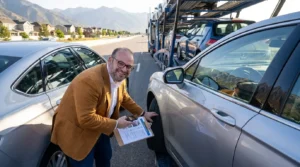
Car Shipping Preparation Checklist: 15 Steps to Get Your Vehicle Ready for Transport
Use this car shipping preparation checklist with 15 steps to prepare car for shipping, avoid delays, and complete your vehicle shipping checklist.
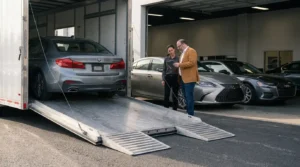
Lease Return Vehicle Transport: A Step-by-Step Guide for Dealers, Fleets, and Lessors
Learn lease return vehicle transport step by step, from inspection and pickup to remarketing transport and dealer vehicle transport.
Still deciding? Get a quote for both options.
Car Haul Direct will quote you both open and enclosed transport for your specific vehicle and route. You’ll see the real price difference and make the call with full information, not a sales pitch.