Auto Transport Insurance Explained:
What Brokers Don't Tell You
By Dean Xeros, EVP of Business Development, Car Haul Direct
(USDOT 4321158 | MC 1685969)
Carrier Cargo Insurance vs.
Broker Liability: What Actually Covers Your Car
Here’s the first thing to understand: the company you booked with may not be the company actually moving your car.
In the auto transport industry, there are two types of businesses: brokers and carriers. Brokers arrange shipments. Carriers own the trucks and physically move the vehicles. Many companies operate as both, but many don’t, and that distinction matters enormously when something goes wrong.
Carrier cargo insurance
is the policy that actually covers your vehicle while it’s in transit. Licensed carriers are required by the FMCSA (Federal Motor Carrier Safety Administration) to carry cargo insurance, and that coverage travels with your car on their truck. If a carrier damages your vehicle, their cargo policy is what pays.
Broker liability,
on the other hand, is often close to zero. A broker’s job is to connect you with a carrier, and once your car is handed off, most brokers have no legal obligation to cover damage. Their contracts frequently include language that shifts all liability to the carrier.
This is the gap most people fall into. They book with a broker, assume they’re covered, and then find out after a door gets dinged or a bumper cracked that the broker is pointing at the carrier, the carrier is disputing fault, and nobody is returning calls.
Under FMCSA regulations, licensed auto transporters must carry minimum cargo insurance. You can verify any carrier’s insurance and authority at safer.fmcsa.dot.gov using their USDOT number. This takes about two minutes and should be a non-negotiable step before you hand over your keys.
Your Personal Auto Insurance
May Not Cover Transit Damage
Most drivers assume their personal auto insurance policy covers their car no matter where it is or what’s happening to it. That assumption is often wrong.
Standard personal auto insurance covers your vehicle while you, or someone you authorize, is driving it. When your car is loaded onto a transport carrier, it’s no longer being driven. It’s cargo. And cargo is a different category entirely.
Here’s what typically happens when a shipper tries to file a claim with their personal insurer after transit damage:
- The insurer asks if the vehicle was in an accident. You say no: it was on a truck.
- The insurer notes that your policy covers collision and comprehensive while the vehicle is operated on the road.
- The claim gets denied, or you’re told to file with the carrier.
Some policies do extend coverage to transit situations, but many have explicit exclusions or limitations. Before your vehicle ships, call your insurance provider and ask directly: “If my car is damaged while being transported on a commercial carrier, am I covered under my current policy?” Get the answer in writing if you can.
How to Read a Carrier's
Certificate of Insurance (COI)
Every legitimate carrier should be able to produce a Certificate of Insurance (COI) on request. If they can’t or won’t, stop there. A COI is a one-page summary of an insurance policy. Here’s what to look for:
Coverage amounts
The FMCSA sets minimum cargo insurance requirements, but minimums aren’t always enough, especially for luxury vehicles or classics. Look at the per-occurrence and aggregate limits. A $100,000 policy spread across 8-10 vehicles provides much less protection than it sounds.
Policy effective dates
Make sure the policy is active. An expired certificate is worthless. Check that the dates cover your pickup and delivery window.
Named insured
The company named on the certificate should match the carrier you’re working with. If there’s a mismatch, such as a parent company or different LLC, ask for an explanation.
Type of coverage
Look for “cargo” or “motor truck cargo” coverage specifically. General liability is not cargo insurance. Don’t accept one in place of the other.
Exclusions
COIs don’t always list exclusions, but you can ask the carrier for the full declarations page. Common exclusions include pre-existing damage, acts of God, and sometimes specific vehicle types.
Confirm with the insurer
When in doubt, call the insurance company listed on the certificate directly and confirm the policy is active. The carrier’s agent number or policy number will be on the document.
The Bill of Lading:
Your Most Important Document
If there’s one piece of paper in the entire shipping process you cannot afford to ignore, it’s the Bill of Lading (BOL). It is the legal contract between you and the carrier, documents your vehicle’s condition at pickup and delivery, and is your primary evidence if you need to file a damage claim. Without a properly completed BOL, a damage claim becomes your word against the driver’s.
At pickup
- Walk the vehicle with the driver. Don’t let them inspect alone.
- Check every panel, the roof, the undercarriage if you can see it, all glass, lights, and mirrors.
- Make sure every piece of damage they note is real. Don’t let them over-document vaguely.
- Make sure damage you see is on the document. If it’s not there, note it yourself.
- Take timestamped photos from every angle, including close-ups of any existing damage.
- Sign the BOL only when you agree with what’s documented.
At delivery
- Do not sign the delivery BOL until you have inspected the vehicle thoroughly in good lighting.
- If it’s dark, ask the driver to wait or note on the BOL that inspection was conducted in low light.
- If there is new damage not on the pickup BOL, note it before signing and photograph everything.
- Never sign a clean delivery BOL if you haven’t inspected the car. Once signed, the record shows acceptable delivery.
How Car Haul Direct's Coverage
Works: $2M Per Shipment
Car Haul Direct operates as a broker. We arrange your shipment with vetted, licensed carriers, and the carrier’s cargo policy is the primary insurance covering your vehicle in transit.
What sets CHD apart is what we offer on top of that. We provide customers access to $2M in supplemental cargo insurance per shipment. This coverage exists specifically to fill gaps that the carrier’s base policy may leave behind. Think of it as a second layer of protection, one that’s available to you because we’ve built it into how we operate.
Here’s why that matters in practice: a truck hauling eight vehicles with a $100,000 cargo policy is spreading that limit thin. If a serious incident occurs and multiple vehicles are damaged, claims get divided. A high-value vehicle owner may recover far less than the actual damage warrants. The supplemental coverage we make available is designed to protect against exactly that scenario.
If you’re shipping a high-value vehicle (a luxury sedan, a classic, a collector car, anything where the gap between the carrier’s policy limit and your vehicle’s actual value keeps you up at night), this is the conversation to have with us before your car ships.
Our team will explain exactly what the carrier’s policy covers, where the supplemental insurance applies, and what you need to do to access it if a claim arises. You can also verify our broker authority at safer.fmcsa.dot.gov using our USDOT number: 4321158.
How to File a Claim
If Damage Occurs
If your vehicle sustains damage during transport, the way you handle the first 24-48 hours matters. Carriers have a legal obligation to respond to cargo claims within a reasonable timeframe under the Carmack Amendment, which governs cargo liability for interstate shipments.
Document at delivery
Note all damage on the delivery BOL before signing. Take photos immediately: time-stamped, from multiple angles, in good light.
Notify the carrier in writing
Contact the carrier (and your booking company, if different) as soon as possible. Email creates a paper trail. State clearly that you are reporting transit damage and attach your photos.
Get a repair estimate
Take the vehicle to a reputable body shop and get a written estimate. Do not authorize repairs before the claim is resolved. Doing so can complicate the process.
Submit the claim formally
You’ll need to provide: the original Bill of Lading (pickup and delivery copies), your photos, the repair estimate, and proof of the vehicle’s value if the damage is significant.
Follow up consistently
Keep records of every communication: dates, names, what was said. If a carrier is unresponsive or denying a valid claim without explanation, you can file a complaint with the FMCSA.
FAQ: Auto Transport Insurance Questions Answered
Does the auto transport company's insurance automatically cover my car?
Yes, the carrier’s cargo insurance covers your vehicle while it’s in their possession. But coverage only kicks in for damage that wasn’t pre-existing and that occurred during transit. Document the vehicle’s condition thoroughly at pickup.
What if I booked through a broker?
If your broker contracted a separate carrier, the carrier’s insurance is what covers your vehicle. The broker typically has no cargo liability. Always get the actual carrier’s name, USDOT number, and COI before your vehicle ships.
Does my personal auto insurance cover transit damage?
Often no. Most personal auto policies cover the vehicle while it’s being driven, not while it’s cargo on a transport truck. Call your insurer before shipping to confirm.
What's the minimum insurance a carrier is required to carry?
The FMCSA sets minimum cargo insurance requirements for licensed auto transporters. You can verify current requirements and confirm any carrier’s active coverage at safer.fmcsa.dot.gov.
What if the driver won't let me inspect the car before signing the BOL?
Don’t sign. You have the right to inspect your vehicle before accepting delivery. A legitimate carrier will not pressure you to skip inspection.
Is open transport or enclosed transport better for insurance purposes?
Both can be properly insured. Enclosed transport reduces exposure to weather and road debris, but it doesn’t inherently mean higher insurance limits. Ask about coverage specifics regardless of transport type.
What happens if the carrier's claim is denied or they stop responding?
Document everything and file a complaint with the FMCSA. You may also have options under the Carmack Amendment, which gives vehicle owners a federal legal framework for pursuing cargo damage claims against interstate carriers.
How do I verify a carrier's insurance before my car ships?
Go to safer.fmcsa.dot.gov, enter the carrier’s USDOT number, and review their active authority and insurance status. You can also request a Certificate of Insurance directly from the carrier and call the issuing insurer to confirm it’s valid.
More Car Shipping Guides
Plain answers on cost, timing, and how your vehicle actually gets from A to B.
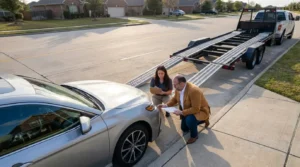
Vehicle Inspection at Pickup and Delivery in 2026: How to Document Condition and Avoid Disputes
Learn vehicle inspection at pickup and delivery best practices, bill of lading vehicle inspection steps, and how to document condition to avoid disputes.
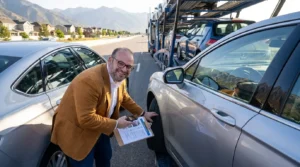
Car Shipping Preparation Checklist: 15 Steps to Get Your Vehicle Ready for Transport
Use this car shipping preparation checklist with 15 steps to prepare car for shipping, avoid delays, and complete your vehicle shipping checklist.
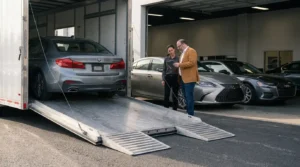
Lease Return Vehicle Transport: A Step-by-Step Guide for Dealers, Fleets, and Lessors
Learn lease return vehicle transport step by step, from inspection and pickup to remarketing transport and dealer vehicle transport.