Inoperable Vehicle Transport for Non-Running Cars
Cars that cannot drive onto a trailer under their own power, whether the car will not start, will not roll, or will not steer. CHD matches non-running vehicles with carriers that have the right loading equipment, typically adding $100-$200 over a running car on the same lane.
- Non-running vehicles typically add $100-$200 over a running car
- Carriers matched to the car actual condition: start, roll, steer, brake
- Most auction purchases include 3-5 free storage days before fees start
Inoperable vehicle transport moves cars that cannot drive onto a trailer under their own power, whether the car will not start, will not roll, or will not steer. Car Haul Direct matches non-running vehicles with carriers that have the right loading equipment, typically adding $100-$200 over a running car on the same lane, with $2M cargo insurance on every load.
Reviewed by Mike Fergusson, EVP Operations, Car Haul Direct
Honest handling for non-running cars
The condition answers decide the equipment, so the quote holds at the curb.
$100-$200 Typical Add
Inoperable handling typically adds $100-$200 to the running-car price on the same lane, quoted up front.
Condition-First Booking
CHD asks whether the car starts, rolls, steers, and brakes before quoting, so the right carrier shows up.
Winch-Equipped Carriers
For cars that roll and steer, winch loading is the common method carriers use to pull the car aboard.
Non-Roller Solutions
True non-rollers may need a forklift or similar equipment at pickup and delivery, arranged case by case.
$2M Cargo Insurance
Non-running and salvage vehicles carry the same $2M cargo coverage as any other shipment.
48-State Coverage
Inoperable transport reaches all 48 contiguous states, including rural pickups that add 1-2 days to the window.
Quoted on Real Condition
The figures that govern a CHD inoperable move.
$100-$200
Typical Inoperable Add
What a non-running car typically adds over the running-car price on the same lane.
$2M
Cargo Insurance Coverage
The same coverage as any other shipment, salvage and non-runners included.
1-3
Day Pickup Window
Typical metro pickup after booking; rural pickups add 1-2 days.
3-5
Free Auction Storage Days
What most auction purchases include before per-day storage fees start.
Inoperable vehicle transport: quick answers
Cost, non-starters, and how a car that cannot drive gets aboard.
How much does inoperable vehicle transport cost?
Inoperable vehicle transport typically costs $100-$200 more than shipping the same car running on the same lane. The add covers the extra loading time and equipment. Your exact number depends on route and condition; the instant quote calculator reflects it once you mark the car as non-running.
Can you ship a car that does not start?
Yes. A car that does not start but still rolls and steers is the most common inoperable shipment. Carriers commonly winch it onto the trailer, which typically adds $100-$200. Disclose the exact condition at booking so the assigned carrier arrives with the right equipment and your quote stays accurate.
How is a non-running car loaded onto a trailer?
Most non-runners that roll and steer are winched up the trailer ramps, the common method for this work. A car that cannot roll, steer, or hold air in its tires may need a forklift at both ends, arranged case by case. The condition details at booking determine which method applies.
Who ships inoperable vehicles?
Project Car Owners
The restoration candidate in your garage has not run in years. Roll-and-steer project cars are the easiest inoperable loads.
Salvage Auction Buyers
You won a non-runner at auction and the 3-5 free storage days are ticking. Book transport against the yard release process.
Barn Find Rescues
Long-parked cars often roll but do not start. An honest condition answer at booking gets the right carrier on the first dispatch.
Breakdowns Far From Home
The car died in another state and the repair quote made no sense. Shipping it home beats a second trip and a second tow.
Estate and Inherited Cars
Inherited vehicles frequently sit undriven for years. Documented condition photos and a Bill of Lading at pickup protect everyone at delivery.
Service options for non-running vehicles
Six ways the CHD service set maps onto a car that cannot drive aboard.
Open Transport
The default for inoperable vehicles. Most winch-equipped carriers run open trailers, keeping the $100-$200 add and typical 1-3 day pickup windows realistic.
Enclosed Transport
Non-running collector cars can move enclosed, typically 40 to 60 percent above open on the same lane plus the inoperable add. Loading method is confirmed at booking.
Winch Loading
The common method for cars that roll and steer. The car is pulled up the ramps under cable instead of being driven aboard.
Forklift Coordination
True non-rollers may need a forklift at pickup and delivery. This is arranged case by case and confirmed before a carrier is dispatched.
Auction Pickup
Salvage auction purchases move under the yard release rules, and most auction purchases include 3-5 free storage days before per-day fees start.
Insurance Coverage
$2M cargo insurance applies to inoperable and salvage vehicles. Condition photos and the Bill of Lading at pickup document what was already wrong.
From condition report to delivery in 5 steps
Five steps that start with an honest answer about what the car can do.
1. Describe the Car Honestly
Tell CHD whether it starts, rolls, steers, and brakes, plus tire and key status. Accuracy here prevents refused loads.
2. Get an Instant Quote
The calculator prices the route, and inoperable handling typically adds $100-$200 to the running-car number.
3. Carrier Matched to Condition
CHD assigns a carrier with the equipment your answers require, commonly a winch-equipped trailer.
4. Loading Day
The driver winches the car aboard or uses the arranged equipment, documents condition with photos and the Bill of Lading, and secures it.
5. Delivery and Unload
The same condition answers guide the unload at destination; you inspect against the Bill of Lading before signing.
Inoperable vehicle transport FAQ
What counts as inoperable, the add, keys, salvage yards, and enclosed.
Any car that cannot be driven onto the trailer under its own power: it does not start, does not roll, or does not steer. Handling differs by which applies, since a car that rolls and steers loads far easier than a true non-roller. Answer the condition questions honestly at booking.
Typically $100-$200 over the running-car price on the same lane, covering the extra loading labor and equipment. True non-rollers that need a forklift can cost more and are quoted case by case. The calculator reflects the inoperable add when you mark the condition correctly.
Not necessarily, but the answer changes the equipment. A car that rolls and steers is a standard winch load. Missing brakes complicates loading, and a true non-roller may need a forklift at both ends, arranged case by case. Disclose everything at booking so the right carrier arrives.
Yes whenever possible. Drivers typically need keys to unlock the steering column and shift the car into neutral during winch loading. No keys can push the job toward forklift handling, which changes the price. Flag missing keys at booking so the equipment decision happens before dispatch.
Yes. Auction pickups follow the yard release process, and most auction purchases include 3-5 free storage days before per-day storage fees start. Book transport as soon as your release clears, because a driver turned away at the gate burns the storage window and the budget.
Keep the cabin and trunk empty. Winch loading tilts the car steeply, and loose items shift and damage interiors. The running-car guidance that most carriers allow around 100 lbs in the trunk does not apply here. Ship spare parts separately.
Yes, and it is common for non-running collector cars. Enclosed typically costs 40 to 60 percent above open on the same lane, plus the $100-$200 inoperable add. The loading method is confirmed at booking, since enclosed trailers load differently than open ones.
Latest Car Shipping Guides
Straight answers on cost, timing, and prep for every shipment.
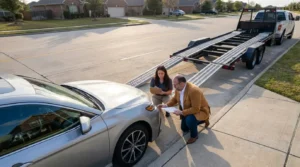
Vehicle Inspection at Pickup and Delivery in 2026: How to Document Condition and Avoid Disputes
Learn vehicle inspection at pickup and delivery best practices, bill of lading vehicle inspection steps, and how to document condition to avoid disputes.

Car Shipping Preparation Checklist: 15 Steps to Get Your Vehicle Ready for Transport
Use this car shipping preparation checklist with 15 steps to prepare car for shipping, avoid delays, and complete your vehicle shipping checklist.
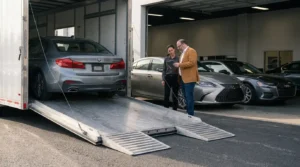
Lease Return Vehicle Transport: A Step-by-Step Guide for Dealers, Fleets, and Lessors
Learn lease return vehicle transport step by step, from inspection and pickup to remarketing transport and dealer vehicle transport.
Get an Instant Quote With the Right Equipment
Mark the car condition honestly in the instant quote calculator on this page and see the exact price, including the typical $100-$200 inoperable add, before you book.