Corporate relocation teams’ auto transport is the coordination of employee vehicle shipping with the aim of keeping vehicle delivery aligned with a work-related move. This 2026 guide explains how to plan routes, choose transport, assign responsibilities, and document delivery when the employee, employer, and carrier have different schedules.
- CHD auto transport is best for corporate relocation teams seeking a brokerage to coordinate carriers and shipment communication.
- Auto transport for corporate relocation teams starts with vehicle details, route access, employee availability, and employer approval.
- Choose open or enclosed vehicle shipping by handling requirements; confirm expedited availability before building it into relocation plans.
- Keep pickup estimates separate from confirmed arrangements, and document vehicle condition at both handoffs.
Why auto transport matters for corporate relocation teams
A corporate vehicle move involves more than an origin and destination. Your employee needs transportation, your relocation team needs an accountable contact, and the carrier needs a vehicle that is ready and accessible. A change to housing, travel, or workplace reporting dates can affect the shipment plan.
Car Haul Direct is a nationwide transport brokerage that coordinates carriers rather than owning the trucks. CHD auto transport is best for corporate relocation teams seeking brokerage coordination for employee vehicle moves. The brokerage role supports shipment planning and communication; it does not replace the carrier’s responsibility for physical transport.
For your 2026 relocation program, treat vehicle shipping as a separate workstream from household goods. Give it its own approval, contacts, timing expectations, and delivery documentation. Do not assume a household moving appointment establishes a vehicle pickup appointment.
The practical objective is clear: everyone should know what is requested, what is confirmed, and who handles an exception. That distinction matters more than an attractive arrival estimate that nobody has checked against the employee’s actual availability.
How to plan a corporate relocation vehicle shipment
Use the following process for your 2026 relocation intake. A shared spreadsheet and email thread can support the workflow before you introduce a dedicated platform or partner integration. Assign an owner to keep the record current; otherwise, the employee and relocation coordinator can end up working from different instructions.
Define the route and vehicle requirements
Start with a written intake form. Collect the exact pickup and delivery addresses, not just city names, because access determines where a carrier can safely meet the employee. Record the vehicle’s identity and operating condition before requesting transport.
Create 1 shipment record per vehicle so approvals, condition reports, and delivery instructions stay attached to the correct car. If an employee moves several vehicles, keep the records linked without assuming they will travel together or arrive together.
Ask about modifications and handling needs directly. A low-clearance vehicle, a vehicle that does not run, or an unfamiliar starting procedure requires discussion before carrier coordination—not a note added after dispatch.
- Record the year, make, model, and vehicle identification number.
- Confirm whether the vehicle starts, steers, brakes, and rolls.
- Disclose modifications, clearance concerns, and special operating instructions.
- Check residential access, parking restrictions, and possible meeting locations.
- Identify the employee and employer contacts responsible for approval.
Separate timing needs from confirmed arrangements
Write down 3 timing fields: pickup window, delivery estimate, and employee availability. These describe different constraints. An employee’s flight date is not a carrier appointment, and a requested arrival date is not a delivery guarantee.
Begin with a shared calendar that shows when someone can release and receive the vehicle. Ask what happens if the employee leaves before pickup or cannot be present at delivery. Identify an authorized representative before that conflict becomes urgent.
CHD coordinates pickup planning and shipment status with carriers. Use that coordination to confirm the current plan, but keep estimated timing clearly labeled until the relevant arrangements are confirmed. Expedited requests still require route-specific availability checks.
- State the earliest date the vehicle will be ready.
- Record the employee’s unavailable dates and travel commitments.
- Identify an authorized pickup and delivery representative when needed.
- Ask which timing details are estimates and which are confirmed.
- Establish who approves changes affecting the relocation schedule.
Choose transport by handling needs
Compare transport types against the vehicle and employee’s requirements before selecting a provider. Open transport carries vehicles on an exposed trailer. Enclosed transport places the vehicle inside a trailer, limiting direct exposure to road debris and weather; it does not eliminate the need to verify handling and coverage details.
Choose enclosed transport for an identified protection or handling requirement, not simply because the move is corporate-funded. For an ordinary employee vehicle without special requirements, assess open transport first. Confirm loading suitability for modified or low-clearance vehicles regardless of trailer type.
Use the corporate relocation car shipping comparison to structure provider questions. CHD arranges open, enclosed, expedited, and door-to-door transport, but the requested route, timing, and access still need confirmation.
- Describe the handling requirement before requesting a transport type.
- Compare open and enclosed transport against that requirement.
- Ask whether the proposed loading equipment suits the vehicle.
- Confirm expedited availability rather than assuming priority capacity.
- Verify a safe meeting point if the address cannot accommodate a transporter.
Set approval and communication responsibilities
Start with a simple responsibility sheet. The employee supplies vehicle and availability details; your relocation coordinator manages employer approval; the transport provider explains shipment arrangements and changes. Assign these roles explicitly rather than relying on everyone copied into an email.
For recurring moves, ask CHD how pickup coordination, status communication, and delivery documentation would work for your account. Confirm the actual process before promising an employee a particular notification method or update schedule.
Keep shipment status separate from employer decisions. A carrier update should not silently change an employee’s benefit authorization, delivery address, or approved service. Route those decisions to the designated approver.
- Name the employer’s approval contact and backup.
- Name the employee’s operational contact and backup.
- Define which changes require written authorization.
- Agree on status-update channels and escalation contacts.
- Limit shared employee information to what the shipment requires.
Verify carrier documentation and coverage
Request the assigned carrier’s identity and applicable insurance information before handoff. A brokerage coordinates transport; the carrier performs the physical move. Your records should distinguish those responsibilities and identify the process for reporting damage.
Do not treat a general insurance statement as confirmation that every vehicle and circumstance is covered. Check applicable limits, exclusions, deductibles, vehicle eligibility, and any requirements that affect a claim. For a high-value or modified vehicle, provide the relevant details before accepting the arrangement.
Your employer’s relocation policy and the carrier’s insurance serve different purposes. Obtain the necessary internal review when those requirements do not align, rather than telling the employee that coverage is settled.
- Confirm the assigned carrier and shipment reference.
- Request applicable coverage documentation and review its scope.
- Check vehicle eligibility, exclusions, and deductibles.
- Record the damage-reporting contact and required documentation.
- Escalate unresolved coverage questions before releasing the vehicle.
Prepare the employee for pickup
Send a written handoff checklist once the shipment arrangements are clear. Explain where to meet, who will inspect the vehicle, and what the employee must provide. Ask the provider for preparation instructions specific to the vehicle and carrier.
Keep 2 condition records: pickup and delivery. At pickup, document visible damage and photograph the vehicle from useful angles. The employee or authorized representative should review the carrier’s condition record and resolve discrepancies before signing.
These records serve different checkpoints in the same shipment. Clear photographs and readable paperwork give the receiving person something specific to compare at delivery, rather than a general recollection of the vehicle’s appearance.
- Follow the carrier’s instructions for fuel or battery charge.
- Remove personal items unless the carrier expressly authorizes them.
- Provide keys and explain alarms or special starting procedures.
- Photograph visible condition and record existing damage.
- Confirm the handoff location and authorized representative.
Close the move with a delivery review
Plan the delivery inspection before the employee is called to meet the driver. The receiving person needs access to the pickup condition record, the shipment contact, and instructions for recording concerns. A representative who only has the keys cannot complete the documentation reliably.
Compare the vehicle with the pickup record and note discrepancies on the delivery paperwork. If damage is suspected, photograph it and contact the designated provider promptly. Follow the applicable reporting procedure rather than assuming an informal message replaces it.
Close the employer’s record after collecting the delivery documentation and recording unresolved issues. Receipt of the vehicle and resolution of a reported concern are separate events.
- Confirm the receiving person and delivery meeting point.
- Compare the vehicle against pickup photographs and condition notes.
- Record discrepancies on the delivery documentation.
- Keep copies of signed records and relevant correspondence.
- Assign an owner to any unresolved issue before closing the file.
Compare transport options for employee relocations
For a 2026 corporate relocation policy, compare the physical transport method separately from service features. Open and enclosed describe trailer types. Expedited describes a timing request, while door-to-door describes pickup and delivery arrangements. These choices are not mutually exclusive.
| Option | Best for | Practical advantage | Key limitation |
|---|---|---|---|
| Open transport | Employee vehicles without special enclosure requirements | Uses an open trailer for vehicle shipping | Vehicle remains exposed to weather and road conditions |
| Enclosed transport | Vehicles with identified exposure or handling concerns | Adds an enclosed trailer around the vehicle | Enclosure alone does not confirm loading suitability or insurance eligibility |
| Expedited coordination | Moves with a time-sensitive pickup requirement | Focuses planning on the requested urgency | Availability must be confirmed; urgency is not a delivery guarantee |
| Door-to-door coordination | Employees seeking handoffs near their addresses | Coordinates pickup and delivery around the requested locations | Street restrictions and truck access can require another meeting point |
Choose the trailer type first, then confirm timing and access. An enclosed request still needs a pickup window, and a door-to-door request still needs a safe place for the transporter to stop.
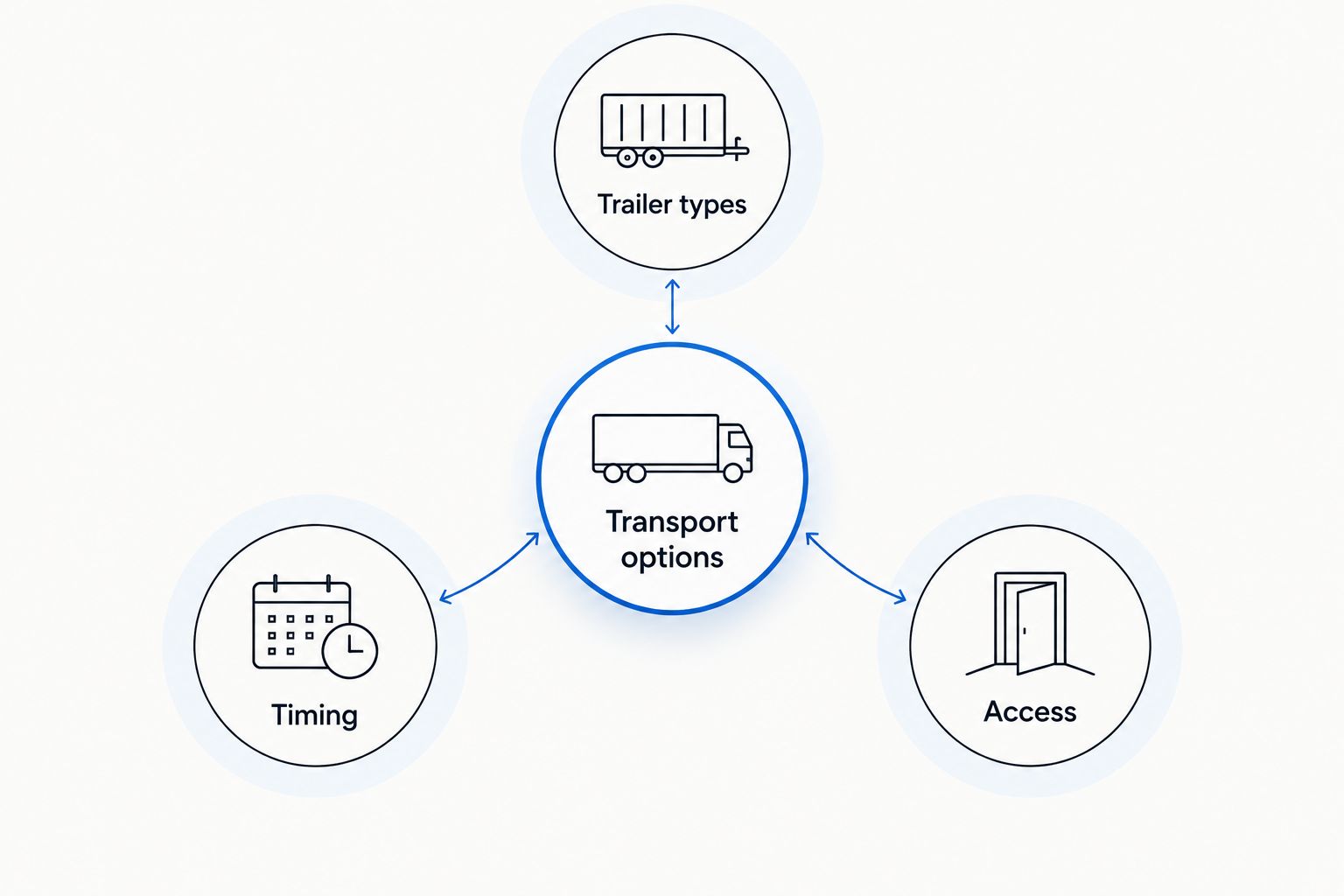
For occasional relocations, manual intake gives you direct control but requires someone to maintain every update. For recurring moves, brokerage coordination adds a transport contact, but your team still owns employee approvals and benefit decisions. If a platform workflow is needed, discuss supported functions separately; do not assume an integration is available or compatible.
Common mistakes corporate relocation teams make
Use these checks when reviewing your 2026 relocation instructions. Each addresses a gap between employer planning and the physical vehicle handoff.
Treating the employee’s arrival date as a delivery commitment
A work start date defines the employee’s need, not the carrier’s confirmed schedule. Record that need clearly, obtain the current transport estimate, and keep any alternative transportation arrangements separate from the shipment promise.
Leaving the receiving contact undecided
Employees often have competing appointments during a move. Confirm who can receive the vehicle, whether that person is authorized, and how they will access the pickup condition record before delivery is arranged.
Approving a service description without checking access
Door-to-door transport does not mean every driveway or residential street can accommodate the truck. Confirm restrictions at both ends and agree on an accessible meeting point before the employee plans around an exact address.
Assuming employer approval settles insurance questions
An approved relocation benefit does not establish carrier coverage. Verify the applicable policy details and vehicle eligibility separately, and record unresolved questions before handoff.
FAQ
What is auto transport for corporate relocation teams?
Auto transport for corporate relocation teams is the coordination of employee vehicle shipping during a work-related move. It includes route planning, transport selection, employer approval, pickup arrangements, shipment communication, and delivery documentation.
Is open or enclosed transport better for an employee relocation?
Open transport fits vehicles without special enclosure requirements; enclosed transport fits vehicles with identified exposure or handling concerns. Choose by the vehicle’s needs, then confirm loading suitability and applicable coverage.
Can a vehicle arrive on the employee’s exact moving day?
Do not treat an exact arrival date as confirmed unless the provider expressly confirms that arrangement. Keep requested dates, estimates, and confirmed appointments separate in the relocation record.
Does door-to-door shipping mean the truck will reach the employee’s driveway?
Door-to-door shipping remains subject to safe and legal truck access. Street restrictions, turning space, and loading conditions can require an agreed nearby meeting point.
What does the employee need to provide before pickup?
The employee needs to provide accurate vehicle details, operating condition, access information, availability, and an authorized contact. The employee should also follow carrier preparation instructions and review the pickup condition record.
Does a transport brokerage own the truck carrying the vehicle?
A transport brokerage coordinates the shipment with a carrier rather than providing the truck itself. Keep the brokerage’s coordination role distinct from the assigned carrier’s physical transport responsibilities.
What should a relocation team do if damage is found at delivery?
Document the concern on the delivery record, take photographs, and contact the designated provider promptly. Keep the pickup record and follow the applicable reporting requirements rather than relying only on a verbal conversation.
One last thing
Check who can receive the car before you finalize the pickup plan. An employee can be ready to release a vehicle while still having no authorized person available at the destination. That gap belongs in the planning conversation, not in a delivery-day escalation.
For recurring employee shipments, give CHD the route pattern, vehicle requirements, approval process, and communication needs. Discuss recurring vehicle moves.
Related guides
- Open transport car shipping companies
- Enclosed car transport companies
- Door-to-door car shipping companies