Nationwide Auto Transport · 24/7 Live Operations

Virginia Beach, VA Car Transport: 2026 Costs and Pickup Times

Door-to-door vehicle transport with a dedicated coordinator, transparent pricing, and full insurance coverage.

$2M Insurance Coverage

Every shipment is fully insured with cargo coverage verified before pickup.

30+ Enclosed Carriers

A vetted enclosed fleet for classics, exotics, and high-value vehicles.

Real-Time GPS Tracking

Follow your vehicle from pickup to delivery with live location updates.

Transparent Pricing

Firm quotes with no hidden fees and no pressure tactics.

Dedicated Coordinator

One point of contact from booking to delivery, with real-time updates.

48-State Coverage

Vetted carriers on every major corridor in the continental United States.

Reviewed by Mike Fergusson, EVP Operations, Car Haul Direct

1-3

DAYS TO PICKUP, VIRGINIA BEACH METRO

$300-$1,650

OPEN TRANSPORT, BY DESTINATION

I-⁠64 · I-⁠264 · I-⁠664

CARRIER CORRIDORS SERVING VIRGINIA BEACH

Key Takeaways

Typical cost: Open transport from Virginia Beach runs $400-$650 to New York, $600-$950 to Atlanta, $750-$1,150 to Tampa, and $1,200-$1,650 to Phoenix. Enclosed transport typically costs 40 to 60 percent more than open.

Transit time: Plan on 1-3 days to New York, 2-4 days to Atlanta or Tampa, 3-5 days to Miami, and 4-8 days to Phoenix once the truck is rolling.

Seasonality: The May to August Navy PCS surge at Norfolk, Oceana, and Dam Neck tightens carrier supply across Hampton Roads, so summer bookings need more lead time than fall ones.

Savings tip: Offer a flexible pickup day and meet your carrier on the near side of the bridge-tunnels, since a driver who avoids an extra Hampton Roads Bridge-Tunnel crossing can hold a tighter price.

Process: A coordinator assigns an insured carrier with $2M cargo insurance, nothing is due until a driver is assigned, and GPS tracking follows your car to delivery.

Popular Routes to and from Virginia Beach

Carriers reach Virginia Beach on I-⁠64 and I-⁠264, with I-⁠664 offering the alternate harbor crossing via the Monitor-Merrimac Memorial Bridge-Tunnel. For statewide pricing and corridor detail, see our Virginia car shipping guide.

Pickup and Delivery Logistics in Virginia Beach

Hampton Roads runs on Navy schedules. Naval Station Norfolk, NAS Oceana, and Dam Neck Annex put three major installations inside one metro, and the May to August PCS cycle fills local lanes with outbound vehicles. Book as early as your orders allow, because carriers running I-⁠64 fill their decks weeks ahead once orders season starts.

Geography is the local constraint. The Hampton Roads Bridge-Tunnel on I-⁠64 and the Monitor-Merrimac on I-⁠664 are the only ways across the harbor, and congestion at both shapes every pickup window. Drivers plan loads around bridge-tunnel peak delays, so a flexible morning or midday meeting keeps your pickup on schedule, and staging on the same side of the water as your carrier saves everyone an hour.

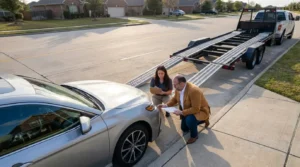
Within Virginia Beach itself, access splits by neighborhood. The Oceanfront resort strip has tight, crowded summer streets where a full-size car hauler will not stop, so drivers stage near a wide lot off Pacific Avenue or around Town Center. Kempsville, Great Neck, and Princess Anne offer easy curbside loading, and deliveries headed to Norfolk or Chesapeake stage on the near side of the tunnels.

Virginia Beach Car Transport FAQs

The 1,010 mile run from Virginia Beach to Miami typically costs $800-$1,200 on an open carrier, with 3-5 days of transit. Carriers run I-⁠64 west to I-⁠95 and then south from there, which keeps this lane well supplied. Fall bookings usually land near the bottom of the range, while the early summer PCS season pushes quotes upward.
Virginia Beach to Phoenix covers 2,420 miles and typically costs $1,200-$1,650 on an open carrier, with 4-8 days of transit. Trucks work west on I-⁠64 and I-⁠40 across the country. Summer PCS demand tightens westbound deck space, so booking three to four weeks ahead of a June or July move protects your price.
Metro pickups are typically assigned within 1-3 days of booking, then transit runs by distance: 1-3 days to New York, 2-4 days to Atlanta or Tampa, 3-5 days to Miami, and 4-8 days to Phoenix. Bridge-tunnel congestion can shift a pickup window by a few hours on peak summer days, but it rarely moves the date.
The PCS surge at Norfolk, Oceana, and Dam Neck runs May through August, with June and July the tightest months for carrier space. Book three to four weeks ahead of your report date, and stay flexible on your pickup day where you can. Shipments after Labor Day typically price lower and dispatch faster than midsummer ones.
Yes, but base access rules apply. Most carriers cannot clear gate security at NAS Oceana or Dam Neck Annex, so drivers meet you just outside the gate, at visitor control, or at a nearby retail lot along Oceana Boulevard or General Booth Boulevard. Off-base neighborhoods like Kempsville and Great Neck allow true door to door loading.
They can. The Atlantic season runs June through November, and Hampton Roads sits on a low-lying coast where tropical systems bring flooding and bridge-tunnel wind restrictions. Carriers watch forecasts and your coordinator will shift your window if a storm approaches. Outside of named systems, the coastal climate rarely delays transport.
Open transport handles most moves, but salt air, summer sun, and storm-season rain are hard on soft tops, fresh paint, and collector cars. Enclosed trailers shield the vehicle fully and typically cost 40 to 60 percent more than open. Daily drivers ship open, while exotics and classics justify enclosed, especially on the 4-8 day cross-country run to Phoenix.
Most carriers allow around 100 lbs of personal items packed in the trunk, kept below the window line. Contents are not covered by carrier insurance, so keep valuables, documents, and electronics with you. Tell your coordinator at booking if the car will carry extra weight so the driver can plan the load position.
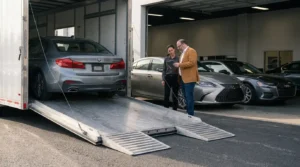
Yes. Every carrier Car Haul Direct assigns carries $2M cargo insurance, verified before dispatch. At pickup, you and the driver complete a bill of lading inspection that documents the car’s condition, and the same inspection happens at delivery. Any transport damage claim is filed against the carrier’s policy with that report as the record.

Nearby Cities We Serve

Related Pages

What Customers Say

Get Your Free Quote

Price your move instantly with our calculator: real shipment factors, not a mileage guess. A dedicated coordinator confirms your firm, all-in quote.

FROM THE BLOG

Car Shipping Guides