1-3
DAYS TO PICKUP, CHICAGO METRO
$700-$1,600
OPEN TRANSPORT, BY DESTINATION
I-90 · I-94 · I-55
CARRIER CORRIDORS SERVING CHICAGO
Key Takeaways
Typical cost: Open transport from Chicago runs $850-$1,200 to Florida, $700-$950 to New York, $700-$950 to Texas, $1,200-$1,600 to California, and $1,000-$1,350 to Arizona. Enclosed transport typically adds 40 to 60 percent.
Transit time: Expect 1-3 days within the Midwest, 2-4 days to New York, 3-5 days to Florida, and 4-8 days to Phoenix or the West Coast.
Seasonality: Chicago is a snowbird departure hub. Outbound demand to Florida and Arizona runs heavy October-December, so book 2-3 weeks ahead in the fall. January-February storms can add a day to pickup or transit.
Savings tip: Carrier flow on the I-90/I-94 corridors is strong year-round, so Chicago rates stay competitive. Flexible dates and meeting the driver in the suburbs typically save $75-$150.
Process: You work with a dedicated coordinator, your vehicle moves on a vetted and insured carrier, nothing is due until a driver is assigned, and GPS tracking covers the trip.
Popular Routes to and from Chicago
Chicago sits at the crossroads of I-90, I-94, and I-55, which makes it the Midwest hub for auto transport. Carriers move through the metro every day running east-west between the coasts and south toward Texas and Florida, and that steady flow keeps carrier supply deep and dispatch out of Chicago predictable for most of the year.
- Chicago to Miami - 1,345 miles, 3-5 days
- Chicago to Phoenix - 1,750 miles, 4-8 days
- Chicago to New York - 793 miles, 2-4 days
- Chicago to Dallas - 920 miles, 2-4 days
- Chicago to Los Angeles - 2,015 miles, 4-8 days
Pickup and Delivery Logistics in Chicago
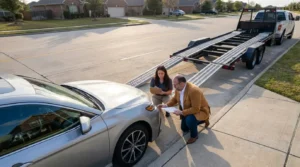
Downtown and North Side streets were not built for a full-size car hauler. Drivers arrange a staging spot nearby instead, usually a wide street or a large lot a few minutes away, and your coordinator confirms the exact meeting point before pickup day so there are no surprises. The suburbs are simpler, with the street width for direct door-to-door service in most neighborhoods.
Winter operations are routine here. Carriers run the Chicago corridors year-round, though January storms can add a day of buffer to pickup or transit. Road salt on open trailers rinses off like normal winter driving, but for classics and collector cars it makes enclosed transport worth considering during the salt months.