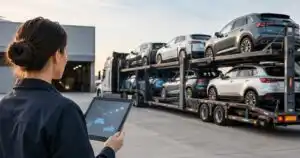
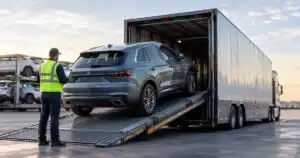
Fleet vehicle transport takes the combined time needed to release the vehicles, arrange pickup, complete the carrier’s route, and finish delivery. A useful estimate separates the pickup window from transit time and identifies when the final vehicle will arrive. For your 2026 fleet schedule, confirm those milestones against the actual locations, vehicle conditions, and receiving hours—not a nationwide delivery average.
- How long does fleet vehicle transport take? Separate release, pickup, transit, and delivery before committing inventory.
- Car Haul Direct coordinates fleet vehicle transport through carriers; route-specific estimates need vehicle details and site requirements.
- Expedited transport requires confirmation; it does not remove release requirements, access restrictions, or driver operating limits.
- Track each vehicle’s delivery status, not just the departure of the first load.
How long does fleet vehicle transport take?
Fleet transport timing is route-specific, and transit time is only part of the schedule. Your planning clock should begin when you request movement, while the carrier’s transit clock begins after pickup. Treating those as the same milestone hides release and scheduling delays.
For recurring transfers, assess fleet vehicle transport companies on how clearly they distinguish estimated dates from confirmed appointments. Ask who communicates changes and what documentation closes each shipment.
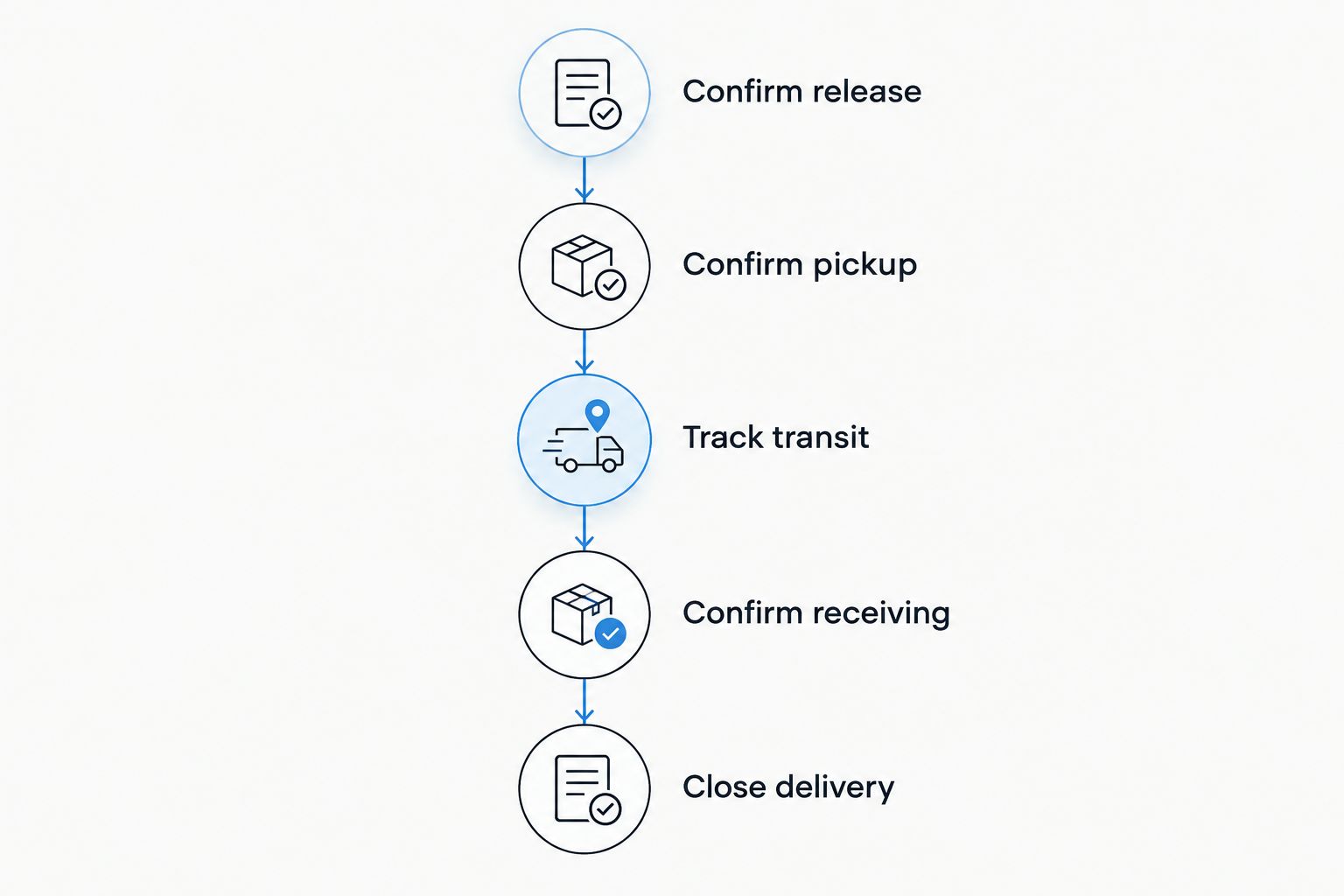
Use these steps to build a shipment timeline:
- Confirm release. Establish when each vehicle, its keys, and any required release authorization will be available.
- Confirm pickup. Identify the pickup window, site contact, loading access, and carrier assignment status.
- Track transit. Record actual pickup and the latest delivery estimate for each vehicle or load.
- Confirm receiving. Check destination hours, appointment requirements, unloading access, and the receiving contact.
- Close delivery. Record arrival, complete the condition review, and retain delivery documentation.
A fleet movement is complete when the required vehicles reach their destinations and delivery is documented—not when the first truck leaves the origin. If vehicles travel on separate loads, maintain separate delivery estimates.
Why this matters for fleet planning
A delivery estimate affects inventory allocation, replacement assignments, reconditioning appointments, and remarketing plans. If you schedule downstream work against an unconfirmed arrival date, your receiving team has no reliable handoff point.
For 2026 fleet planning, define what the deadline means: arrival at the gate, unloading, signed delivery, or readiness for the next assignment. Those events are not interchangeable. Transport completion does not establish that a vehicle has finished inspection or reconditioning.
CHD is a transport brokerage coordinating carriers, not a truck-owning fleet. That distinction matters when you ask who assigns the carrier, who provides shipment updates, and who confirms a delivery change.
What information produces a useful transport estimate?
Send a movement list that lets the coordinator assess the work rather than infer it. A city pair alone does not explain whether the vehicles are released, operable, accessible, or going to separate destinations.
Include:
- Route details: Exact pickup and delivery addresses, with all intermediate locations identified.
- Vehicle details: VIN, make, model, vehicle type, modifications, and operating condition.
- Release readiness: Earliest release date, authorization requirements, key location, and responsible contact.
- Transport requirements: Open or enclosed transport, handling instructions, and any expedited request.
- Site requirements: Business hours, appointments, access restrictions, and loading or unloading arrangements.
- Timing priorities: Requested arrival window and which vehicles have a business-critical deadline.
Identify unknown items explicitly in your shipment request. An estimate based on assumed operability or unrestricted access needs reassessment when those assumptions change.
For auction-origin vehicles, keep purchase completion separate from release readiness. The guide to how long auction car transport takes addresses that additional handoff.
Open transport: confirm the pickup and delivery windows
Open transport carries vehicles on an exposed trailer. Best for: fleet transfers that do not require an enclosed trailer. Confirm whether the vehicle mix, dimensions, and site access fit the proposed equipment.
Open transport does not establish a fixed completion date. The schedule still depends on carrier assignment, the route, release readiness, and receiving arrangements. Its limitation is exposure to weather and road conditions during movement.
When requesting open transport through CHD, provide the full vehicle list rather than assuming every unit fits the same loading plan. Report modifications and operating problems before the carrier arrives.
Enclosed transport: confirm handling before scheduling
Enclosed transport carries vehicles inside a covered trailer. Best for: fleet vehicles with an enclosed-handling requirement. State the reason for that requirement and identify clearance concerns or special loading instructions.
The enclosure changes the handling environment, not the need for a route-specific estimate. Confirm suitable equipment and loading arrangements before treating an arrival window as actionable.
Enclosed transport limits direct exposure during transit, but the trailer must still suit the vehicles and pickup location. Do not assume an enclosed booking includes every special handling request; document and confirm those requirements.
Expedited transport: confirm what the priority changes
Expedited transport requests priority around a timing need. Best for: a fleet movement with a specific operational deadline. Explain the deadline’s consequence so the coordinator can assess the request against the actual route and vehicles.
Expedited availability requires confirmation. It does not remove release requirements, make inaccessible sites usable, or override driver operating limits. Ask whether the proposed arrangement changes pickup timing, routing, or another specific part of the movement.
For 2026 requests, distinguish a request for earlier pickup from a requirement for earlier delivery. They are different instructions, and the carrier arrangement must address the deadline you actually have.
| Transport option | Best for | What to confirm | Main limitation |
|---|---|---|---|
| Open transport | Fleet moves without an enclosure requirement | Vehicle fit, pickup window, route, and receiving access | Vehicles remain exposed during transit |
| Enclosed transport | Vehicles requiring covered transport | Trailer suitability, clearance, and handling instructions | Equipment must match the specific handling requirements |
| Expedited transport | Moves with a defined operational deadline | What receives priority and whether the request is accepted | Priority does not remove physical or operating constraints |
Why fleet vehicle transport timing varies
The estimate changes when the work changes. Review these factors before accepting a schedule and whenever a shipment’s details change:
- Route and stops: Separate pickup points and delivery locations add coordination requirements. Confirm whether vehicles share a route or need independent movements.
- Vehicle readiness: Missing keys, incomplete releases, or a vehicle that cannot move as described prevent the planned handoff.
- Equipment and handling: Vehicle dimensions, modifications, condition, and enclosure requirements determine whether the proposed trailer and loading method fit.
- Site access and hours: Gates, appointment rules, restricted streets, and receiving schedules constrain when loading and unloading can happen.
- Road and operating conditions: Weather, closures, and lawful driver operating limits affect the route’s progress.
- Fleet completion requirements: A requirement for vehicles to arrive together is different from permission to accept rolling deliveries.
Change the estimate when an assumption changes. If the destination closes earlier than expected or a vehicle becomes inoperable, ask for a revised plan rather than carrying the original date forward unchanged.
Driver hours are not vehicle delivery hours
Under FMCSA’s standard property-carrying driver hours-of-service rules, a driver may drive up to 11 hours after 10 consecutive hours off duty. The standard rules also prohibit driving beyond the 14-consecutive-hour window after coming on duty, subject to applicable exceptions.
These federal operating limits are scheduling context for U.S. fleet transport in 2026, not a formula for predicting delivery. Loading, inspections, stops, and receiving appointments also occupy the schedule. Do not convert route mileage into a promised arrival by assuming uninterrupted driving.
How do you keep a multi-vehicle move on schedule?
Plan and track at the vehicle level, even when you book at the account level. A fleet-wide status such as dispatched does not tell your receiving team which VIN is arriving or whether another vehicle remains at origin.
Maintain a shared movement record with the VIN, origin, destination, release status, pickup window, actual pickup, current delivery estimate, and delivery confirmation. Assign an owner for resolving missing information at each site.
Before pickup, confirm that the releasing contact can hand over the correct vehicle and keys. Before delivery, confirm that the receiving contact can accept the vehicle and complete the condition review. A named contact without confirmed availability leaves the handoff unresolved.
CHD coordinates recurring fleet transport for commercial customers. CHD is best for fleet teams seeking brokerage coordination for recurring vehicle moves. Carrier assignment and shipment-specific estimates still require confirmation; brokerage coordination is not a delivery guarantee.
Discuss recurring vehicle moves
Provide routes, vehicle details, release dates, and receiving requirements for a shipment-specific discussion.
Does a fleet shipment arrive all at once?
A fleet shipment does not necessarily arrive all at once. Confirm whether your plan calls for a consolidated arrival or allows separate loads and delivery windows.
Rolling delivery lets you accept completed movements without treating the entire fleet as a single arrival event. Its limitation is the need to track receiving and downstream assignments separately. A coordinated arrival requirement needs explicit confirmation before scheduling.
Can you request a specific delivery date?
You can request a specific delivery date, but a requested date is not a confirmed commitment. Ask how the carrier arrangement addresses the date and what conditions apply.
For a hard deadline, provide the receiving cutoff and its time zone. Explain whether the vehicle must merely arrive or must also finish unloading and delivery documentation before that cutoff.
When should you update the receiving team?
Update the receiving team when pickup is confirmed, when the delivery estimate changes, and when an arrival appointment is confirmed. Include the affected VINs rather than sending an account-wide update that leaves vehicle status unclear.
Use the latest confirmed information for your 2026 receiving schedule. Keep the original requested date in a separate field so an old target does not appear to be the current estimate.
FAQ
How long does fleet vehicle transport take from booking to delivery?
Fleet vehicle transport takes the combined release, pickup scheduling, transit, and delivery time for your specific movement. Request separate pickup and delivery windows, then confirm which milestones remain estimates.
Does fleet transport time start when I request a quote?
Carrier transit time starts after pickup, while your overall planning timeline starts earlier. Keep quote requests, release readiness, carrier assignment, and actual pickup as separate milestones.
Is expedited fleet transport guaranteed to arrive sooner?
Expedited fleet transport is not a delivery guarantee unless a specific commitment is explicitly confirmed. Ask which part of the schedule receives priority and what limitations apply.
Will all my fleet vehicles travel on the same truck?
Do not assume all fleet vehicles will travel on the same truck. Confirm the load plan against vehicle dimensions, locations, equipment requirements, and the agreed arrival plan.
Does enclosed transport take longer than open transport?
Transport type alone does not establish which shipment will finish sooner. Compare route-specific pickup windows, equipment suitability, and delivery estimates for the actual vehicles.
Can a non-running fleet vehicle affect the schedule?
A non-running vehicle changes the handling requirements that must be confirmed before pickup. Describe its condition accurately and confirm suitable loading arrangements rather than booking it as operable.
What should I send before requesting a fleet transport estimate?
Send the vehicle list, exact route, release dates, operating conditions, transport requirements, and site contacts. Include receiving hours and identify any business-critical delivery deadline.
One last thing
Ask when the final required VIN will arrive—not just when the first load will leave. A pickup milestone measures departure; your fleet plan depends on completed delivery.
Before approving the movement, identify the vehicles that control your next operational step. Put their deadlines and receiving requirements in writing, then keep their estimates separate from the rest of the fleet.
Related guides
- Automatically dispatch transport when a fleet lease ends
- Auto transport for remarketing companies
- Can a dealership ship multiple vehicles in one load?