Yes, OEMs can schedule recurring vehicle transport around repeat routes, release windows, vehicle requirements, and receiving-site capacity. A recurring schedule establishes the coordination plan; it does not guarantee a truck assignment or delivery date for every shipment. For your 2026 program, confirm carrier acceptance, vehicle readiness, and site access before treating a planned pickup as committed.
- Can OEMs schedule recurring vehicle transport? Yes, with agreed routes, release windows, and shipment-level carrier confirmation.
- OEM logistics schedules need vehicle readiness checks, pickup coordination, status updates, and delivery documentation.
- Open transport suits vehicles without enclosure requirements; enclosed transport addresses specified protection and handling needs.
- CHD is best suited to OEM teams seeking a transport brokerage to coordinate recurring vehicle shipping.
Can OEMs schedule recurring vehicle transport?
OEMs can establish recurring transport arrangements, but each movement still needs an executable shipment plan. Separate the standing instructions from the details that change with every release: vehicle identification, condition, quantity, pickup authorization, and receiving contact.
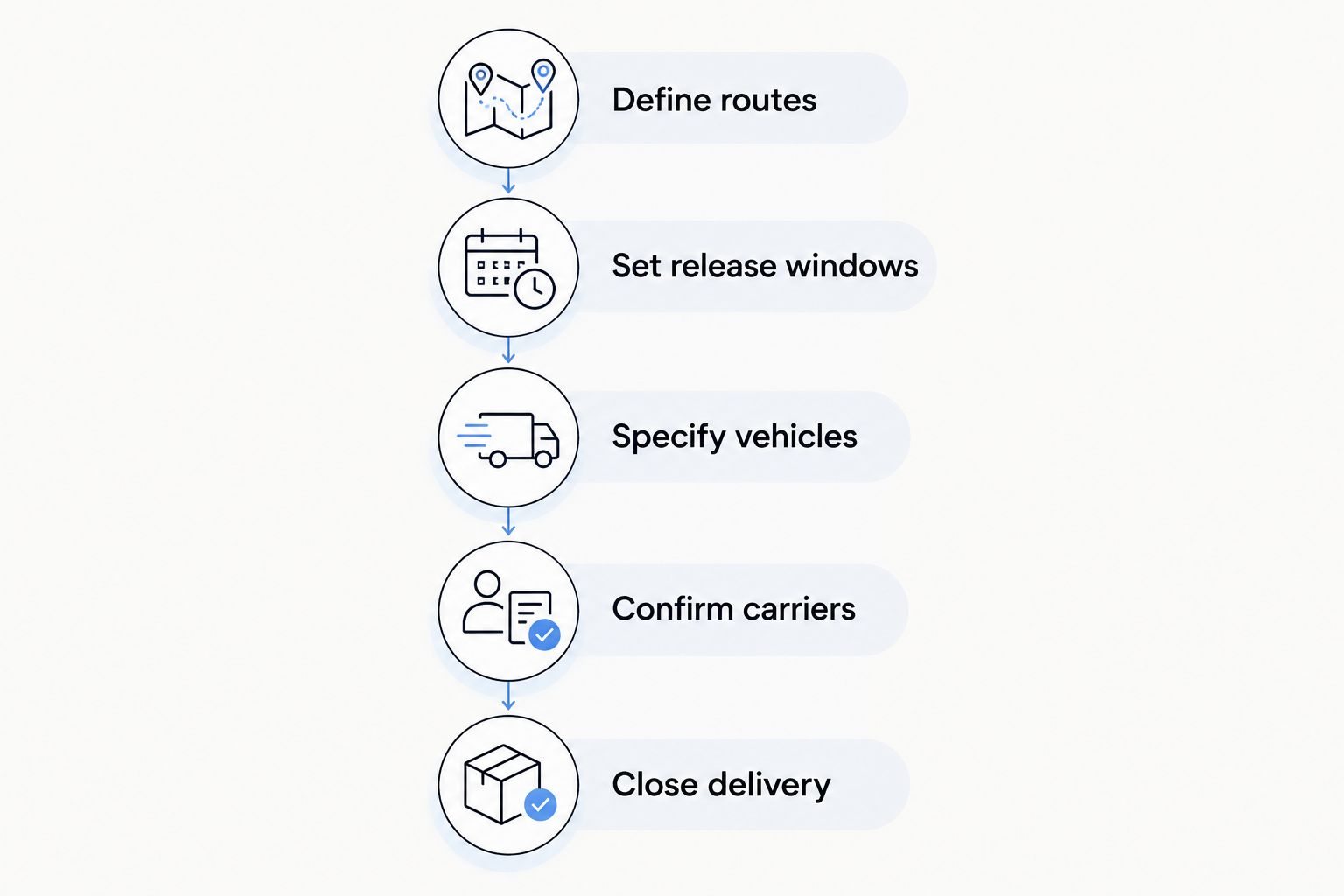
The auto transport for OEM manufacturers guide addresses the broader service context. For recurring moves, use this setup sequence:
- Define routes. Identify the actual loading and unloading locations, not just the cities.
- Set release windows. State when vehicles become available and when each facility accepts transporters.
- Specify vehicles. Supply identifiers, vehicle types, operating condition, and handling restrictions.
- Confirm carriers. Obtain acceptance of the shipment requirements before relying on the pickup plan.
- Close delivery. Collect delivery documentation and record unresolved exceptions.
A repeat lane is not the same as a reserved truck. If you require dedicated equipment or committed capacity, put that requirement into the commercial discussion and obtain written confirmation of what the arrangement includes.
Why this matters
A transport calendar is only useful when the vehicles and facilities can support it. A vehicle awaiting release authorization is not pickup-ready, even when a transporter has an appointment.
Build your 2026 transport plan around the handoffs you control. Name the person who authorizes release, the person who confirms loading access, and the person who accepts delivery. Give the coordinator a clear escalation contact when those responsibilities sit with different teams.
Your recurring schedule should describe how a shipment becomes ready, not just when you want it collected. That distinction keeps a forecast from being mistaken for a confirmed movement.
Which transport option fits recurring OEM moves?
Choose equipment around the vehicle and handling requirement, then discuss timing. Open, enclosed, and expedited transport do not answer the same question: open and enclosed describe transport configurations, while expedited describes a timing priority.
| Option | Best for | Main benefit | Limitation to confirm |
|---|---|---|---|
| Open transport | Vehicles without a specified enclosure requirement | Carries vehicles on an open trailer | Vehicles remain exposed to weather and road conditions |
| Enclosed transport | Vehicles requiring enclosure during transit | Adds a physical enclosure around the vehicles | Loading configuration and carrier suitability still need confirmation |
| Expedited coordination | Moves with a time-sensitive pickup requirement | Makes the timing need explicit during carrier coordination | Equipment, route, and carrier acceptance determine feasibility |
Open transport for routine releases
Open transport is the starting option when your vehicles do not require enclosure. Tell the coordinator about dimensions, modifications, operating condition, and any restrictions that affect loading.
Do not assume a recurring route means every vehicle fits the same equipment plan. A change in the released vehicle mix needs a fresh compatibility check before dispatch.
Enclosed transport for specified protection needs
Enclosed transport fits shipments with an explicit enclosure requirement. Record that requirement in the shipment instructions rather than relying on a verbal description such as special vehicle.
Enclosure does not replace handling instructions or condition records. Confirm loading clearance, securement requirements, and any restrictions on vehicle access or photography before the carrier accepts the movement.
Expedited coordination for timing exceptions
Expedited coordination addresses urgency; it is not a guaranteed pickup promise. State the required pickup window, the reason it matters operationally, and whether you can accept an alternative loading location or release time.
Keep urgent exceptions separate from your recurring baseline. Otherwise, the word expedited stops distinguishing a genuine deadline from a routine scheduling preference.
Why recurring OEM transport schedules vary
For a 2026 recurring program, document these variables before asking for a fixed operating rhythm:
- Route and access: Loading space, approach restrictions, gates, and unloading locations affect whether the proposed equipment can serve each site.
- Vehicle readiness: Release authorization, keys, identification, and operating condition determine whether a vehicle is ready to load.
- Vehicle requirements: Dimensions, clearance, modifications, and enclosure instructions affect carrier and equipment suitability.
- Carrier acceptance: A requested window becomes a workable plan only after the carrier accepts the shipment requirements.
- Receiving capacity: Site hours, appointment requirements, unloading access, and an available recipient constrain delivery planning.
- Release changes: Added vehicles, removed vehicles, destination changes, and holds require the coordinator to reassess the movement.
Treat these as planning inputs, not explanations to collect after a missed handoff. Ask each facility to maintain current instructions and identify who can approve an exception.
What should an OEM provide before each pickup?
Use a shipment record that gives the carrier and coordinator the same instructions. Keep recurring route information separate from the vehicle-specific release so that a changed destination does not disappear inside an old template.
Vehicle and release details
Provide the vehicle identification, vehicle type, operating condition, and any known loading restrictions. Identify the vehicles actually authorized for collection, not the larger pool you expect to release later.
State who can approve a substitution. A vehicle list is not permission to replace an unavailable vehicle with another unit. Make substitutions an explicit approval step.
Pickup and delivery contacts
Provide the loading address, receiving address, site contacts, operating hours, and appointment instructions. Include the gate or loading-area details needed to reach the correct handoff point.
Door-to-door service still depends on safe, permitted access. If the transporter cannot use the requested location, agree on an alternative before the vehicle is moved.
Condition and handling instructions
Specify how condition will be documented at pickup and delivery. Record visible condition, relevant photographs, and any handling restrictions through the agreed process.
For vehicles with special requirements, obtain acceptance before dispatch. Do not assume a note added after assignment changes what the equipment or carrier can accommodate.
Shipment status responsibilities
Define which events need an update and who receives it. Useful events include carrier assignment, pickup confirmation, a material schedule change, and delivery completion.
Assign an owner for exceptions. A status notification tells you something changed; an escalation process tells the people involved what to do next.
How should you manage schedule changes?
Maintain a current release list and a clear approval path. When a plant hold, destination change, or revised receiving appointment affects a shipment, send the change to the coordinator before treating it as accepted.
For your 2026 operating instructions, distinguish a requested change from a confirmed change. Ask the coordinator to acknowledge the revision and identify whether the carrier, equipment plan, or timing needs to change.
Use a change log that records:
- What changed and which vehicles it affects.
- Who authorized the revision.
- Whether the carrier accepted the revised instructions.
- Which pickup and delivery contacts received the update.
Avoid leaving the original instructions active alongside a replacement version. The person releasing the vehicle and the person collecting it need the same current plan.
How should OEMs track recurring shipments?
Track shipment events as well as location. A vehicle location does not establish that release paperwork is complete, loading is authorized, or the receiving site can accept delivery.
For road movements, GPS tracking for freight transport addresses location visibility, while pickup confirmation and delivery documentation establish the shipment handoffs. Keep those records distinct in your operating process rather than treating a location update as proof of completion.
Before agreeing to status reporting, ask what information is available, how updates arrive, and who handles a missing or contradictory update. Do not assume every assigned carrier supplies the same tracking method or reporting frequency.
For a 2026 systems project, define the workflow before requesting an integration. Specify whether you need booking requests, shipment references, status events, or document exchange, then confirm which functions the proposed integration actually supports.
How do you close a recurring vehicle shipment?
Close each movement against the released vehicle list. Confirm that the expected vehicles arrived at the correct destination and that the receiving record matches the shipment identifiers.
Review condition documentation at the handoff. Record discrepancies through the agreed process, preserve the relevant records, and notify the designated coordinator rather than assuming a signed receipt settles every issue.
Keep these completion records together:
- The final authorized vehicle list.
- Pickup and delivery documentation.
- Recorded exceptions and supporting photographs, where applicable.
- The contact responsible for resolving each open issue.
For insurance questions, verify the applicable policy limits, exclusions, deductibles, and vehicle eligibility. Do not treat a general statement about insured transport as confirmation of coverage for your specific shipment.
Can OEMs reserve the same pickup window every week?
Yes, OEMs can request a recurring weekly pickup window, but the agreement must distinguish a preferred appointment from committed capacity. Confirm what happens when vehicles are not ready, site hours change, or the proposed carrier cannot accept the movement.
A fixed calendar entry alone does not establish dedicated equipment. Put any reserved-capacity requirement into the arrangement explicitly.
Does recurring scheduling guarantee the same carrier?
No, recurring scheduling alone does not guarantee the same carrier or driver. If carrier continuity matters to your operation, state that requirement and confirm whether the proposed arrangement includes it.
Also decide how a replacement carrier will receive site instructions and handling requirements. Continuity is useful, but written instructions remain necessary.
Where a brokerage fits the recurring transport plan
Car Haul Direct is a transport brokerage coordinating carriers for nationwide vehicle shipping, including recurring commercial moves. CHD is best suited to OEM teams seeking a transport brokerage to coordinate recurring vehicle shipping.
With CHD, we coordinate transport with carriers and help you plan pickup, follow shipment status, and manage delivery. Carrier acceptance, special routing, handling requirements, and applicable insurance details still need shipment-specific confirmation; brokerage coordination does not replace those checks.
CHD also offers API and white-label transport solutions for business partners, with scope and availability confirmed for each integration. Do not build your transport process around an assumed connection or unsupported workflow.
For an OEM program, bring the routes, vehicle requirements, expected release pattern, and receiving-site constraints to the discussion. That gives the coordination team a defined transport requirement instead of a calendar without shipment details.
Discuss recurring vehicle moves
Share your routes, vehicle requirements, release pattern, and pickup and delivery constraints.
FAQ
Can OEMs schedule recurring vehicle transport in 2026?
Yes, OEMs can schedule recurring vehicle transport around repeat routes, release windows, and receiving requirements. Each shipment still needs vehicle readiness checks and carrier confirmation.
Can an OEM use enclosed transport for recurring shipments?
Yes, an OEM can request enclosed transport as part of a recurring shipping arrangement. Confirm equipment suitability, handling requirements, and carrier acceptance for the vehicles involved.
Does a recurring schedule guarantee pickup?
No, a recurring schedule does not by itself guarantee pickup. Confirm whether the arrangement provides a preferred window, accepted shipment assignment, or explicitly committed capacity.
What does an OEM need to provide before vehicle pickup?
An OEM should provide the authorized vehicle list, operating condition, handling requirements, site instructions, and pickup and delivery contacts. Identify who can approve substitutions or schedule changes.
Can urgent shipments be added to a recurring transport plan?
Urgent shipments can be requested as exceptions to the recurring plan. Expedited feasibility depends on the route, equipment requirements, and carrier acceptance.
Can OEM transport bookings connect to business software?
Business-software connections require confirmation of the supported workflow and integration scope. Do not assume a connection supports booking, status updates, or document exchange without checking each function.
Does enclosed transport guarantee insurance coverage?
No, enclosed transport does not establish the insurance coverage that applies to a shipment. Verify policy limits, exclusions, deductibles, and vehicle eligibility separately.
One last thing
Name the person who can stop a release. A recurring pickup can look ready on the calendar while a vehicle remains under a quality, paperwork, or destination hold. Give that person a direct way to notify the coordinator before loading begins.
Related guides
- OEM plant schedule to dealer lot workflow
- How long does fleet vehicle transport take?
- Can a dealership ship multiple vehicles in one load?