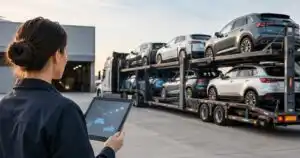
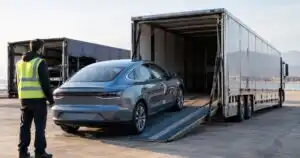
Enclosed transport is not necessary for every OEM vehicle shipment in 2026; use it when the shipment's written requirements call for protection from outdoor exposure, restricted visibility, or specialized handling that the selected equipment can provide. Open transport remains an option when the manufacturer permits it, but neither trailer type replaces carrier qualification, condition documentation, or shipment-specific insurance review.
- Is enclosed transport necessary for OEM shipments? No—not automatically; the manufacturer’s written requirements determine the choice.
- Open transport suits vehicles approved for outdoor exposure; enclosed transport adds a physical barrier during transit.
- Enclosed trailers do not guarantee confidentiality, damage-free delivery, or coverage for every vehicle.
- Car Haul Direct coordinates OEM vehicle transport through carriers; confirm equipment, access, and handling before dispatch.
Why this matters
Choosing a trailer before defining the shipment leaves important questions unanswered. A finished production vehicle, an unreleased prototype, and a display vehicle do not necessarily share the same exposure limits, release procedures, or receiving requirements.
For OEM teams planning vehicle moves in 2026, start with the vehicle's transport instructions, not the trailer label. Car Haul Direct is a transport brokerage for OEM teams that need carrier coordination rather than a truck-owning provider. Our auto transport for OEM manufacturers guide covers the broader coordination task.
Is enclosed transport necessary for OEM vehicle shipments?
Enclosed transport is necessary when the OEM's shipment instructions require it. Without that requirement, select equipment by the vehicle's condition, permitted exposure, loading needs, and destination access—not simply because the vehicle came from a manufacturer.
Use this comparison to frame the decision. The suitability of an actual shipment still depends on the assigned equipment and carrier's acceptance of the handling instructions.
| Decision point | Open transport | Enclosed transport |
|---|---|---|
| Best for | Vehicles approved for outdoor exposure during transit | Vehicles requiring a physical barrier from outdoor exposure |
| Main benefit | Meets transport needs when an enclosure is unnecessary | Adds protection from direct weather and road exposure |
| Main limitation | Leaves vehicles exposed to weather and the surrounding environment | Does not eliminate loading, unloading, or securement risks |
| Visibility | Vehicles remain visible during transit | Trailer walls limit outside visibility while vehicles are inside |
| Loading requirements | Confirm equipment compatibility with the actual vehicle | Confirm compatibility; enclosure alone says nothing about loading clearance |
| Insurance review | Check applicable limits, exclusions, deductibles, and eligibility | Perform the same shipment-specific review |
Keep the distinction between a requirement and a preference explicit. If your team prefers enclosed equipment but allows open transport under defined conditions, put those conditions in writing. Dispatch staff should not have to interpret an informal request when a carrier offers a different trailer.
Open transport: best for vehicles approved for outdoor exposure
Open transport is an appropriate option when your OEM permits outdoor exposure and the vehicle fits the proposed loading and securement arrangement. The advantage is straightforward: you avoid specifying an enclosure that the shipment does not require.
The trade-off is exposure. Weather, airborne dirt, and the surrounding road environment remain part of the move, so your acceptance criteria must account for the selected transport method.
Before approving open equipment, check the vehicle's condition and any attached components. Tell the carrier about loose accessories, damaged panels, unusual bodywork, or preparation instructions that affect handling. Do not assume a production vehicle is ready to load simply because it starts and drives.
Approve open transport only against the vehicle's written requirements. A familiar model name does not establish that a particular unit has standard dimensions, operating condition, or transport preparation.
Enclosed transport: best for exposure-sensitive OEM shipments
Enclosed transport adds a physical barrier between the vehicle and the outdoor environment during transit. It fits shipments whose instructions require that barrier, including vehicles with documented finish-protection or visibility restrictions.
The limitation is equally important: enclosure is not a complete handling specification. An enclosed trailer does not automatically provide the loading method, clearance, securement arrangement, or receiving process your vehicle requires.
For a prototype or display vehicle, identify the actual concern. If the concern is visibility, specify restrictions around photography, staging, loading, and unloading. If the concern is ground clearance, provide the relevant vehicle information and require equipment confirmation before release.
Choose enclosed transport for a defined requirement, not an assumed guarantee. A closed trailer cannot compensate for incomplete release instructions or an unsuitable loading arrangement.
Why OEM transport requirements vary
For a 2026 OEM shipping brief, separate the reasons for enclosure from the operational details that apply to either trailer type. These factors determine what you need to confirm:
- Permitted exposure. State whether the vehicle can travel exposed to weather and road conditions or requires an enclosed trailer.
- Vehicle condition. Identify whether the vehicle runs, steers, brakes, and has any damage or modifications affecting handling.
- Loading compatibility. Provide dimensions, clearance concerns, and manufacturer handling instructions so the proposed equipment can be checked.
- Visibility restrictions. Specify whether photography, public staging, or outside viewing is restricted, including at handoff points.
- Route and access. Confirm plant entry, staging locations, receiving access, and any special routing requirements.
- Timing and release. Separate the vehicle-ready window from the requested delivery window, and identify who authorizes release.
Do not collapse these factors into a note that says only special vehicle. That wording gives the carrier no usable instruction. Describe the condition or restriction and state what must happen before loading proceeds.
How to approve the transport method before dispatch
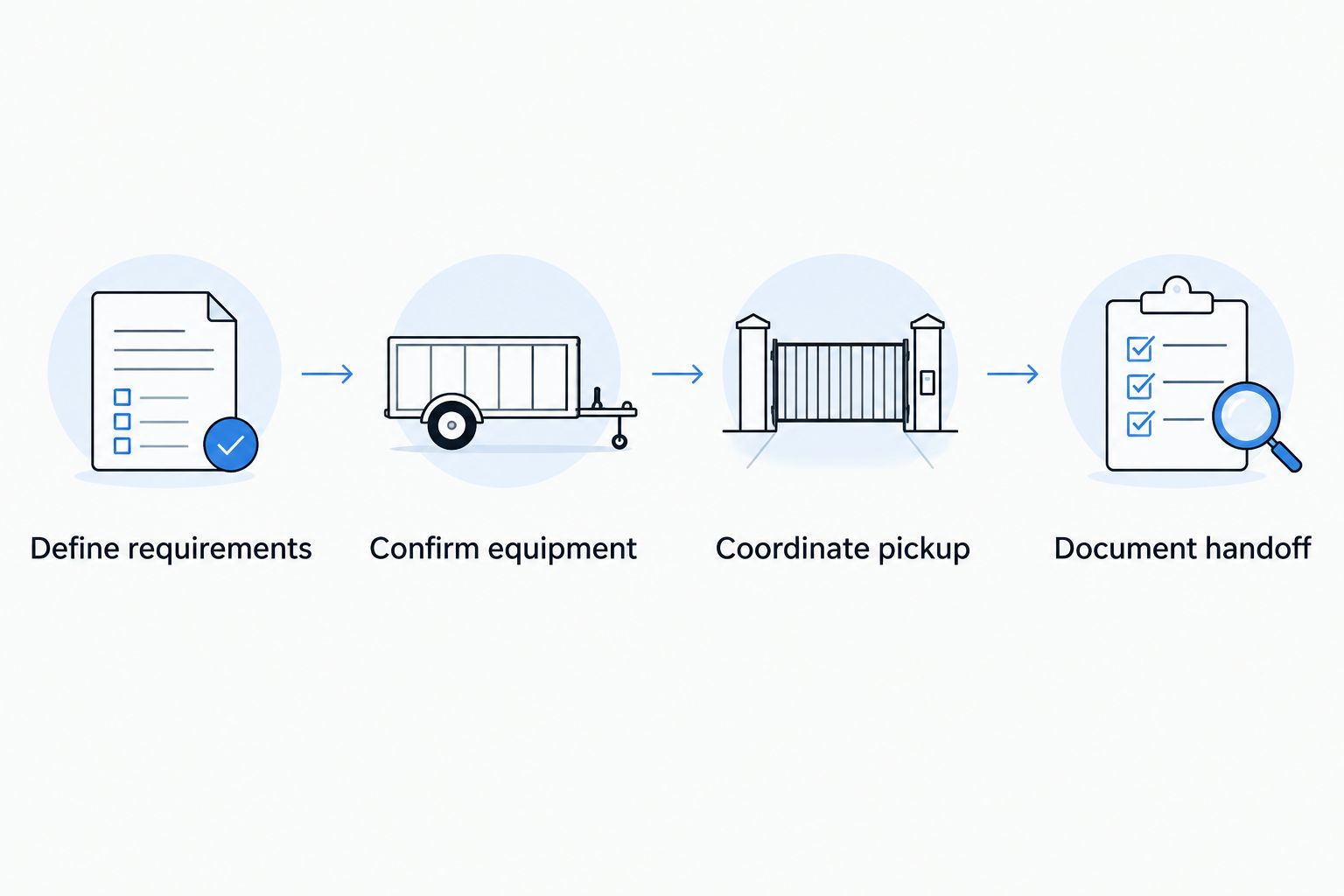
Use the following sequence for a 2026 OEM movement request. It keeps the trailer decision connected to the vehicle, the route, and the people responsible for releasing and receiving it.
Define requirements
Record the pickup and delivery locations, vehicle identification, operating condition, requested dates, and transport instructions. Mark enclosed equipment as required or preferred, and name the person authorized to approve a change.
For sensitive vehicles, share technical and access information through your organization's approved process. Give the transport team enough detail to assess the move without treating unrestricted distribution of vehicle information as the default.
Confirm equipment
Have the proposed carrier confirm that its equipment can accommodate the vehicle and its handling instructions. Resolve questions about clearance, loading method, securement, and any non-running condition before the pickup appointment.
Do not accept the word enclosed as proof of compatibility. Ask for confirmation against the actual requirements rather than assuming every enclosed trailer can perform the same work.
Coordinate pickup
Confirm the release contact, required pickup authorization, site access, staging point, and vehicle-ready window. Include any restrictions on photography or movement within the facility.
If the carrier cannot enter the intended loading area, agree on an authorized alternative before the truck arrives. Do not leave the driver and site staff to improvise a handoff outside the approved process.
Document handoff
Record vehicle condition at pickup and delivery using the required transport documentation and permitted photographs. Identify who signs at each end and how condition exceptions reach the responsible team.
Treat delivery confirmation and condition acceptance as related but distinct tasks. A vehicle reaching the destination does not remove the need to inspect it and record any discrepancy.
For the surrounding release and receiving process, use the OEM plant schedule to dealer lot workflow. Keep the approved transport method attached to the movement request so scheduling changes do not erase the handling instructions.
Does enclosed transport guarantee prototype confidentiality?
Enclosed transport limits outside visibility while the vehicle is inside the trailer; it does not guarantee confidentiality. Loading areas, staging locations, photography, and unloading procedures still require separate instructions.
For a confidential OEM move in 2026, define who can access the vehicle and where exposure is permitted. Confirm the carrier's acceptance of those restrictions before sharing the release authorization. If an instruction cannot be met, resolve it before pickup rather than relying on the trailer walls.
Does enclosed transport include different insurance protection?
An enclosed trailer does not establish the insurance protection for an OEM shipment. Review the applicable policy limits, exclusions, deductibles, and vehicle eligibility for the assigned carrier and shipment.
State the vehicle information needed for that review accurately, including any unusual condition or status relevant to eligibility. Resolve coverage questions before release; do not substitute a general insurance statement for confirmation that applies to the actual move.
Can expedited OEM transport be open or enclosed?
Expedited timing and enclosed equipment are separate requirements. Request the transport type you need, then confirm whether a carrier can meet the route, pickup window, equipment requirements, and receiving schedule.
Do not treat expedited service as a guaranteed delivery commitment unless the specific arrangement states one. A vehicle that is not released, a closed receiving facility, or unresolved loading instructions still requires coordination regardless of the requested urgency.
What to send with an OEM transport request
Give the transport coordinator a movement brief that supports a decision rather than a request to fill in the missing details. Include the following information, then identify anything still awaiting approval:
- Pickup and delivery addresses, site contacts, and access instructions.
- Vehicle identification, dimensions where relevant, operating condition, and handling restrictions.
- Required transport type and the authority for approving alternatives.
- Vehicle-ready window, receiving window, and release authorization process.
- Condition documentation, photography restrictions, and delivery sign-off requirements.
- Insurance questions that must be resolved before dispatch.
CHD coordinates OEM vehicle transport with carriers and helps customers plan pickup, follow shipment status, and manage delivery. We need the route, vehicle, timing, and handling requirements to assess the requested move; we do not own the trucks or assume that every carrier can handle every shipment.
The benefit of brokerage coordination is a defined point of contact for arranging the move. The limitation remains shipment-specific: equipment suitability, carrier acceptance, timing, and applicable coverage require confirmation. Do not release a vehicle against unresolved requirements.
For recurring OEM moves in 2026, use the same required fields across requests while preserving exceptions for individual vehicles. Standardizing the request does not mean standardizing away prototype restrictions or unusual handling needs.
Discuss recurring vehicle moves
Share your routes, vehicle requirements, pickup windows, and receiving constraints with CHD.
FAQ
Is enclosed transport necessary for OEM shipments?
Enclosed transport is not necessary for every OEM shipment. Use it when the manufacturer’s written requirements call for an enclosure, and confirm equipment suitability before release.
Can new OEM vehicles travel on open transport?
New OEM vehicles can travel on open transport when the manufacturer permits outdoor exposure and the proposed equipment meets the vehicle’s handling requirements. New condition alone does not determine the trailer type.
What’s the best transport option for an unreleased prototype?
The best transport option for an unreleased prototype is the arrangement that meets its written handling and confidentiality requirements. Enclosed equipment limits outside visibility during transit, but staging, photography, and handoff restrictions need separate confirmation.
Does an enclosed trailer protect a low-clearance vehicle during loading?
An enclosed trailer alone does not establish safe loading compatibility for a low-clearance vehicle. Confirm the actual loading equipment and method against the vehicle’s clearance and handling instructions.
Does enclosed OEM transport guarantee damage-free delivery?
Enclosed OEM transport does not guarantee damage-free delivery. It adds a barrier from outdoor exposure, while loading, unloading, securement, condition documentation, and insurance review remain necessary.
Can I request expedited enclosed transport for an OEM vehicle?
You can request expedited enclosed transport, but equipment and timing require shipment-specific confirmation. Provide the route, vehicle condition, release window, and receiving requirements before treating the schedule as agreed.
What should an OEM receiving team check at delivery?
An OEM receiving team should check vehicle identity, visible condition, and the required delivery documentation against the shipment instructions. Record discrepancies at handoff and notify the responsible contact through the agreed process.
One last thing
The most useful protection decision can happen before a trailer is assigned: identify who can authorize a change. If enclosed equipment is required, a scheduling problem does not make open equipment an approved substitute.
Put that approval rule beside the transport requirement, not in a separate email thread. An equipment change needs an explicit decision before the vehicle is released.
Related guides
- Is enclosed transport worth it for an exotic car?
- Is open transport safe for a luxury car?
- Expedited enclosed car transport: how it works in 2026