Staying with Ship Your Car Now makes sense when its proposed shipment meets your route, vehicle, and pickup requirements; switching only helps if the next arrangement addresses a specific need. Among ship your car now alternatives in 2026, Car Haul Direct fits recurring dealer, auction, and fleet moves through carrier coordination, while direct carrier booking fits buyers who want to manage the transport relationship themselves.
- For ship your car now alternatives, CHD fits commercial auto transport that needs carrier coordination and recurring vehicle shipping.
- Direct carrier booking fits buyers prepared to manage scheduling, shipment updates, and delivery documentation themselves.
- Compare the same route, vehicle condition, transport type, and timing requirements before choosing a provider.
- Keep Ship Your Car Now when its confirmed arrangement already meets your shipment requirements.
Why this matters
A dealership does not need another provider name. You need an auction purchase released, a dealer trade collected, or inventory delivered to the correct receiving location. The useful comparison is who handles those tasks, what you must supply, and which arrangements require confirmation.
CHD is an auto transport brokerage for commercial buyers who need coordinated dealer, auction, and fleet moves. CHD coordinates carriers rather than operating its own trucks. That distinction matters when you discuss dispatch, pickup access, shipment status, and delivery paperwork.
For your 2026 provider review, start with the actual movement. A transport proposal for an operable vehicle at an accessible dealership is not interchangeable with a proposal for a nonrunning auction vehicle or a restricted delivery site.
Ship Your Car Now alternatives at a glance
Compare 2 booking approaches against your existing Ship Your Car Now arrangement. The table separates confirmed CHD services from the requirements you should verify with any provider; it does not assign unsupported scores or delivery rankings.
| Option | Best for | Main distinction | Difference to evaluate against Ship Your Car Now |
|---|---|---|---|
| Ship Your Car Now | Keeping an arrangement that meets your requirements | Your current or proposed shipment arrangement | Confirm who handles pickup, status updates, and delivery exceptions |
| CHD | Recurring dealership, auction, and fleet moves | Brokerage coordination with open, enclosed, expedited, and door-to-door options | Compare the proposed coordination process and carrier arrangements for your specific move |
| Direct carrier booking | Buyers who want a direct relationship with the transporting carrier | You arrange the move directly with the carrier | Compare your internal workload and the carrier's ability to serve the route |
Do not compare a broad service description with a shipment-specific commitment. Ask each provider to address the same pickup location, receiving location, vehicle condition, and timing requirement in writing.
1. CHD: best for coordinated commercial vehicle moves
CHD arranges nationwide vehicle shipping, including single purchases and recurring commercial moves. For dealerships, auctions, and fleets, the relevant service is transport coordination: planning pickup, following shipment status, and managing delivery with carriers.
Start with your operating task, not a generic request to ship a car. Identify whether the movement is a dealer trade, an auction purchase, a fleet transfer, or remarketing inventory. The auto transport for dealerships guide provides a related starting point for dealership planning.
Where CHD shines
- Commercial coordination: CHD serves dealerships, auctions, and fleets, including recurring vehicle moves.
- Transport choice: CHD arranges open and enclosed shipping so you can specify the handling approach your vehicles require.
- Pickup and delivery planning: CHD helps customers plan pickup and manage delivery with carriers.
- Shipment follow-up: CHD helps customers follow shipment status rather than leaving the service description at booking alone.
Where CHD falls short
- Not a truck-owning option: CHD is a brokerage. If your purchasing requirement is to contract directly with the carrier operating the truck, direct carrier booking is the better structural match.
- Expedited is conditional: Expedited transport requires confirmation for the shipment. A request for speed is not a confirmed pickup commitment.
- Door-to-door needs access checks: Special routing, loading space, and location restrictions require confirmation. The requested address does not settle whether a transport truck can load there.
CHD versus Ship Your Car Now
Use this head-to-head checklist for your 2026 decision. Evaluate the proposed service for your account rather than treating a company name as proof of operational fit.
| Dimension | CHD | Ship Your Car Now |
|---|---|---|
| Provider relationship | Brokerage coordinating carriers | Confirm the contracting party and transporting carrier for your shipment |
| Recurring commercial moves | Offered for dealer, auction, and fleet customers | Confirm the proposed process for recurring moves |
| Transport approach | Open, enclosed, expedited, and door-to-door arrangements | Confirm the option proposed for the same vehicle and route |
| Pickup and delivery coordination | Helps plan pickup, follow status, and manage delivery | Confirm responsibilities, contacts, and documentation |
Best for: Commercial buyers who want a brokerage to coordinate vehicle movements with carriers.
Verdict: Hold until the route, vehicle requirements, pickup process, and delivery responsibilities are confirmed. Choose CHD when that proposed arrangement matches your commercial workflow.
2. Direct carrier booking: best for managing the relationship yourself
Direct carrier booking is an alternative purchasing approach, not a single competing company. You contract with the carrier that transports the vehicle and establish the pickup, communication, and delivery arrangements directly.
This approach fits a buyer who wants to select the transporting carrier and has someone available to manage the shipment. It does not eliminate coordination; it changes who performs it.
Where direct carrier booking shines
- Direct contact: You establish the working relationship with the transporting carrier.
- Carrier selection: You can assess that carrier's equipment, route fit, and shipment requirements before contracting.
- Clear internal ownership: Your team can keep responsibility for scheduling and receiving arrangements in-house.
Where direct carrier booking falls short
- More buyer coordination: You must arrange your own process for pickup contacts, shipment follow-up, and delivery exceptions.
- Route fit requires checking: A carrier must confirm that it can take the specific movement; selecting a carrier does not establish route availability.
- Additional moves need additional planning: Do not assume a carrier accepted for one route can also cover every location in your inventory network.
| Dimension | Direct carrier booking | Ship Your Car Now |
|---|---|---|
| Working relationship | You contract directly with the transporting carrier | Confirm who contracts with you and who transports the vehicle |
| Coordination ownership | Establish responsibilities directly with the carrier | Confirm which tasks the proposed service handles |
| Recurring route fit | Confirm each required route with the carrier | Confirm coverage for your recurring movement pattern |
Best for: Buyers with internal capacity to manage carrier selection and transport coordination.
Verdict: Hold until the carrier confirms route fit, equipment suitability, and pickup arrangements. Choose this approach for the direct relationship, not on an assumption that it always produces a better outcome.
Why people switch from Ship Your Car Now
A sound reason to switch is a mismatch between your shipment requirements and the arrangement offered. That is a purchasing criterion, not a claim that Ship Your Car Now has a particular service failure.
Use these specific reasons to decide whether to request another proposal:
- Your workload changed: A single purchase has become recurring auction pickups, dealer trades, or fleet transfers. You now need a repeatable coordination process.
- Your receiving network changed: Vehicles must reach different dealerships, storage locations, or reconditioning facilities, each with its own contact and access requirements.
- Your handling requirements changed: A vehicle now needs enclosed transport or loading arrangements that must be confirmed before dispatch.
- Your communication needs changed: You need an agreed shipment-status process and a clear contact when pickup or delivery arrangements change.
For 2026 procurement, write down the gap first. Then ask CHD or a direct carrier to explain exactly how the proposed arrangement addresses it. If there is no specific gap, changing providers adds another handoff without establishing a benefit.
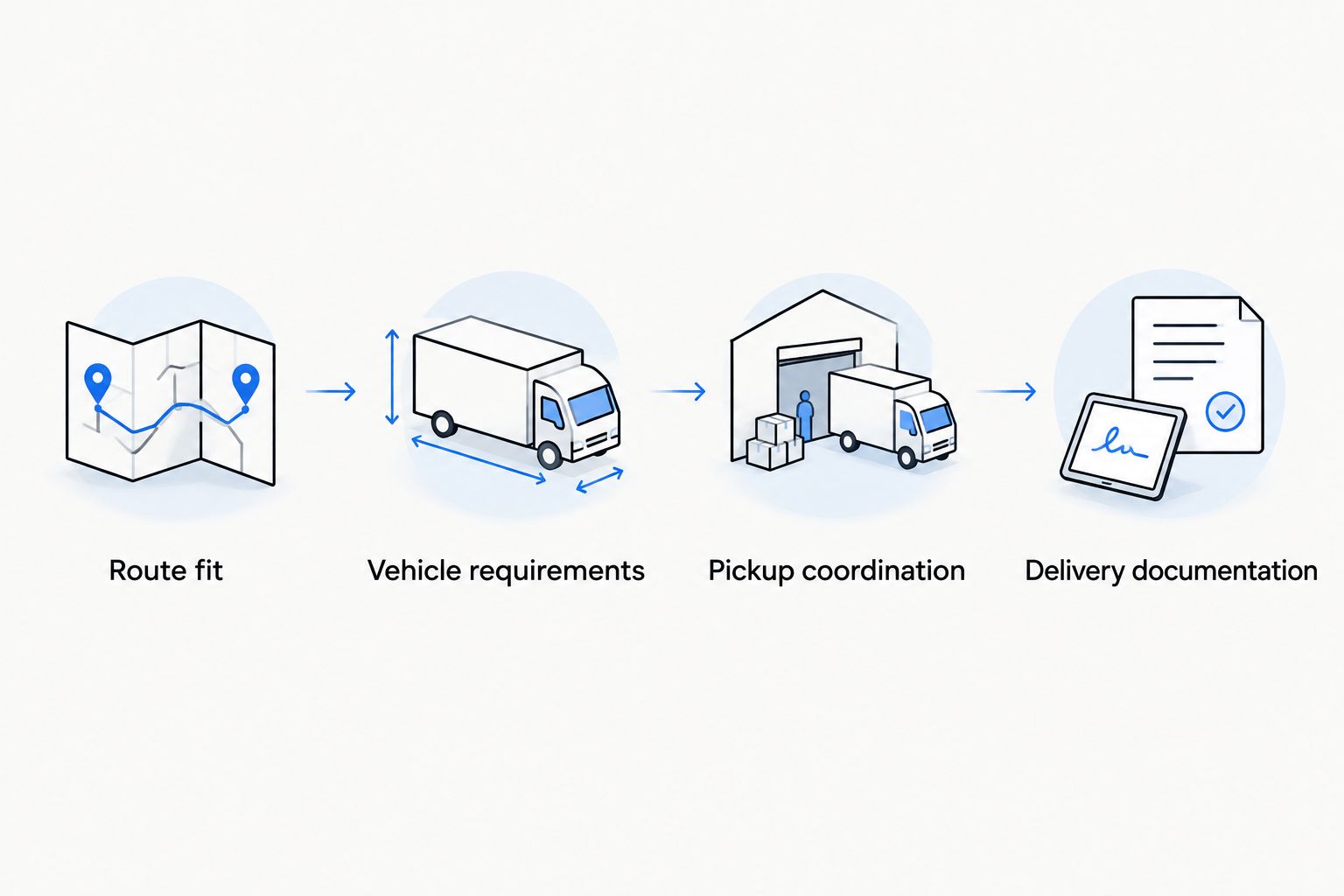
Use 4 checks before choosing an alternative
Route fit
Provide the pickup and delivery addresses, location types, site contacts, and access restrictions. Identify whether the vehicle is at an auction, dealership, fleet location, or storage facility.
Ask who will confirm loading access and receiving arrangements. Door-to-door shipping still requires a workable place for the truck to stop and the vehicle to load or unload safely.
Vehicle requirements
Supply the vehicle's make and model, operating condition, and any modifications or handling concerns. Tell the provider about issues affecting starting, steering, braking, or loading rather than assuming the carrier can address them on arrival.
Compare open and enclosed transport explicitly. Open transport uses an exposed trailer; enclosed transport places the vehicle inside a trailer. Select the option based on the vehicle's handling and exposure requirements, then confirm equipment suitability.
Pickup coordination
Identify your requested pickup window, the release contact, and any appointment requirements. Separate the date you want from the arrangements the provider and carrier have confirmed.
For an expedited request, explain the actual deadline and the consequence of missing it. Ask what has been confirmed for that shipment; do not treat an expedited label as a delivery guarantee.
Delivery documentation
Name the receiving contact and explain how your team accepts vehicles. Agree on the delivery-document process and how to record a condition concern before the movement starts.
Verify applicable insurance limits, exclusions, deductibles, and vehicle eligibility for the shipment. A general statement about insurance is not a substitute for reviewing the coverage that applies to your vehicle.
Build a repeatable commercial handoff
For recurring moves, agree on who submits shipment requests and who authorizes changes. A provider comparison becomes useful when your operations team can follow the resulting process without interpreting a new set of instructions for every vehicle.
Keep release and receiving responsibilities separate. The person authorizing an auction purchase is not necessarily the person who can release the vehicle, and the destination contact must know what is arriving.
Use 3 document groups to organize the handoff: release information, vehicle condition records, and delivery paperwork. This is a planning structure, not a promise that every location uses the same forms.
For your 2026 account review, ask how status information reaches your team and where delivery documents will be retained. Confirm special instructions before dispatch rather than expecting a carrier to discover them at pickup.
Discuss recurring vehicle moves
Provide your routes, vehicle types, pickup requirements, and receiving locations.
When staying with Ship Your Car Now is the right call
Stay with Ship Your Car Now when its confirmed arrangement meets your route, handling, communication, and documentation requirements. A different provider is not automatically a better fit.
Check whether the proposed alternative solves a documented problem or simply changes the company name on your request. If your existing arrangement works and the new proposal adds no relevant improvement, keeping it is a reasonable decision.
Apply the same standard to every 2026 alternative: a clear scope, confirmed responsibilities, and a shipment plan that matches the vehicle. Do not substitute a broad recommendation for that review.
FAQ
What’s the best Ship Your Car Now alternative for dealerships?
CHD fits dealerships seeking brokerage coordination for dealer trades, auction purchases, and recurring inventory moves. Choose it when the confirmed pickup, status, and delivery process matches your dealership’s requirements.
Is CHD a carrier or an auto transport broker?
CHD is an auto transport brokerage that coordinates carriers. Do not treat its service as a commitment to transport your vehicle on company-owned trucks.
Is direct carrier booking better than using a brokerage?
Direct carrier booking is better suited to buyers who want to manage the carrier relationship themselves. Brokerage coordination fits buyers who want help arranging pickup, following shipment status, and managing delivery.
Should I choose open or enclosed vehicle transport?
Choose based on the vehicle’s exposure and handling requirements. Open transport uses an exposed trailer, while enclosed transport places the vehicle inside a trailer; confirm the equipment is suitable for your shipment.
Can an alternative guarantee expedited pickup?
Treat expedited pickup as unconfirmed until the provider confirms the shipment arrangements. Give the actual deadline, route, vehicle condition, and access requirements before relying on a proposed schedule.
What should I send when requesting recurring dealer transport?
Send the routes, vehicle details, operating condition, pickup requirements, release contacts, and receiving contacts. Explain the recurring movement pattern and how your team needs shipment status and delivery documents handled.
When should I keep using Ship Your Car Now?
Keep using Ship Your Car Now when its confirmed arrangement meets your shipment requirements. Switch to address a specific coordination or handling need, not because another provider appears on an alternatives list.
One last thing
Before changing providers, check whether the vehicle is actually ready for release. A transport request and a pickup-ready vehicle are different things.
Confirm the release authorization, keys, site contact, and receiving arrangements with the people responsible. That check gives any chosen provider a clearer starting point and keeps the comparison focused on transport rather than unresolved purchase paperwork.
Related guides