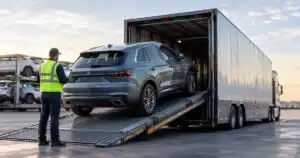
Instead of chasing release details, carrier updates, and delivery receipts separately, use a Copart salvage vehicle transport workflow that gates each move on authorization, vehicle condition, and receiving-site acceptance. For 2026, this guide connects an auction win to a documented physical handoff without confusing transport with title transfer or insurance coverage.
- The Copart salvage vehicle transport workflow starts with release verification, not a pickup promise.
- CHD coordinates carriers; salvage handling requirements need confirmation before dispatch.
- Keep auction release, transport documentation, and insurance authorization separate.
- Match loading equipment to actual vehicle condition, then document pickup and delivery.
Why this matters
A salvage purchase is not a complete transport instruction. Your carrier still needs a verified pickup location, release authorization, a usable condition description, and a destination prepared to receive the vehicle.
Car Haul Direct is a transport brokerage suited to commercial buyers who need carrier coordination for auction vehicle moves. CHD coordinates transport with carriers rather than operating the trucks. That adds a coordination resource, but your team still needs to supply accurate release and condition information.
Treat your 2026 workflow as a chain of approvals, not a promised delivery date. An auction win, permission to collect, carrier acceptance, and completed delivery are different events; recording them separately keeps an incomplete step from appearing finished.
In this guide, an insurance transfer means a physical vehicle movement connected to an insurer-authorized instruction. It does not mean transferring ownership, activating coverage, or resolving a claim. Establish which of those tasks your assignment actually includes before arranging collection.
Before you start
- Access and authority: Have authorized access to the relevant Copart purchase and release information. Identify who can authorize collection and who can approve the insurer-related destination or instructions, when applicable.
- Shipment materials: Assemble the lot identifier, VIN, purchase reference, pickup location, destination, contact details, condition information, and receiving hours. Record any collection deadline shown in the current transaction instructions.
- The gotcha: A vehicle described as running is not automatically ready for ordinary loading. Confirm its present rolling, steering, braking, wheel, key, and access conditions; a condition change can require a different loading plan.
For each 2026 assignment, use the current transaction instructions rather than a procedure saved from a previous purchase. Confirm location-specific collection arrangements with the releasing facility before assigning a carrier.
Shipment record and release gate
The following bold labels are suggested fields for your own worksheet, not Copart interface labels. Use 1 movement record per vehicle so release information, transport updates, and delivery evidence stay attached to the same asset.
- Create the shipment record. Enter Vehicle identity, Pickup location, Destination, Release authority, and Receiving contact. Match the VIN across the purchase information and movement instruction; investigate a mismatch before proceeding.
- Separate the approvals. Record Auction release, Movement authorization, and Destination acceptance as distinct items. Ask the responsible party to confirm each one rather than treating a purchase confirmation as permission for every subsequent action.
- Verify collection instructions. Confirm what the releasing location requires from the collecting driver, how collection is arranged, and whether any outstanding requirement prevents release. Pass sensitive collection credentials only through an agreed channel.
- Check destination readiness. Confirm the address, delivery contact, receiving hours, unloading arrangements, and permission to leave the vehicle. Establish whether the destination is a repair facility, storage site, remarketing location, or another authorized receiver.
Expected result: Your record passes 3 release checks: the vehicle can be collected, the move is authorized, and the destination accepts it. An unanswered check means the shipment remains unready for dispatch.
For insurer-directed movements, use the total-loss transfer guide to frame the handoff around authorization and receiving requirements. Keep title work and claim decisions with the parties responsible for them.
Vehicle condition and transport plan
Describe the actual vehicle before requesting a carrier assignment. A short condition label cannot tell a driver whether damaged wheels turn, a parking brake releases, or bodywork obstructs loading.
- Build the condition description. Record whether the vehicle starts, rolls, steers, and brakes, along with key availability, wheel condition, visible leaks, loose components, and ground-clearance concerns. Mark anything unverified as Unknown, not as working.
- Provide supporting evidence. Share available condition photographs and identify when they were taken. Ask the releasing location to clarify material uncertainties rather than asking a driver to discover them at collection.
- Confirm loading compatibility. Have the transport coordinator confirm that the proposed carrier can handle the stated condition and that the pickup and receiving sites can support the loading and unloading plan.
- Record the accepted plan. Write down the transport type, handling requirements, access constraints, and escalation contact. Treat an expedited request as a timing need requiring confirmation, not a guaranteed pickup commitment.
Transport options by handling need
| Option | Best for | Practical benefit | Limitation to resolve |
|---|---|---|---|
| Open transport | Vehicles accepted for open transport with compatible loading requirements | Moves the vehicle without an enclosed trailer requirement | Exposes the vehicle to weather and road conditions; damage still needs a loading assessment |
| Enclosed transport | Vehicles whose handling plan calls for reduced exposure | Places the vehicle inside a trailer | Enclosure alone does not resolve inoperability, leaks, or difficult loading |
| Specialized recovery equipment | Vehicles that cannot use the proposed ordinary loading method | Addresses a defined recovery or handling obstacle | Equipment and site acceptance require specific confirmation |
Choose equipment from the vehicle's condition, not from its auction category. Open and enclosed describe transport arrangements; neither label proves that a carrier can load a particular salvage vehicle.
If damage involves an electric vehicle battery, report the known condition before assignment. Do not assume a standard vehicle carrier accepts a damaged battery or that ordinary handling instructions are sufficient; obtain an explicit acceptance decision.
Expected result: The coordinator has a condition description and a confirmed loading plan. Unresolved handling questions remain visible instead of disappearing inside a general transport request.
Carrier assignment and pickup handoff
A pickup request becomes actionable when release, equipment, and site instructions agree. Keep the carrier's assignment tied to the approved movement record rather than scattering revisions across unrelated messages.
- Send the dispatch packet. Include the vehicle identifiers, authorized pickup information, destination, site contacts, condition description, handling plan, and timing requirements. State who can approve changes.
- Confirm the collection arrangement. Recheck the location's current collection process and the carrier's planned arrival. Distinguish a requested window from an accepted arrangement; communicate changes to the releasing and receiving contacts.
- Verify the vehicle at pickup. Ask the collecting party to match the VIN and lot information before loading. Escalate a different vehicle, unexpected damage, missing access, or incompatible equipment before the collection proceeds.
- Document the handoff. Request a dated pickup condition record and photographs, and retain the transport document used for the move. Record unresolved exceptions in writing rather than relying on a phone conversation alone.
For your 2026 dispatch record, use explicit statuses such as Awaiting release, Ready for assignment, Pickup confirmed, and Collected. These are recommended internal labels, not claims about a Copart status screen or an automated connection.
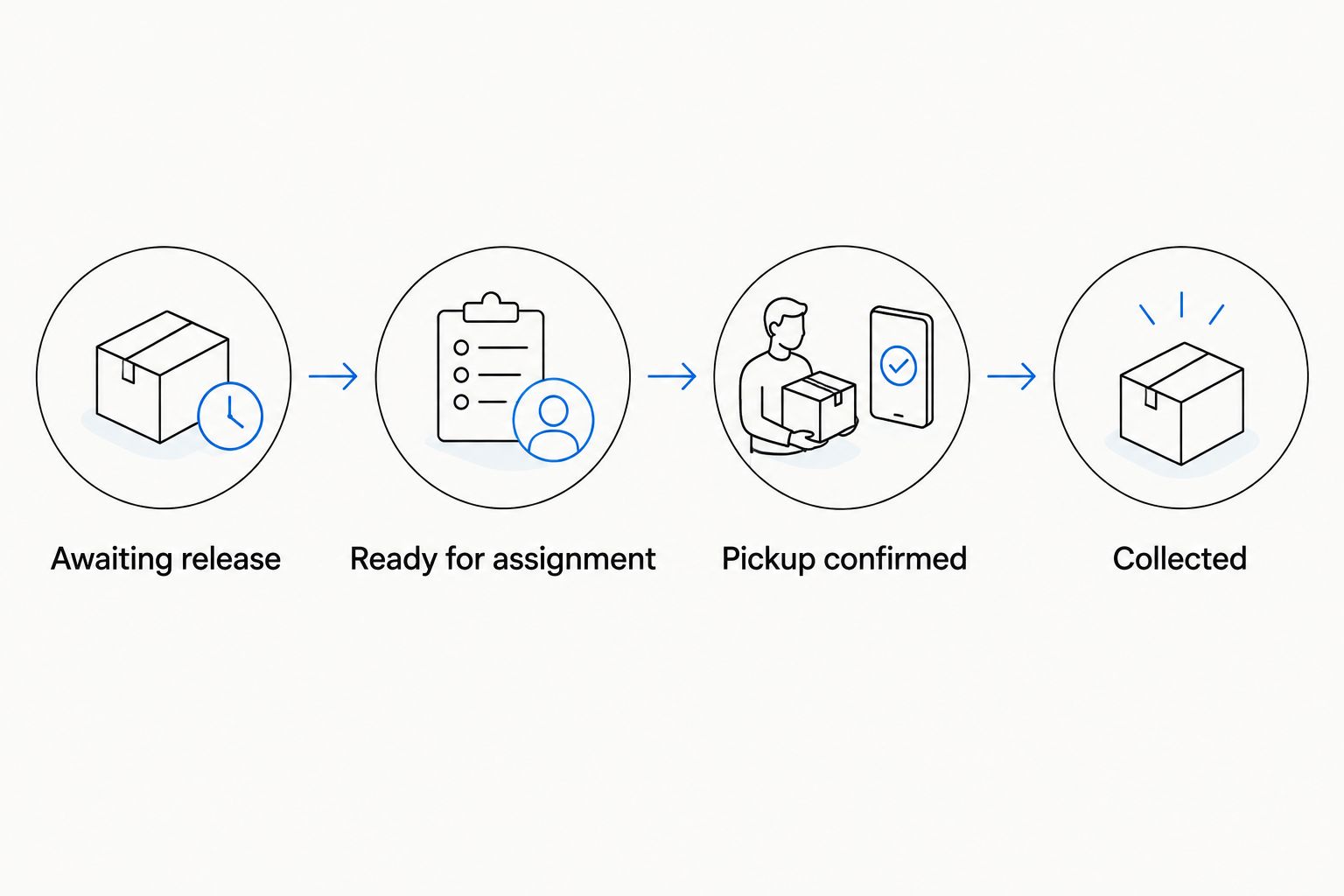
Expected result: You have evidence that the correct vehicle left the authorized location, plus a written record of its pickup condition. A scheduled collection alone does not establish that the vehicle was collected.
Delivery acceptance and insurance handoff
Delivery closes the transport task only when the receiving party acknowledges the physical handoff. It does not automatically close the insurer's file or complete ownership documentation.
- Reconfirm receiving access. Give the receiving contact the current arrival information and confirm unloading access. Resolve changes to the destination or receiving instructions before redirecting the carrier.
- Inspect at delivery. Have the receiver verify vehicle identity and compare visible condition with pickup documentation. Record newly observed damage or discrepancies on the delivery documentation and follow the applicable reporting instructions promptly.
- Collect delivery evidence. Retain the signed delivery receipt or bill of lading, receiver identification, delivery location, and condition photographs. Keep 2 photo sets in the movement record: pickup and delivery.
- Route the closeout packet. Send the transport evidence to the authorized business or insurance contact. List unresolved items separately, including missing documents, condition disputes, or instructions still awaiting approval.
Expected result: The authorized receiver has the vehicle, and the responsible contact has the delivery evidence. Mark transport complete only after confirming that physical handoff; keep claim, title, and coverage tasks open until their owners close them.
When the destination changes after the auction win
An adjacent workflow applies when an insurer or authorized business contact changes the receiving location before collection. Preserve the original instruction and document the replacement instead of overwriting the record without explanation.
- Obtain the revised destination from the authorized decision-maker.
- Confirm the new receiver's acceptance, hours, access, and unloading arrangements.
- Ask the coordinator to reassess the route, equipment fit, and timing estimate.
- Distribute the approved revision to the carrier and affected site contacts.
Best for: A pre-pickup destination change with clear authority. This variant keeps the existing condition and release work usable, but it requires renewed receiving and transport confirmation.
If the vehicle has already been collected, stop treating the change as a routine address edit. Request revised movement instructions and carrier acceptance before promising a different delivery; the original arrangement does not establish acceptance of a new route.
Troubleshooting
The driver cannot obtain release
Check the vehicle identifiers, release authority, and the facility's stated collection requirements. Have the authorized buyer or representative resolve the release issue; do not ask the driver to bypass it.
The vehicle cannot load as described
Pause loading and document the discrepancy. Update the condition record, send current evidence to the coordinator, and obtain an accepted equipment plan before proceeding.
The delivery location cannot receive the vehicle
Contact the authorized decision-maker and receiving contact before arrival where possible. Confirm any alternative location, access arrangement, and carrier acceptance in writing rather than leaving destination selection to the driver.
Pickup and delivery condition records disagree
Preserve both records, photographs, and relevant messages. Notify the responsible transport and insurance contacts under the applicable reporting process; a discrepancy needs investigation, not an unsupported assumption about who caused it.
Someone asks whether transport damage is covered
Request the applicable policy information and shipment-specific confirmation. Check limits, exclusions, deductibles, vehicle eligibility, and reporting requirements; neither a brokerage relationship nor a transport booking establishes blanket coverage.
Customize your workflow
For recurring auction purchases, assign an owner to release verification, carrier coordination, and delivery closeout. Keep responsibility explicit even when the same person performs several tasks, and store supporting documents with the vehicle record.
CHD coordinates recurring commercial moves and shipment status communication. For a 2026 operating procedure, agree on update triggers, exception contacts, and required delivery documents before increasing shipment volume.
Do not build an assumed Copart connection into that procedure. API or white-label transport workflows require separate confirmation of scope, supported events, access, and integration availability; a manual workflow does not establish software compatibility.
Discuss recurring vehicle moves
Share your auction routes, vehicle conditions, receiving locations, and coordination requirements.
FAQ
What is the Copart salvage vehicle transport workflow?
The workflow is to verify release and movement authority, document vehicle condition, confirm suitable transport, and collect pickup and delivery evidence. Keep ownership, insurance, and claim administration separate from the physical move.
Can I arrange transport immediately after winning a Copart vehicle?
You can begin planning transport after the win, but collection requires verified release readiness. Confirm the current transaction and location requirements before committing a carrier to pickup.
Does a running salvage vehicle qualify for ordinary transport?
A running description does not establish loading compatibility. Confirm rolling, steering, braking, wheel condition, access, and any damage that affects loading with the transport coordinator.
Is enclosed transport better for a salvage vehicle?
Enclosed transport addresses exposure, not every salvage handling problem. Select it when the handling plan calls for enclosure, and separately confirm that the vehicle can be loaded and accepted.
Does an insurance transfer include title transfer?
A physical vehicle transfer does not itself transfer title or activate insurance. Confirm title, claim, and coverage responsibilities with the parties authorized to handle those tasks.
What documents should I keep after delivery?
Keep the pickup condition record, delivery receipt or bill of lading, photographs, and authorized movement instructions. Send the required evidence to the designated business or insurance contact and track unresolved exceptions separately.
Can CHD coordinate a non-running auction vehicle?
CHD coordinates vehicle transport with carriers, but a specific non-running vehicle requires handling confirmation before assignment. Provide its rolling, steering, braking, wheel, access, and damage details so the proposed loading plan can be assessed.
One last thing
Give the receiving contact the pickup condition record before the vehicle arrives. A delivery inspection is more useful when the receiver can compare conditions at the handoff instead of searching for photographs afterward. Make that document transfer part of your dispatch routine, not a cleanup task.
Related guides
- Auction car transport companies
- Inoperable vehicle transport companies
- Auto transport for remarketing companies