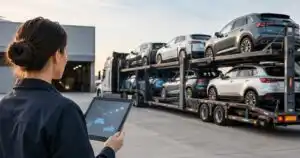
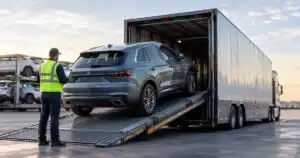
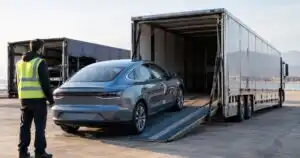
Your auction to dealership car shipping cost in 2026 depends on the route, vehicle condition, transport type, pickup requirements, and requested timing; use a shipment-specific written quote to set your budget. Confirm whether that quote includes any special loading or access arrangements, and account separately for auction charges that are not part of the transport agreement.
- Auction to dealership car shipping cost requires a route-specific quote, not a budget based on mileage alone.
- Car Haul Direct suits dealerships seeking a transport brokerage to coordinate auction pickups and recurring inventory moves.
- Compare open transport, enclosed transport, and expedited requests against the vehicle’s handling needs and pickup deadline.
- Confirm auction release, loading requirements, receiving hours, and exclusions before authorizing carrier coordination.
Why this matters
A transport quote only helps your inventory decision when it matches the vehicle you bought and the work required to collect it. An incorrect running-condition description or an unresolved release requirement leaves the pickup plan incomplete.
For dealership buyers, the task extends beyond moving a vehicle between addresses. The guide to auto transport for dealerships covers the broader coordination context; the immediate priority here is to define the shipment before comparing quotes.
Compare the same shipment scope, not just the quoted total. Your purchasing team, auction contact, transport coordinator, and receiving lot should work from the same vehicle details and timing requirements.
How much does auction-to-dealership car shipping cost in 2026?
The amount you should authorize is the written quote for your specific auction-to-dealership move, with its inclusions and exclusions confirmed. A mileage estimate alone does not describe the loading requirements, auction access, or delivery arrangements.
Build your 2026 purchase worksheet around the following breakdown. Keep transport charges separate from auction-account charges so your team knows which party is responsible for each item.
| Budget component | What to confirm | Why it belongs in the review |
|---|---|---|
| Vehicle transport | Origin, destination, vehicle, and transport type | Defines the shipment being quoted |
| Special loading | Running condition, wheel movement, steering, brakes, and loading needs | Establishes whether standard loading is suitable |
| Pickup coordination | Release status, collection requirements, and pickup contact | Establishes what must happen before collection |
| Delivery arrangements | Receiving address, access restrictions, and receiving hours | Defines where and how the handoff will occur |
| Auction-account charges | Applicable auction terms and outstanding obligations | Keeps auction obligations distinct from transport |
| Exceptions and changes | Written treatment of changed instructions or vehicle details | Clarifies when the original quote requires review |
Ask whether the document is an estimate or a confirmed transport arrangement, what remains subject to confirmation, and what changes require your approval. Do not treat an initial quote as proof that a carrier has accepted the move.
Open transport: best for vehicles without an enclosure requirement
Open transport carries vehicles on a trailer without an enclosed compartment. It is a relevant option when your dealership has not specified protection from normal road and weather exposure.
Best for: Auction purchases whose condition and handling requirements are compatible with open carriage. Its limitation is exposure: open transport does not provide the surrounding barrier of an enclosed trailer.
Give the coordinator the actual vehicle details, including modifications that affect loading. Do not describe a damaged or unverified auction purchase as running simply because the listing includes photographs of an intact vehicle.
Ask the carrier coordinator to confirm that the selected equipment suits the vehicle and the pickup location. The transport category alone does not establish whether a particular trailer can load a particular vehicle.
Enclosed transport: best for vehicles requiring enclosure
Enclosed transport places the vehicle inside a trailer rather than on an exposed deck. Consider it when your dealership’s handling instructions call for an enclosed environment, including appropriate collector or high-value purchases.
Best for: Vehicles with a documented enclosure requirement. Enclosure addresses exposure, but it does not replace a loading assessment, condition report, or review of the applicable carrier insurance.
Explain low clearance, modifications, damage, or other handling concerns before equipment is selected. Ask what loading method is proposed and whether it meets those requirements.
Do not choose enclosure solely from a vehicle’s sale category. Match the transport plan to the actual vehicle and your dealership’s instructions, then confirm the arrangement in writing.
Expedited transport: best for a time-sensitive pickup request
Expedited transport addresses a request for faster coordination or a tighter shipment schedule. It is a timing requirement, not a separate form of vehicle protection; the move still needs an appropriate open or enclosed transport plan.
Best for: Auction purchases with a specific, documented timing need. Carrier availability, auction release, access, and route requirements still need confirmation, so an expedited request is not a guaranteed pickup or delivery commitment.
For a time-sensitive 2026 purchase, distinguish the vehicle’s release date, your preferred collection date, and the dealership’s required arrival date. Those dates describe different parts of the job.
| Transport option | Best for | Main benefit | Limitation to resolve |
|---|---|---|---|
| Open transport | Vehicles without an enclosure requirement | Provides transport without an enclosed-trailer requirement | Vehicle remains exposed to weather and road conditions |
| Enclosed transport | Vehicles requiring enclosure | Provides a surrounding trailer barrier | Loading suitability and insurance terms still require review |
| Expedited request | Time-sensitive auction purchases | Makes the timing requirement explicit during coordination | Availability and schedule require confirmation |
Why auction-to-dealership shipping costs vary
A useful quote reflects the work required for the shipment. Provide these details together rather than asking for a rate and adding operational requirements afterward.
- Route: Supply the actual auction location and receiving address. Include any special routing instructions rather than relying only on city names.
- Vehicle: Identify the year, make, model, and modifications relevant to loading. Explain unusual dimensions or clearance requirements without assuming the coordinator already knows them.
- Condition: State whether running condition is verified. Describe damage and any known limitations involving movement, steering, braking, or loading.
- Transport type: Specify open or enclosed carriage and the reason for any special handling requirement. Keep an expedited timing request distinct from equipment selection.
- Timing: Provide release readiness, the requested pickup window, and receiving hours. Identify which dates are preferences and which are operational constraints.
- Access and coordination: Explain auction collection procedures, site restrictions, contact details, and dealership handoff requirements. Confirm whether the truck can use the proposed locations.
For recurring auction purchases, use the same information fields for every request. Consistent instructions make quote comparisons more useful without assuming that different routes or vehicles should receive the same terms.
How do you get a quote your dealership can actually use?
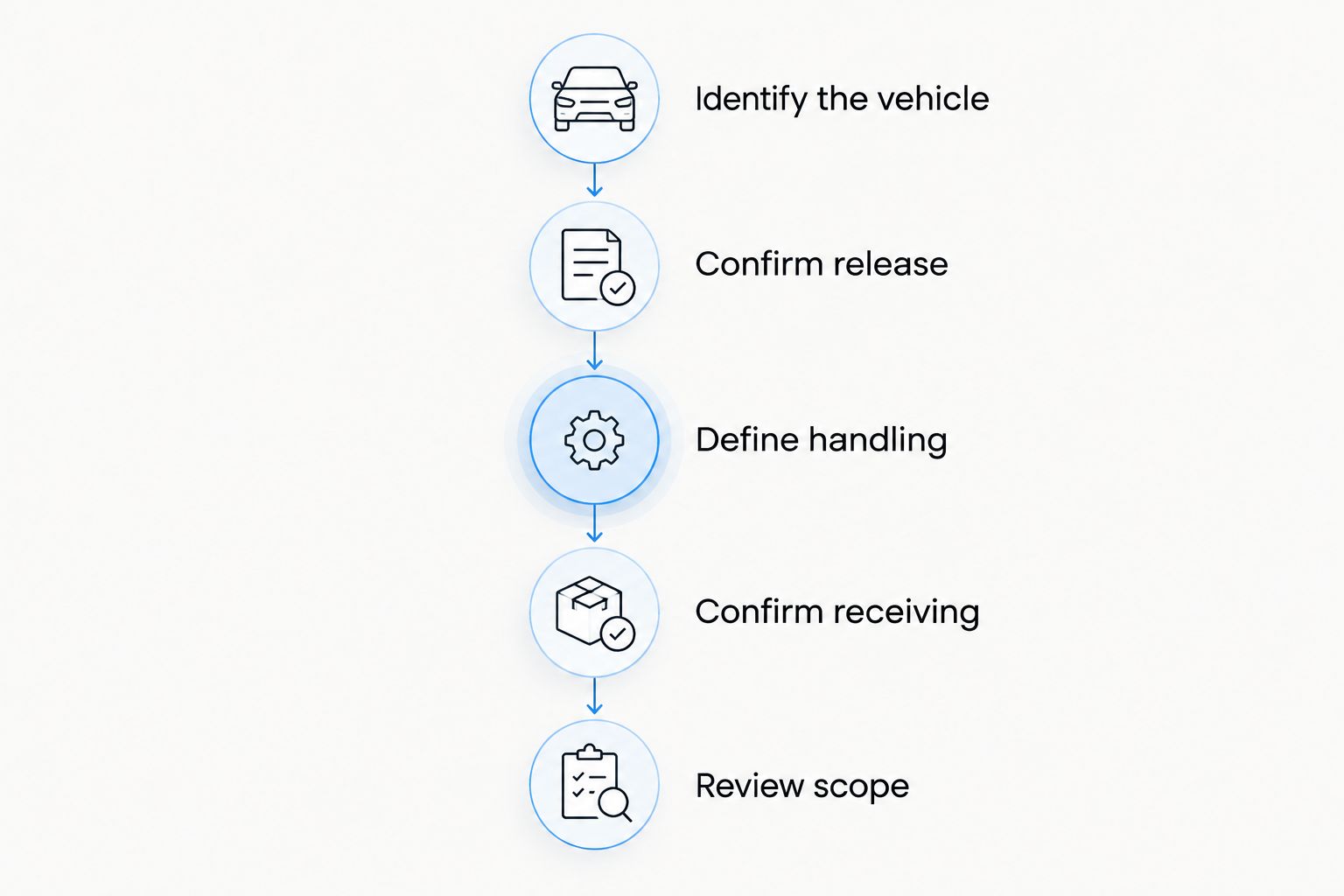
Use the following sequence before authorizing a shipment. Each step resolves a different part of the pickup and delivery plan.
1. Identify the vehicle
Provide the VIN, auction location, lot or stock reference where applicable, and vehicle description. Include the auction’s condition information and distinguish confirmed facts from details that still need checking.
If your team has not verified whether the vehicle runs, say so. A clear unknown is more useful to transport planning than an unsupported assumption.
2. Confirm release
Ask the auction what must be completed before the vehicle can leave. Confirm the release contact, required documents, and any collection instructions that apply to that purchase.
A purchase confirmation and a vehicle ready for collection are not interchangeable instructions. Tell the transport coordinator when release is confirmed rather than assuming the carrier can resolve outstanding auction requirements.
3. Define handling
State the requested transport type and describe any loading concerns. Supply relevant condition photographs or documentation when they help explain damage, clearance, or access needs.
Ask the coordinator to confirm the proposed handling arrangement. Do not assume that selecting enclosed or expedited service resolves a loading problem.
4. Confirm receiving
Name the receiving contact and provide the dealership’s receiving hours. Explain whether the destination is the sales lot, a storage site, or a reconditioning location.
Check truck access before selecting the handoff point. If the proposed address has restrictions, agree on a suitable arrangement before dispatch rather than leaving the driver and receiving team to improvise.
5. Review scope
Check the written quote against the instructions you supplied. Resolve exclusions, unconfirmed details, status-update expectations, and approval requirements for changes before proceeding.
CHD is a transport brokerage coordinating carriers, not a truck-owning carrier. Its dealership offering includes recurring commercial moves; confirm the scope of your account’s pickup coordination, shipment updates, and delivery process before booking.
The final quote review should leave your team with a defined shipment, not a list of assumptions. Keep the approved instructions with the purchase record so a different employee can handle receiving without reconstructing the conversation.
Discuss recurring vehicle moves
Share auction routes, vehicle details, timing needs, and receiving requirements with CHD.
What should you check before accepting the quote?
Accept the shipment scope before accepting the number. In 2026, your approval record should identify the vehicle, route, transport type, timing assumptions, and any unresolved conditions.
Ask how shipment status will be communicated and who should receive updates. Provide a dealership contact who can answer questions about the purchase, plus a receiving contact who can handle the delivery.
Review the applicable carrier insurance rather than relying on a general insurance statement. Confirm policy limits, exclusions, deductibles, and vehicle eligibility for the proposed shipment; do not assume the vehicle’s purchase amount establishes its coverage.
Also agree on the condition-documentation process at pickup and delivery. Your receiving team needs instructions for recording the vehicle’s condition and raising a discrepancy, not just a notification that the truck has arrived.
For repeat purchases, assign responsibility for approving changes. A coordinator should know which dealership contact can authorize a revised destination, handling arrangement, or schedule.
Is auction-to-dealership shipping priced by mileage alone?
Mileage alone is not a complete shipment specification. The route matters, but so do vehicle condition, equipment requirements, pickup access, timing, and delivery instructions.
Use the same origin, destination, condition description, and transport requirements when requesting competing quotes. Otherwise, the documents do not describe the same job, even when the vehicle is identical.
Can you combine auction purchases into one transport request?
You can request coordination for multiple vehicles, but the arrangement needs confirmation. Provide each vehicle’s details, release status, pickup location, and destination rather than assuming the purchases can share a pickup or trailer.
CHD coordinates recurring dealer and auction moves. Discuss the actual purchase pattern and receiving requirements without assuming that grouping vehicles establishes a particular rate or schedule.
Does expedited shipping guarantee the auction pickup date?
An expedited request does not establish a guaranteed pickup date. Release readiness, carrier availability, equipment suitability, and auction access still require confirmation.
State the business deadline and ask what schedule is confirmed versus estimated. If your dealership must make another decision before pickup is secured, keep that decision separate from an unconfirmed transport request.
FAQ
How do I find my auction to dealership car shipping cost in 2026?
Request a written quote using the auction location, dealership address, vehicle details, condition, transport type, and timing requirements. Confirm inclusions, exclusions, and any details still subject to approval before budgeting the move.
Is open or enclosed transport better for an auction purchase?
Open transport suits vehicles without an enclosure requirement; enclosed transport suits vehicles whose handling instructions require an enclosed trailer. Confirm loading suitability and applicable carrier insurance separately from that choice.
Can I book shipping before the auction releases my car?
You can discuss transport before release, but identify release as pending and confirm the collection requirements before scheduling pickup. A transport request does not resolve outstanding auction obligations.
What if the auction vehicle does not run?
Tell the coordinator about the non-running condition before accepting a quote. Describe known movement, steering, braking, and damage limitations so the proposed loading arrangement can be assessed.
Does expedited auction transport guarantee delivery?
An expedited request does not by itself guarantee delivery. Confirm carrier availability, release readiness, access, and the difference between estimated and committed timing.
Does CHD operate the transport trucks?
CHD is a transport brokerage that coordinates shipments with carriers. Confirm the carrier arrangement, shipment scope, communication process, and applicable insurance for your move.
What should my dealership check when the vehicle arrives?
Your receiving team should check vehicle identity, document condition, and complete the agreed delivery documentation. Follow the established discrepancy-reporting process if the vehicle’s condition differs from the pickup record.
One last thing
Do not let a quote become your release checklist. Before your next 2026 auction purchase moves, ask the auction to confirm collection readiness and ask your receiving lot to confirm the handoff plan.
Those confirmations answer different questions. Keep both with the transport instructions so the carrier coordinator receives an actionable pickup request and your dealership knows what to expect at delivery.
Related guides
- How to choose auction car transport for buyers
- Auto transport for independent dealers
- Auto transport for exotic car dealerships