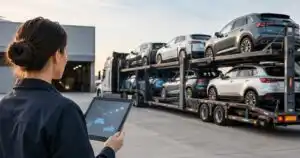
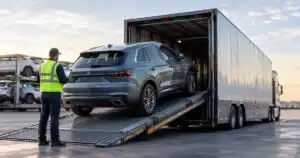
Instead of manually chasing release paperwork, carrier updates, and receiving staff after a Manheim auction win, build your 2026 manheim auction to dealer lot transport workflow around release verification, pickup coordination, and documented delivery. Car Haul Direct is a transport brokerage for dealers who want carrier coordination rather than arranging each move themselves.
- For manheim auction to dealer lot transport, verify release readiness before committing a carrier to pickup.
- CHD coordinates carriers; confirm route, vehicle condition, transport type, and receiving arrangements for each shipment.
- Use the VIN to connect auction records, transport instructions, condition documentation, and dealership intake.
- Treat estimated timing, confirmed pickup arrangements, and completed delivery as separate shipment states.
Why this matters
An auction purchase is not the same as a vehicle ready for collection. A transport request needs a verified pickup location, the applicable release requirements, an accurate vehicle description, and someone authorized to receive it.
Keep purchase status, release status, and transport status separate. Otherwise, a buyer's confirmation can become an assumed pickup authorization, or an estimated arrival can become an appointment your receiving team cannot support.
For your 2026 operating checklist, assign responsibility for both ends of the move. The broader auto transport for dealerships guide covers dealer transport coordination; this workflow focuses on the auction-to-lot handoff.
Before you start
- Auction access and release materials: Have authorized access to your purchase records, the full 17-character VIN for a standard modern vehicle, the actual pickup location, and the documents or instructions the releasing location requires. Confirm requirements directly rather than assuming every location follows the same process.
- Transport and receiving contacts: Identify the dealership buyer, pickup contact, transport coordinator, receiving contact, and backup receiver. Gather vehicle dimensions or modifications that affect loading, operating condition, requested transport type, and timing needs.
- The release gotcha: Do not equate a purchase confirmation with permission to collect. Verify release readiness and where the vehicle physically sits before asking a carrier to travel to the pickup point.
This is a coordination workflow, not a Manheim software tutorial. Use the applicable auction records and your dealership's shipment register; the steps do not require a particular screen, button, or integration.
Purchase and release record
Create a record that follows the vehicle from auction purchase through dealership intake. Use the VIN as the primary reference, with the auction purchase reference and your internal stock reference alongside it.
- Record the purchase. Enter the VIN, year, make, model, auction reference, buying entity, and intended destination. Compare the VIN across the available purchase and release materials before sending transport instructions. Resolve mismatches with the responsible party rather than choosing whichever entry looks plausible.
- Verify the physical origin. Confirm the collection address and releasing contact. Ask whether the vehicle is at the expected auction location or another collection point, and record any access instructions supplied for that location.
- Confirm release readiness. Ask the releasing location what the collecting carrier must present and whether anything still prevents collection. Record who confirmed readiness and when. Keep unresolved requirements visible instead of burying them in an email chain.
- Separate the timing fields. Record when the vehicle is ready, the requested pickup window, any confirmed pickup arrangement, and the dealership's receiving hours. These entries describe different things. Do not copy the requested date into the confirmed field.
Expected result: Your shipment record identifies the correct vehicle, its actual origin, the release requirements, and the person responsible for resolving a release problem. A carrier can receive usable instructions without reconstructing the purchase history.
Transport requirements and carrier coordination
For CHD auction transport coordination, provide the route, vehicle details, transport preference, readiness status, and receiving restrictions together. An incomplete request leaves the coordinator without the information needed to assess carrier fit.
For a 2026 shipment request, use the following distinctions. Open and enclosed describe transport equipment; expedited describes a timing request, not a separate promise of equipment or delivery.
| Requirement | Best for | Practical advantage | Limitation to resolve |
|---|---|---|---|
| Open transport | Routine dealer inventory without an enclosure requirement | Moves vehicles on an open carrier | Vehicle remains exposed to weather and road conditions |
| Enclosed transport | Vehicles whose handling plan calls for enclosure | Encloses the vehicle during transit | Confirm loading method, clearance, and route fit |
| Expedited coordination | A time-sensitive inventory need | Makes urgency explicit during carrier coordination | Availability and timing require shipment-specific confirmation |
- Describe loading condition accurately. State whether the vehicle starts, moves under its own power, steers, and brakes. Include known flat tires, missing keys, leaks, clearance concerns, or modifications. Do not describe the vehicle as operable solely because an earlier listing said so.
- Specify the transport requirement. Choose open or enclosed based on the vehicle and handling needs. If timing is urgent, provide the business deadline and explain whether pickup, arrival, or both drive the request. Ask what can actually be arranged before making a customer-facing commitment.
- Confirm site access. Provide pickup and delivery restrictions, receiving hours, appointment requirements if applicable, and a suitable unloading location. Door-to-door coordination still depends on safe, lawful carrier access; confirm an alternative handoff point when the destination cannot accommodate the equipment.
- Review shipment-specific protection and instructions. Verify the applicable carrier policy limits, exclusions, deductibles, and vehicle eligibility. Keep the relevant documentation with the move. Do not assume the transport type alone establishes coverage or that every vehicle has identical protection.
Expected result: The transport coordinator has enough detail to assess the move, clarify exceptions, and communicate the carrier arrangement. The dealership understands what is requested, what is confirmed, and what still needs an answer.
Pickup handoff and shipment updates
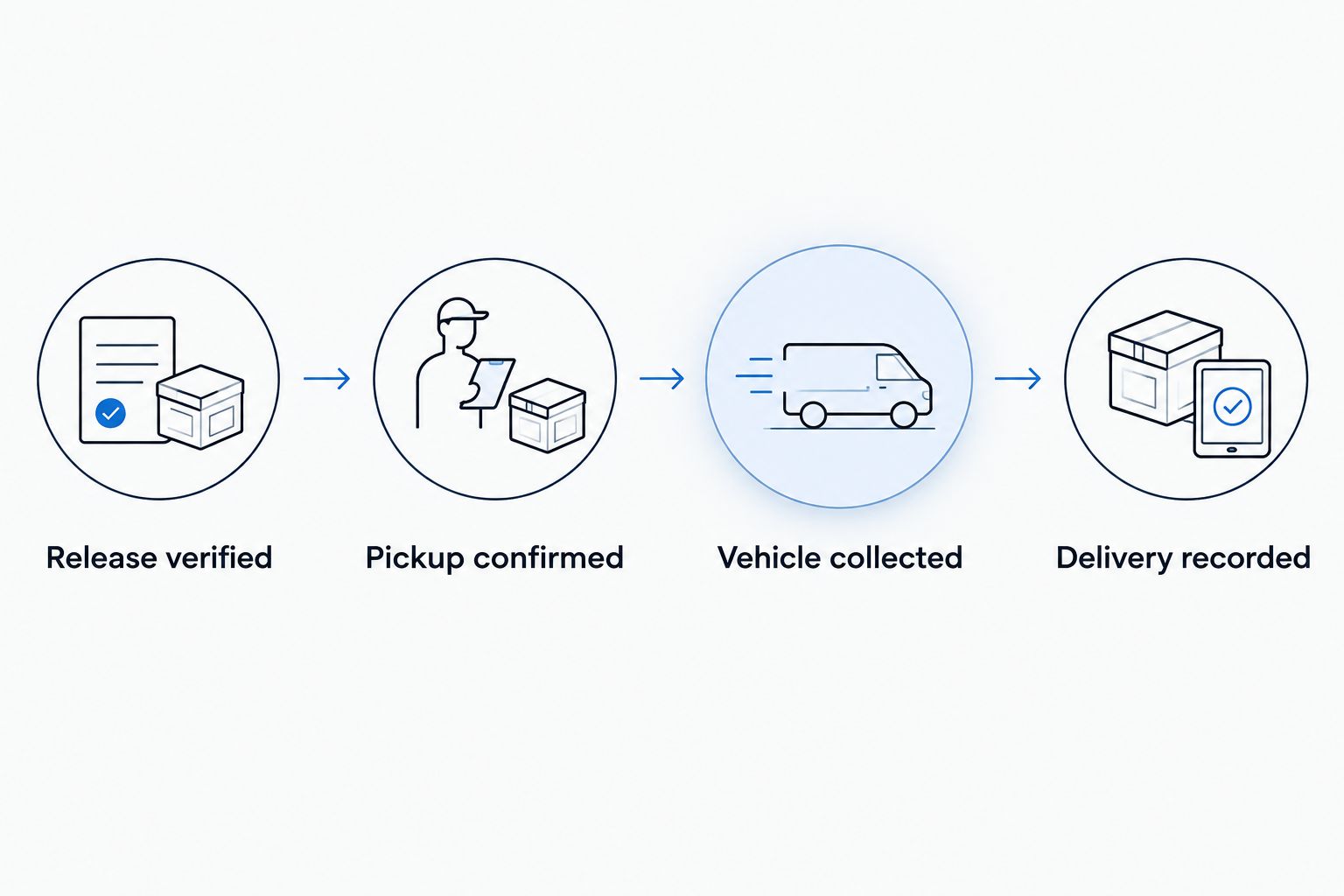
Your shipment record should distinguish these checkpoints: Release verified, Pickup confirmed, Vehicle collected, and Delivery recorded. These are proposed internal labels, not claimed Manheim interface fields or automatic CHD notifications.
- Recheck release before collection. Confirm that the releasing location has the necessary authorization and that the collection instructions match the carrier arrangement. If the vehicle's location or condition changes, notify the transport coordinator before collection proceeds.
- Document the pickup handoff. Have the collecting party verify vehicle identity and document accessible condition, including visible damage and relevant exceptions. Retain the pickup transport document and available photographs with the vehicle record. An auction condition report does not replace documentation of the transport handoff.
- Define the update owner. Name the person who will communicate pickup confirmation, collection, material timing changes, and delivery coordination. Confirm how updates will be shared. Do not assume a live tracking feed, automated notification, or platform connection exists for your shipment.
- Send changes to receiving staff. Share the latest arrival estimate, carrier contact arrangements, and unloading requirements with the dealership receiver. Label estimates as estimates. If the receiving window no longer works, resolve the conflict with the coordinator instead of leaving the driver to find an alternative.
Expected result: You can distinguish an assigned pickup from a collected vehicle, locate the pickup documentation, and identify who must act when timing changes. Your receiver gets operational instructions rather than an unexplained arrival date.
Delivery intake and document closeout
Close the transport task only after the receiving handoff is documented. For your 2026 intake procedure, keep physical receipt distinct from later reconditioning or sales preparation.
- Verify the receiving arrangement. Before arrival, confirm the authorized receiver, unloading point, site access, and receiving window. Give the backup receiver the same instructions. A vehicle arriving at a dealership address does not establish that someone can accept it.
- Match identity and inspect condition. Compare the arriving VIN with the shipment record. Inspect accessible surfaces and record visible exceptions on the delivery document before signing. Photograph concerns where possible and retain the pickup evidence for comparison; do not treat every condition difference as proof of transport damage.
- Record the handoff. Note receipt, key handover, and any discrepancies in the delivery documentation. Follow the document's signing procedure and retain a copy. Send concerns promptly through the applicable reporting process without promising an outcome before review.
- Close or escalate the record. Attach delivery documentation, mark the transport handoff complete, and route unresolved issues to the responsible person. Tell inventory or reconditioning staff that the vehicle has arrived, while keeping any open condition issue visible.
Expected result: The dealership has a documented receipt, a clear exception record, and an internal next owner. Transport completion no longer depends on someone remembering to forward a driver's message.
Repeat the workflow for recurring auction purchases
Best for dealer groups with recurring auction purchases: Use the same vehicle-level record inside a shared shipment register. This preserves individual release status while giving your coordinator a view of planned inventory movement.
Add each purchased vehicle when the purchase is recorded, but advance it to pickup coordination only after the release check. Group records by origin, destination, and readiness for planning; ask the coordinator to confirm whether grouping suits the actual carrier arrangement.
Keep an exception queue for unreleased vehicles, unclear operating condition, changed destinations, and missing receiving instructions. Assign an owner to each exception so one unresolved purchase does not obscure the rest of the register.
For recurring CHD dealership transport coordination, the benefit is a consistent brokerage contact and carrier coordination process. The limitation remains shipment-specific execution: recurring work does not make every requested pickup time or equipment choice confirmed.
Troubleshooting
The carrier cannot collect the vehicle
Recheck release authorization, required collection materials, physical location, and access arrangements with the releasing contact. Give the transport coordinator the specific unresolved requirement. Do not simply resend the original purchase confirmation.
The vehicle will not load as described
Stop and report the actual condition, including steering, braking, tire, key, or clearance problems. Ask the coordinator to reassess equipment and handling requirements. Do not authorize an improvised loading method just to preserve an earlier schedule.
The arrival estimate falls outside receiving hours
Give the coordinator an authorized alternative receiving window or a confirmed alternative handoff arrangement. Check access and receiver authority before changing the destination instructions. Do not assume an unattended lot is an acceptable delivery point.
Pickup and delivery condition records differ
Preserve both records, photographs, and relevant communications. Document the concern and follow the applicable reporting procedure promptly. Separate what the records show from assumptions about when or how damage occurred.
Customize your workflow
For your next 2026 process revision, add separate exception fields for release, loading condition, timing, and receiving access. Keep them distinct from ordinary progress updates so your team can see which shipment needs a decision.
Expand the register by dealership or receiving site when several locations share purchasing staff. Give each destination its own contact and access instructions rather than copying one location's arrangements across the group.
If you want CHD to support recurring auction moves, bring a representative route list, vehicle mix, release process, and receiving requirements. If you later discuss a platform connection, confirm the supported workflow and integration scope before planning around automation.
Discuss recurring vehicle moves
Share auction origins, receiving locations, vehicle requirements, and recurring coordination needs.
FAQ
What do I need for Manheim auction to dealer lot transport?
You need verified release readiness, the vehicle identity and condition, pickup instructions, transport requirements, and an authorized dealership receiver. Confirm the releasing location’s requirements before committing a carrier to collection.
Can I arrange transport as soon as I win the auction?
You can begin planning after the purchase, but verify release readiness before committing to collection. Keep the requested pickup window separate from a confirmed pickup arrangement.
Is open or enclosed transport better for auction inventory?
Open transport suits routine inventory without an enclosure requirement; enclosed transport suits vehicles whose handling plan calls for enclosure. Confirm loading condition, clearance, and carrier fit rather than choosing by vehicle value alone.
Can expedited transport guarantee my dealership delivery date?
Do not treat an expedited request as a guaranteed delivery date. Confirm shipment-specific availability and timing, and explain the receiving deadline before accepting the arrangement.
What if the auction vehicle does not run?
Report the actual loading condition before carrier coordination proceeds. Describe starting, movement, steering, braking, tires, keys, and known clearance problems so the coordinator can assess the handling requirements.
Does a pickup confirmation mean the vehicle is in transit?
No. A pickup confirmation describes an arrangement; collection confirms that the vehicle has been handed over. Keep those states separate in your shipment register.
What should the dealership check at delivery?
Verify the VIN, inspect accessible condition, document visible exceptions, and retain the delivery paperwork. Compare concerns with pickup evidence and follow the applicable reporting procedure promptly.
One last thing
The most useful shipment update is the next unresolved action. Alongside the status, record the action, its owner, and the condition that allows the vehicle to advance. A release problem needs an authorization decision; a receiving conflict needs an accepted handoff plan—not another generic request for an update.
Related guides
- Auto transport for remarketing companies
- Inoperable vehicle transport options
- Auto transport for exotic car dealerships
- Auto transport for classic car auction houses