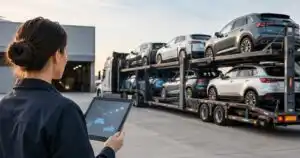
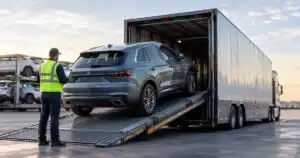
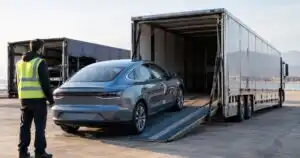
Best overall for dealer auction-purchase coordination: Car Haul Direct. Best for routine inventory: open transport. Best for exposure-sensitive vehicles: enclosed transport. For auction car transport in 2026, choose by route, vehicle condition, release readiness, and receiving deadline—not by a pickup promise made before those details are checked.
- CHD coordinates auction car transport for dealers that need carrier coordination, shipment status, and delivery planning.
- Open transport suits routine dealer inventory; enclosed transport limits exposure for vehicles with specific handling requirements.
- Expedited transport requires route-specific confirmation; an auction release problem still prevents pickup.
- Confirm vehicle condition, release documents, loading access, and receiving arrangements before authorizing dispatch.
Why this matters
An auction purchase creates two separate jobs: securing the vehicle’s release and arranging transport that can actually collect it. A carrier assignment does not resolve missing paperwork, restricted access, or an inaccurate condition description.
For a dealer buying inventory in 2026, the useful comparison is between transport arrangements that fit the purchase. Open, enclosed, expedited, and recurring transport solve different problems. They are not interchangeable, and some belong together on the same shipment.
CHD is best for auction car transport buyers who want a brokerage to coordinate carriers and manage pickup and delivery communication. We arrange transport rather than operate the trucks. The right arrangement still depends on the vehicle, route, and confirmed carrier requirements.
What makes the best auction car transport
Judge the transport plan against these criteria before comparing providers:
- Release readiness: The pickup plan identifies who authorizes release and what the driver must present.
- Vehicle suitability: The carrier receives an accurate description of running condition, damage, clearance, and loading restrictions.
- Transport fit: Open or enclosed equipment matches the vehicle’s exposure and handling requirements.
- Timing clarity: The plan separates requested dates, estimated windows, and confirmed arrangements.
- Accountability: You know who coordinates dispatch, who provides status, and who receives delivery documentation.
- Coverage verification: You review the applicable carrier policy, limits, exclusions, deductibles, and vehicle eligibility rather than rely on a blanket insurance statement.
A useful quote addresses those points. A quote that leaves them unresolved is not yet a complete pickup plan.
Auction car transport options at a glance
These are ranked transport arrangements, not an unsupported ranking of competing companies. Select the operating model first, then confirm the carrier and shipment details. Expedited coordination can apply to either open or enclosed transport.
| Rank and option | Best for | Standout feature | Key limitation |
|---|---|---|---|
| 1. Broker-coordinated open transport | Routine dealer auction purchases | Combines carrier coordination with open transport | Vehicle remains exposed during transit |
| 2. Enclosed transport | Exposure-sensitive dealer inventory | Moves the vehicle inside an enclosed trailer | Loading geometry and handling still require confirmation |
| 3. Expedited transport coordination | Deadline-driven inventory moves | Prioritizes a time-sensitive transport request | Feasibility depends on the route, release readiness, and carrier availability |
| 4. Recurring commercial transport coordination | Dealer groups with repeat auction purchases | Supports repeated pickup and receiving coordination | Each vehicle still needs accurate release and condition details |
1. Broker-coordinated open transport: best for routine auction stock
Broker-coordinated open transport combines an open trailer with a team that arranges the carrier and helps coordinate collection and delivery. For a running auction purchase headed to a dealership, this is the first option to evaluate when enclosed protection is not a requirement.
CHD arranges open auction car transport and helps customers plan pickup, follow shipment status, and manage delivery. We need the route, vehicle details, release status, and timing requirements to develop the transport request.
Broker-coordinated open transport pros:
- Gives you a coordination contact separate from the driver.
- Fits routine inventory that does not require enclosed transport.
- Lets you discuss auction release and dealership receiving requirements together.
Broker-coordinated open transport cons:
- Open trailers expose vehicles to weather and road conditions.
- Brokerage coordination does not remove auction release restrictions or establish a guaranteed pickup date.
Best for: Dealers moving ordinary auction inventory that is suitable for the assigned carrier’s equipment.
Before approving the arrangement, describe any damage that affects steering, braking, rolling, or loading. Do not describe a vehicle simply as running if its actual condition creates a loading problem. Ask the coordinator to confirm that the assigned equipment matches the disclosed condition.
Verdict: Buy this arrangement for routine inventory once release readiness and equipment suitability are confirmed.
2. Enclosed transport: best for exposure-sensitive inventory
Enclosed transport carries the vehicle inside a trailer rather than on an exposed deck. Evaluate it for specialty auction inventory when limiting exposure is part of the purchasing or receiving requirement.
Enclosure does not answer every handling question. A low-clearance vehicle, modified bodywork, or damaged suspension still requires a specific loading discussion before dispatch.
Enclosed transport pros:
- Separates the vehicle from direct weather exposure during transit.
- Fits purchases with explicit enclosed-transport requirements.
- Creates a clear opportunity to document special loading and handling instructions.
Enclosed transport cons:
- An enclosed trailer alone does not confirm suitable ramp angles or loading equipment.
- Enclosure is not a substitute for condition documentation or verified cargo coverage.
Best for: Dealers purchasing exposure-sensitive specialty inventory with documented handling requirements.
Send clear photographs of clearance issues and existing damage. Ask how the vehicle will load, where the carrier can safely collect it, and whether any special handling request has been accepted. Keep the agreed instructions with the shipment record rather than leave them in a separate conversation.
Verdict: Buy enclosed transport when protection from exposure is a defined requirement; skip it as a substitute for checking handling suitability.
3. Expedited transport coordination: best for time-sensitive purchases
Expedited transport addresses a timing need, not a trailer type. You can request it for an auction purchase with a specific receiving deadline, but the request needs route-specific confirmation.
In 2026, a useful expedited discussion starts with the vehicle’s actual release status and the date the dealership needs it. Explain the deadline and its reason before treating any proposed schedule as workable.
Expedited transport coordination pros:
- Makes the required pickup and delivery timing explicit.
- Helps focus the carrier search on the shipment’s urgency.
- Can be discussed alongside open or enclosed requirements.
Expedited transport coordination cons:
- Availability depends on the route, equipment, and carrier schedule.
- Priority coordination cannot release a vehicle the auction has not authorized for collection.
Best for: Dealers with a genuine inventory deadline and a vehicle ready for release.
Ask what has been confirmed: a transport request, an assigned carrier, a pickup window, or a delivery estimate. Those are different milestones. If the receiving location cannot accept the vehicle during the proposed window, resolve that conflict before dispatch.
Verdict: Buy expedited coordination only after the release status, route feasibility, and receiving deadline have been checked.
4. Recurring transport coordination: best for repeat auction buying
Recurring commercial transport coordination suits dealer groups and purchasing teams that repeatedly move auction inventory. The value is a consistent process for vehicle information, pickup instructions, status communication, and receiving documentation.
CHD coordinates recurring dealer, auction, and fleet moves. We need the expected routes and purchase patterns, plus the requirements at each origin and destination; a recurring account does not make every shipment identical.
Recurring transport coordination pros:
- Gives repeat purchases a consistent information checklist.
- Lets purchasing and receiving teams define their respective responsibilities.
- Supports discussion of multiple origins, destinations, and transport types.
Recurring transport coordination cons:
- Each vehicle still needs release authorization and an accurate condition description.
- Purchases from different auctions do not automatically fit one carrier route or pickup window.
Best for: Dealer groups with repeated auction purchases and more than one receiving location.
Set expectations for how the purchasing team submits vehicles and how each store confirms receipt. Decide who handles exceptions, including a vehicle that is not ready, an inaccessible pickup point, or a receiving location that changes after dispatch.
Verdict: Buy recurring coordination when repeated purchases need a consistent process, not an assumption that every load can move together.
How the options rank
The 2026 order follows the criteria above: release readiness, equipment fit, timing clarity, accountability, and coverage verification. Broker-coordinated open transport is the default for routine stock; enclosed, expedited, and recurring arrangements address specific requirements.
This is a use-case ranking, not a scored carrier-performance study. Choose the option that fits the purchase, then verify the proposed shipment details.
What to send before dispatch
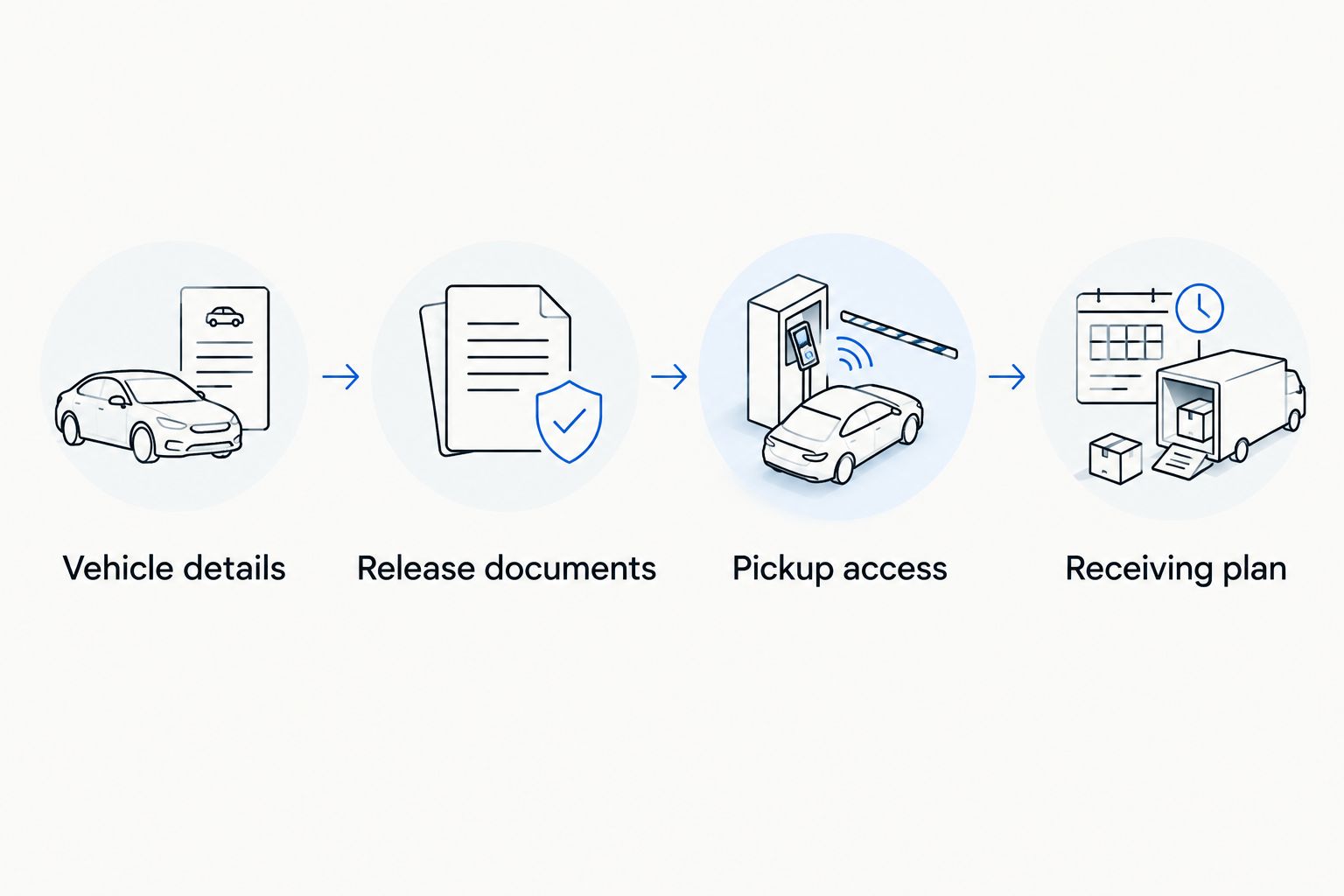
Use this auction pickup checklist for 2026 purchases. Complete it before you authorize a carrier to collect the vehicle; unresolved details belong in the transport discussion, not in a driver’s surprise at the gate.
Vehicle details
Provide 1 VIN per vehicle, the auction lot reference, year, make, and model. Describe whether the vehicle starts, rolls, steers, and brakes, and disclose damage or modifications that affect loading.
Include photographs when words leave room for interpretation. A damaged wheel or low front bumper deserves more detail than a general condition label.
Release documents
Confirm that the auction has authorized collection and identify the required release documents. Ask the auction directly about its current collection procedure, operating hours, appointment rules, and any vehicle-specific restrictions.
Keep the release reference connected to the correct VIN. Do not assume that completing the purchase means the vehicle is ready for a carrier.
Pickup access
Give the coordinator the exact collection location and any truck-access instructions. Confirm whether collection occurs at the auction yard or another designated point.
If the vehicle needs assistance to load, establish who supplies it and whether the auction permits the proposed method. Do not assume yard equipment or staff will be available.
Receiving plan
Identify 2 location contacts: one for pickup and one for delivery. Each should know the vehicle reference and have authority to resolve access or handoff questions.
Confirm dealership receiving hours, available space, and who will inspect the vehicle. A delivery address without an available receiver is an incomplete plan.
Check coverage and document the handoff
Keep 3 shipment checkpoints: release ready, pickup documented, and delivery documented. These checkpoints separate administrative readiness from physical possession and final receipt.
Before pickup, request the applicable carrier insurance information and confirm limits, exclusions, deductibles, and vehicle eligibility. Ask how to report a problem. Do not treat a general statement that a shipment is insured as proof that every damage scenario is covered.
At pickup and delivery, review the condition record and retain the available photographs and transport documents. Record any discrepancy when you identify it and follow the applicable reporting process. A clean-looking exterior is not a substitute for comparing the vehicle against its documented condition.
Which auction car transport should you choose?
Start with broker-coordinated open transport for routine dealer inventory. Choose enclosed transport for a defined exposure or handling requirement, request expedited coordination for a confirmed timing need, and discuss recurring coordination when auction buying is an ongoing operation.
For CHD auction car transport, send the route, vehicle condition, preferred transport type, release status, and receiving deadline. We can then discuss the coordination requirements without treating an estimate as a guarantee.
Discuss recurring vehicle moves
Share auction locations, vehicle details, receiving sites, and timing requirements.
FAQ
What’s the best auction car transport option for a dealership?
Broker-coordinated open transport is the starting point for routine dealer inventory that does not require enclosed protection. Confirm release readiness, vehicle condition, equipment suitability, and receiving arrangements before dispatch.
Is enclosed transport better than open transport for auction cars?
Enclosed transport is better when limiting exposure is a defined requirement. Open transport remains an option for routine inventory, while either arrangement still requires suitable loading equipment and condition documentation.
Can I arrange transport before the auction releases my car?
You can discuss transport before release, but collection requires the auction’s authorization and required documents. Tell the coordinator which release steps remain unresolved rather than presenting the vehicle as ready.
Does expedited auction transport guarantee a pickup date?
An expedited request does not establish a guaranteed pickup date. Confirm what the provider has actually arranged, including carrier assignment, pickup expectations, and any stated limitations.
What if my auction vehicle does not run?
Disclose the vehicle’s actual loading condition before accepting a transport arrangement. Confirm whether it rolls, steers, and brakes, and whether the proposed carrier and auction can support the required loading method.
What affects an auction car transport quote?
The quote depends on the route, vehicle details, transport type, timing requirements, and loading conditions. Provide the same shipment information when comparing proposals so you can compare their scope and limitations.
Does a transport broker own the truck carrying my auction purchase?
A transport brokerage coordinates the shipment with a carrier rather than operating the truck as part of the brokerage service. Ask who will carry the vehicle and verify the shipment-specific arrangements and applicable coverage.
One last thing
The next useful question is not “When can the truck arrive?” It is “What would stop this vehicle from being released and loaded?” For your next 2026 auction purchase, answer that question before approving dispatch. It turns a vague pickup request into a transport plan the auction, carrier, and receiving dealership can follow.
Related guides
- Manheim auction win-to-dealer-lot workflow
- ADESA auction buy-to-showroom-ready workflow
- Auto transport for dealerships
- Auto transport for remarketing companies