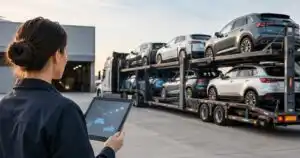
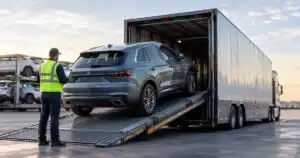
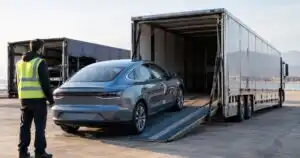
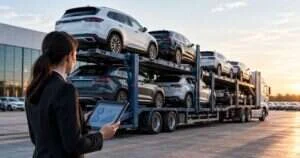
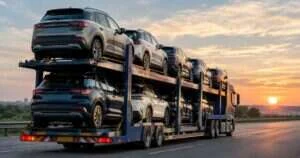
Yes, open transport can be appropriate for a luxury car when you accept exposure to weather and road debris, and the carrier’s equipment, loading method, and applicable coverage fit the vehicle. Enclosed transport is the better choice when protecting a sensitive finish, accommodating special handling, or limiting exposure matters more than using an open trailer; neither option eliminates handling risk.
- Is open transport safe for luxury car shipping? Open trailers leave vehicles exposed; suitability depends on handling, coverage, and condition.
- Enclosed transport is best for exposure-sensitive luxury cars, but loading methods and policy exclusions still need checking.
- CHD coordinates luxury car transport with carriers; confirm the vehicle’s handling requirements before choosing equipment.
- Document condition at pickup and delivery, including wheels, lower bodywork, and existing damage.
Is open transport safe for a luxury car?
Open transport is a reasonable option for a road-driven luxury car whose owner accepts outdoor exposure and whose loading requirements match the assigned equipment. The luxury badge alone does not decide suitability. Ground clearance, bodywork, finish condition, and carrier-specific coverage are more useful checks.
For your 2026 shipment, compare the actual equipment and handling plan rather than treating either trailer type as a guarantee. The enclosed car transport guide provides a starting point when reducing exposure is your priority.
| Transport option | Best for | Main advantage | Limitation to check |
|---|---|---|---|
| Open transport | Road-driven luxury cars whose owners accept outdoor exposure | Moves the vehicle without driving it along the shipping route | No enclosure against weather or airborne road debris; loading compatibility still matters |
| Enclosed transport | Exposure-sensitive finishes, collector vehicles, and cars with special handling needs | Adds a physical barrier around the vehicle during transit | Does not eliminate loading damage; ramp configuration and coverage still need verification |
Choose the equipment around the vehicle’s requirements, not the vehicle’s badge. An enclosed trailer with an unsuitable loading arrangement does not solve a clearance problem.
Why this matters
Luxury-car shipping involves separate decisions about exposure, handling, and financial protection. A trailer’s walls address exposure. They do not establish whether the loading angle suits your front splitter or whether a particular loss falls within an insurance policy.
Before booking, identify what you need to protect. An everyday vehicle with existing cosmetic wear presents a different decision from a freshly restored car whose finish must arrive in its documented condition. Tell the transport coordinator about those differences before a carrier is assigned.
For a 2026 purchase or relocation, separate your preferred delivery date from the date you actually need the vehicle. That distinction lets the coordinator assess equipment and scheduling without silently dropping your handling requirements.
Open transport: best for owners who accept outdoor exposure
Open transport leaves the vehicle outside during the journey. Weather, dust, and airborne road debris remain relevant considerations. Transport also involves loading, securement, unloading, and handoffs, so outdoor exposure is not the only issue to review.
Open transport deserves consideration when your luxury car is regularly road-driven, has compatible clearance, and does not need additional protection from the outside environment. You still need the carrier to confirm suitability for the exact vehicle.
The benefit: Your car travels on a carrier rather than being driven along the shipping route. Open transport can serve an ordinary purchase or relocation when its exposure limitations match your expectations.
The trade-off: An open trailer does not shield the finish from the surrounding environment. Do not book open transport if your acceptance depends on the car remaining isolated from weather and road debris.
Ask about loading equipment before agreeing to dispatch. A factory-standard vehicle and the same model with lowered suspension or an added front splitter can require different handling. Supply current photographs rather than relying only on the model name.
Enclosed transport: best for exposure-sensitive vehicles
Enclosed transport adds a barrier between the vehicle and the outside environment during transit. That makes it the stronger fit when limiting exposure is a central requirement, especially for a collector vehicle or a sensitive finish.
The enclosure is only part of the assessment. Ask whether the assigned trailer uses ramps or a liftgate, how loading clearance will be checked, and how the carrier will secure the vehicle. Enclosed transport does not automatically mean a particular loading system is included.
The benefit: The vehicle receives protection from direct outdoor exposure while inside the trailer. That addresses a limitation an open trailer cannot remove.
The trade-off: Enclosed transport does not remove handling risk or override policy exclusions. You must still confirm equipment compatibility, inspection procedures, and applicable coverage for the shipment.
If the car needs a specific loading method, make that a booking requirement. Do not leave it as a preference to discuss after the truck arrives.
Why luxury-car transport risk varies
The useful question is not whether every luxury car belongs on the same trailer. It is which conditions make your particular move acceptable.
- Route and exposure: Identify the pickup and delivery locations and whether outdoor exposure conflicts with your requirements. Distance alone does not describe every handling or access issue.
- Ground clearance: Disclose lowered suspension, splitters, side skirts, and other low bodywork. Ask the carrier to confirm loading compatibility rather than assuming a luxury-car label communicates these details.
- Finish and condition: Explain whether the vehicle has a sensitive finish, existing damage, or recently completed bodywork. Obtain preparation instructions from the relevant repair or finish specialist when needed.
- Loading and securement: Confirm the loading method and vehicle-appropriate securement. Give the carrier any relevant manufacturer instructions before pickup.
- Coverage terms: Review applicable policy limits, exclusions, deductibles, and vehicle eligibility. A general statement that a carrier is insured does not answer those questions.
- Pickup and delivery access: Disclose narrow streets, overhead restrictions, steep approaches, or restricted parking. Agree on a suitable meeting location if the truck cannot safely reach the address.
Use those factors to write your 2026 booking requirements. A requirement stated before dispatch is easier to assess than an assumption discovered during loading.
How do you check the transport plan before pickup?
Use this sequence to turn a broad request for safe shipping into instructions a coordinator and carrier can evaluate. Keep the requirements together so the vehicle description, equipment choice, and handoff plan do not contradict each other.
Identify the vehicle
Provide the make, model, current condition, and whether the vehicle starts, steers, brakes, and rolls normally. Disclose modifications and any mechanical issue affecting loading. A vehicle that cannot be loaded as expected needs a different plan, not an improvised pickup.
Choose equipment
State whether you accept open transport or require enclosed transport. Explain the reason, such as limiting finish exposure or accommodating a loading constraint. Ask for confirmation of any required ramp or liftgate arrangement.
Verify coverage
Request information for the actual carrier assigned to the move. Check the applicable limits, exclusions, deductibles, and vehicle eligibility against your shipment. Ask your own insurer how your policy applies rather than assuming personal coverage fills every gap.
Document condition
Prepare a clear pickup record with photographs and written condition notes. Include the wheels, bumpers, lower bodywork, glass, and any existing marks. Make sure the pickup contact can inspect and discuss the record before loading.
Confirm handoff
Give both locations an informed contact and agree on access arrangements. Explain who can release the car, who will receive it, and how delivery inspection will happen. Keep keys and required operating instructions ready.
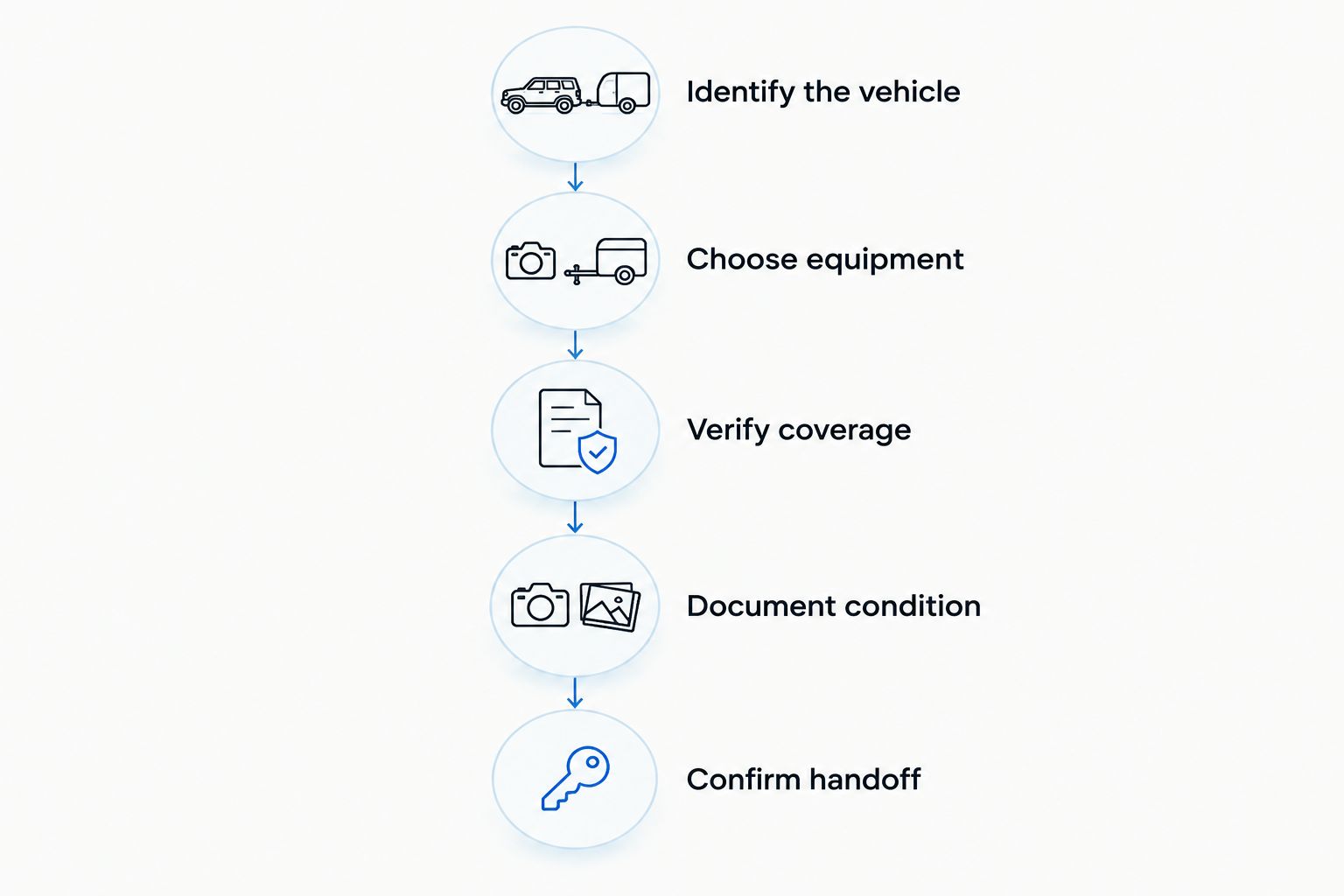
At delivery, compare the vehicle with the pickup record before completing the handoff. Record discrepancies on the delivery documentation and follow the carrier’s reporting procedure promptly. Keep copies of photographs, transport documents, and relevant correspondence together.
What should you ask about insurance?
Ask which policy applies to the assigned carrier and your vehicle. Review the scope, not just the headline limit. Coverage questions remain necessary whether you choose an open or enclosed trailer.
Useful questions include:
- Does the policy apply to this vehicle and the planned shipment?
- What exclusions affect the risks you are concerned about?
- What deductible applies, and who is responsible for it?
- How are loading and unloading incidents addressed?
- What documentation and reporting procedure apply if you discover damage?
For a 2026 booking, request current information tied to the carrier assignment. Do not treat an old certificate, a general website statement, or the word enclosed as a substitute for checking the applicable terms.
Can an enclosed trailer still damage a luxury car?
Yes. Enclosed transport reduces exposure, not every cause of damage. Loading clearance, securement, vehicle condition, and handoff procedures remain relevant inside a trailer.
For example, a low front splitter requires a loading assessment regardless of trailer walls. Tell the coordinator about the restriction and obtain confirmation that the assigned equipment suits it. Do not use enclosure as a shortcut around that check.
Should you choose open transport for a daily-driven luxury car?
Open transport is a reasonable choice when you accept outdoor exposure and confirm vehicle-compatible handling and coverage. Regular road use does not remove transport risk, but it helps clarify whether an enclosure addresses a requirement you actually have.
Choose enclosed transport when reducing exposure is a firm condition of the move. Make that decision before booking rather than requesting an equipment change at pickup.
Does expedited transport change the protection level?
Expedited transport addresses a timing request, not a protection standard. You still need to specify open or enclosed equipment and confirm the loading and coverage requirements.
Availability requires confirmation for the route, vehicle, equipment, and requested timing. A tighter schedule does not justify accepting an unsuitable truck or skipping the condition record.
Arrange a shipment around the car’s requirements
Car Haul Direct is best for luxury-car owners who want a transport brokerage to coordinate carriers and shipment requirements. CHD arranges open, enclosed, expedited, and door-to-door transport; the assigned carrier performs the move.
The brokerage model gives you a coordination point for pickup planning, shipment status, and delivery. Its limitation is that the brokerage’s service description does not establish the assigned carrier’s equipment or applicable coverage. Confirm those shipment-specific details before release.
For your 2026 request, provide the route, vehicle details, preferred transport type, timing needs, and any access or handling restrictions. CHD can coordinate those requirements with carriers without treating every luxury vehicle as the same shipment.
Get a transport quote
Provide your route, vehicle, timing needs, and handling requirements.
FAQ
Is open transport safe for luxury car shipping?
Open transport can be appropriate for a luxury car when you accept outdoor exposure and confirm compatible equipment, handling, and applicable coverage. Choose enclosed transport when limiting exposure is a firm requirement.
Is enclosed transport better for a luxury car?
Enclosed transport is better for limiting exposure to weather and airborne road debris. It does not eliminate loading risk, so confirm clearance, loading equipment, and coverage separately.
Can a lowered luxury car go on an open trailer?
A lowered luxury car needs a carrier-specific loading assessment before you select an open trailer. Disclose suspension changes, splitters, and low bodywork, and ask the carrier to confirm equipment compatibility.
Does carrier insurance cover every kind of damage?
Carrier insurance does not establish blanket coverage for every loss. Verify the applicable policy limits, exclusions, deductibles, and vehicle eligibility for the assigned carrier and shipment.
Should I photograph my luxury car before shipping?
Photograph your luxury car before pickup and compare its condition at delivery. Record existing marks and delivery discrepancies in the relevant transport documentation, and keep copies.
Does door-to-door shipping guarantee pickup from my driveway?
Door-to-door shipping does not establish that a transport truck can safely enter your driveway or street. Confirm access restrictions and agree on a suitable meeting location when the address cannot accommodate the equipment.
Does expedited shipping include enclosed transport?
Expedited shipping does not by itself specify enclosed equipment. Request the trailer type separately and confirm availability for your route, vehicle, handling requirements, and timing.
One last thing
An enclosed trailer does not answer a loading-clearance question. Before releasing a low luxury car, ask the driver to explain the loading approach and confirm it matches the agreed requirements. Resolve a mismatch before loading starts, not after the vehicle is on the ramp.
Related guides
- Luxury car shipping companies
- Open transport car shipping companies
- Expedited enclosed car transport: how it works