Expedited auto transport cost vs standard depends on the route, vehicle, transport type, and timing requirements—not a fixed surcharge you can apply to every shipment. For a useful 2026 comparison, request matched written quotes and ask what the expedited option changes about pickup or delivery. Check separately for auction charges, storage, special loading, and other items outside the transport quote.
- Compare expedited auto transport cost vs standard using identical routes, vehicles, trailer types, and shipment requirements.
- Standard transport suits flexible inventory moves; expedited transport suits deadline-driven moves only when the proposed schedule fits.
- CHD coordinates auto transport through carriers; confirm shipment-specific timing and terms before approving a move.
- An earlier pickup estimate does not establish an earlier delivery commitment.
How much does expedited auto transport cost vs standard?
The cost difference is specific to your shipment. Compare 2 written quotes with the same underlying requirements: one standard and one expedited. Subtract the standard total from the expedited total only after confirming that both cover the same work.
A useful 2026 quote comparison separates the transport charge from the scheduling terms. An expedited label alone does not tell you whether the offer changes carrier assignment, pickup timing, delivery timing, or some combination of those steps.
| Option | Best for | Main benefit | Main limitation | What to confirm |
|---|---|---|---|---|
| Standard auto transport | Dealer trades and inventory transfers with flexible dates | Lets you plan around the proposed carrier schedule | The offered pickup window might not fit a fixed deadline | Pickup window, delivery estimate, and included services |
| Expedited auto transport | Auction purchases or dealer moves with a specific timing requirement | Focuses the transport request on the time-sensitive need | The label does not establish a guaranteed arrival | Exactly which scheduling commitment differs from standard |
Do not compare an open standard quote with an enclosed expedited quote and call the entire difference an urgency charge. You have changed both the trailer type and the scheduling requirement. Ask for matching transport types before deciding what expediting adds.
Why this matters
For a dealership, the useful question is not simply whether expedited transport costs more. It is whether the proposed schedule solves the operational problem: releasing an auction purchase, completing a dealer trade, or getting a vehicle to its receiving location before a documented deadline.
A rushed booking can still leave the vehicle waiting if payment, release authorization, keys, or the receiving contact are unresolved. Confirm readiness before paying for a tighter schedule. Transport coordination cannot replace the seller's release process or the destination's receiving arrangements.
Your 2026 transport request should identify the business deadline and its consequence without turning that consequence into a promised saving. Use actual storage terms, receiving appointments, and customer commitments from your own records when deciding whether the expedited option is justified.
Standard auto transport: best for flexible inventory moves
Standard transport is the better fit when you can accept the proposed pickup window and delivery estimate without disrupting the move. Give the coordinator your earliest release date and latest acceptable arrival date rather than saying the vehicle is ready whenever.
The benefit is scheduling flexibility. The limitation is that the proposed schedule still needs to fit your receiving hours, staffing, and inventory plans; standard does not mean a vehicle can arrive at any time without coordination.
For a dealer trade, identify who authorizes release at the sending store and who signs at the receiving store. For an auction purchase, confirm the lot's release requirements before treating the vehicle as ready for collection.
If you manage repeated transfers, use a consistent shipment brief rather than rewriting the requirements for every vehicle. The auto transport for dealerships guide provides a separate starting point for the broader inventory-movement process.
Choose standard transport when its documented schedule already meets your operational need. An urgent-sounding request is not a reason to select expedited service if the standard proposal does the job.
Expedited auto transport: best for a defined deadline
Expedited transport is the better fit when a specific pickup or delivery need cannot be met by the standard proposal. State the deadline, location, and reason so the coordinator can check the actual requirement rather than work from a general request for speed.
The benefit is a request built around the timing constraint. The limitation is that the requested schedule requires confirmation for the route, vehicle, and carrier; expedited service is not an automatic promise of immediate collection or fixed arrival.
Ask whether the proposal addresses earlier pickup, a delivery deadline, or both. Those are different commitments. A vehicle collected earlier can still have an estimated delivery window rather than a guaranteed appointment.
For 2026 bookings, keep the written timing terms alongside the quote approval. If the schedule changes before carrier assignment or pickup, revisit the decision instead of assuming the original reason for choosing expedited service still holds.
Choose expedited transport only when the confirmed scheduling difference addresses your deadline. Keep the transport requirements intact: urgency does not remove the need for suitable equipment, access checks, or condition documentation.
Why expedited auto transport costs vary
These shipment details belong in both quote requests. Changing them between requests prevents a clean standard-versus-expedited comparison.
- Route and access: Provide the actual pickup and delivery locations. Disclose restricted entrances, truck-access concerns, and any need to arrange an alternative meeting location.
- Vehicle condition: State whether the vehicle runs, steers, rolls, and brakes. Identify damage or loading concerns before equipment is arranged.
- Transport type: Specify open or enclosed transport. Keep that selection identical when isolating the effect of timing.
- Timing requirements: Separate vehicle readiness, requested pickup, and required delivery. Identify which dates are flexible and which need confirmation.
- Release and receiving arrangements: Include auction authorization, key access, contact details, and receiving hours. A scheduled truck still needs an authorized handoff.
- Special handling: Disclose low clearance, modifications, unusual dimensions, or other loading requirements. Ask how those requirements affect the proposed service.
Open transport carries vehicles on an exposed trailer; enclosed transport places them inside a covered trailer. Enclosure addresses exposure, while expediting addresses scheduling. Neither term, by itself, establishes the other service's handling arrangements or timing commitments.
How do you compare standard and expedited quotes fairly?
Use a repeatable process for your 2026 comparisons. The objective is to identify the exact scheduling difference, not simply collect two totals with different service labels.
1. Match requirements
Send the same origin, destination, vehicle details, operating condition, and trailer preference for both requests. Include site restrictions and loading concerns in the initial brief, not after you select a quote.
Keep the requested service scope consistent too. If one proposal assumes a different handoff location or excludes special loading, resolve that difference before comparing the totals.
2. Confirm readiness
Verify that payment and release requirements are satisfied and that someone can provide the keys. Confirm who can authorize pickup if the usual contact is unavailable.
At the destination, name the receiving contact and provide receiving hours. A delivery request is incomplete when the coordinator knows the address but not whether the vehicle can be accepted there.
3. Compare timing
Ask for the standard pickup window and delivery estimate, then ask what the expedited proposal changes. Keep requested dates separate from confirmed commitments.
If your concern is delivery, do not approve a proposal solely because it discusses pickup. Ask how the delivery requirement is addressed and what limitations apply.
4. Check exclusions
Read each proposal for transport inclusions, payment terms, cancellation terms, and requirements that trigger a revised quote. Confirm how changes in vehicle condition, access, or readiness will be handled.
Treat insurance as a separate verification task. Request applicable policy information and confirm limits, exclusions, deductibles, and vehicle eligibility rather than inferring coverage from the word expedited.
5. Approve the move
Record the selected service, agreed scope, timing terms, and contact responsibilities. Share the pickup instructions with the releasing party and the delivery instructions with the receiver.
Keep 3 checkpoints visible throughout the move: release readiness, pickup coordination, and delivery documentation. A tighter scheduling request does not replace any of them.
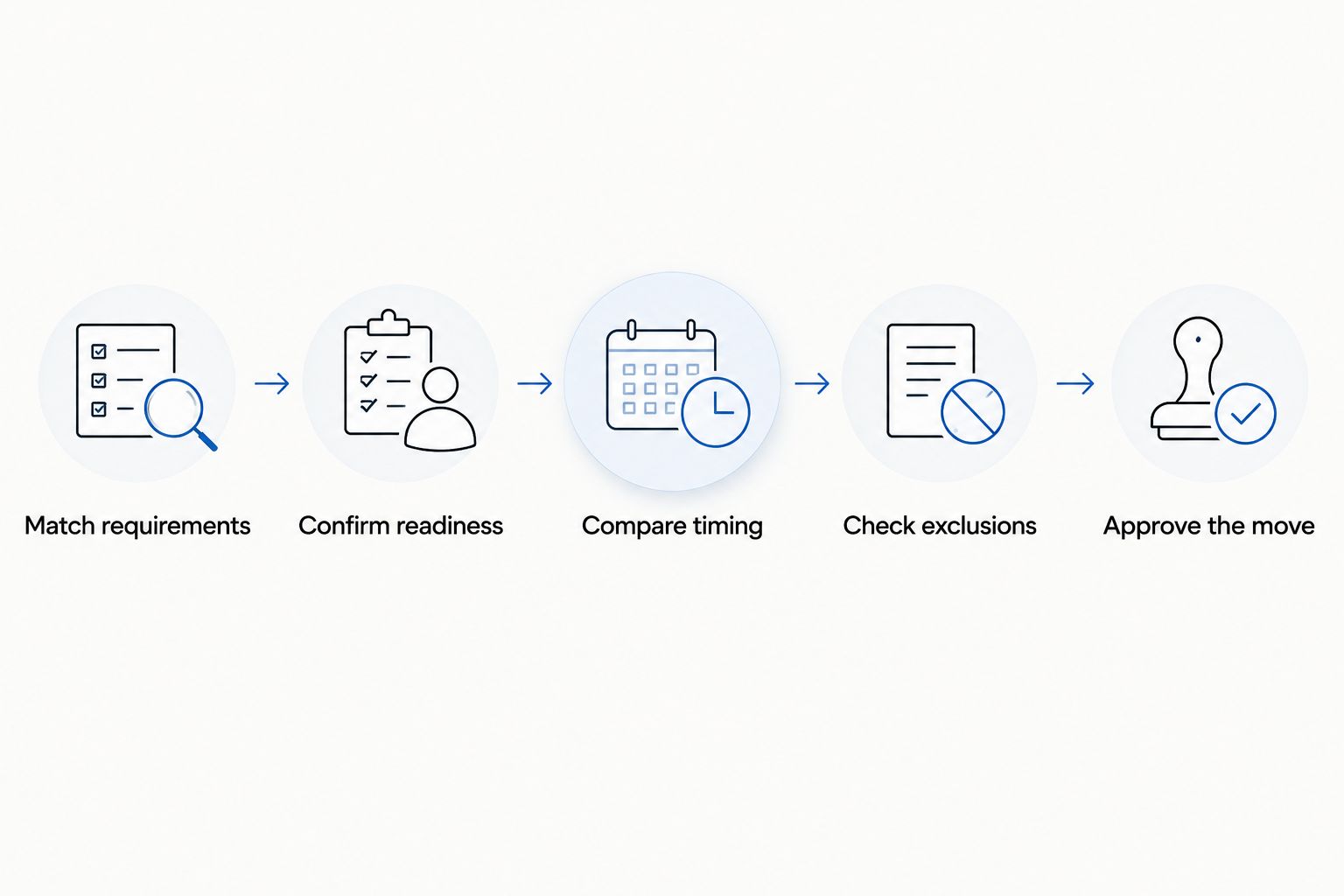
The comparison is complete when you can explain both the additional commitment and its limits in plain language. If the only difference you can identify is the word expedited, ask for clearer terms before approving the shipment.
Is expedited shipping worth it for an auction purchase?
Expedited shipping is worth considering when the standard proposal misses a documented auction-release or receiving requirement. Check the auction's actual release status and applicable storage terms before deciding; do not assume faster transport cancels charges already incurred.
Ask the pickup contact to confirm authorization, keys, vehicle condition, and collection instructions. A requested early pickup is useful only when the vehicle can actually leave.
Does expedited pickup mean faster delivery?
Expedited pickup does not, by itself, establish faster delivery. Ask for separate pickup and delivery terms, including which dates are estimates and which commitments are confirmed in writing.
For a deadline-driven dealer move, work backward from the receiving requirement. An earlier collection is not enough if the delivery proposal still misses the date you need.
Can enclosed transport also be expedited?
Enclosed transport can be requested with expedited scheduling, but the route, equipment, handling requirements, and timing need shipment-specific confirmation. Compare standard enclosed and expedited enclosed proposals to keep the trailer type consistent.
Do not substitute open transport simply to preserve a requested schedule without reviewing the vehicle's handling needs. Make the exposure and timing decisions separately.
Where CHD fits in the decision
Car Haul Direct is a transport brokerage for dealers that need carrier coordination for standard or expedited vehicle moves. We coordinate transport with carriers; we do not present the brokerage as the owner of the trucks.
For a recurring account, give CHD your common routes, vehicle types, pickup contacts, receiving requirements, and exception process. We can discuss open, enclosed, and expedited requests against those needs, with timing and special requirements confirmed for each shipment.
CHD auto transport coordination helps organize the move, but a service label is not a blanket delivery or insurance guarantee. Keep the applicable carrier terms, shipment documents, and scheduling commitments attached to the individual booking.
Discuss recurring vehicle moves
Share your routes, vehicle types, receiving requirements, and timing needs.
FAQ
How much more does expedited auto transport cost than standard in 2026?
The difference requires matched, shipment-specific quotes; a fixed surcharge does not answer the question for every route. Compare the same vehicle, locations, trailer type, and handling requirements, then confirm what scheduling commitment changes.
What’s the best way to compare standard and expedited car shipping?
Compare written quotes with identical shipment requirements and separate pickup terms from delivery terms. Review exclusions and payment conditions before treating the difference as the charge for urgency.
Is expedited auto transport guaranteed to arrive on a specific day?
An expedited label is not a specific-day delivery guarantee. Ask which dates are estimates, what commitments are confirmed, and what limitations apply to your shipment.
Should a dealership use expedited shipping for every auction purchase?
A dealership should select expedited shipping when the confirmed schedule addresses a requirement the standard proposal does not meet. Check release readiness, actual auction terms, and receiving arrangements before approving it.
Can a non-running vehicle use expedited auto transport?
Request a shipment-specific assessment for a non-running vehicle rather than assuming expedited scheduling includes suitable loading equipment. Disclose whether the vehicle rolls, steers, and brakes, along with damage or access concerns.
Does expedited car shipping include more insurance?
Expedited scheduling does not establish additional insurance coverage. Verify the applicable policy limits, exclusions, deductibles, and vehicle eligibility for the assigned shipment.
What does a transport broker need before comparing quotes?
Provide the pickup and delivery locations, vehicle details, operating condition, trailer preference, and timing requirements. Include release contacts, receiving hours, site restrictions, and special handling needs.
One last thing
Flexibility belongs at both ends of the route. A flexible pickup date does not solve a delivery location that cannot accept the vehicle during the proposed window. Before approving a 2026 shipment, have both contacts confirm their handoff arrangements and identify who handles an exception.
Keep that confirmation with the selected quote. It gives everyone the same operational instructions without turning an estimate into a promise.
Related guides
- How much does auction-to-dealership car shipping cost?
- Expedited enclosed car transport: how it works in 2026
- Auto transport companies ranked by delivery speed